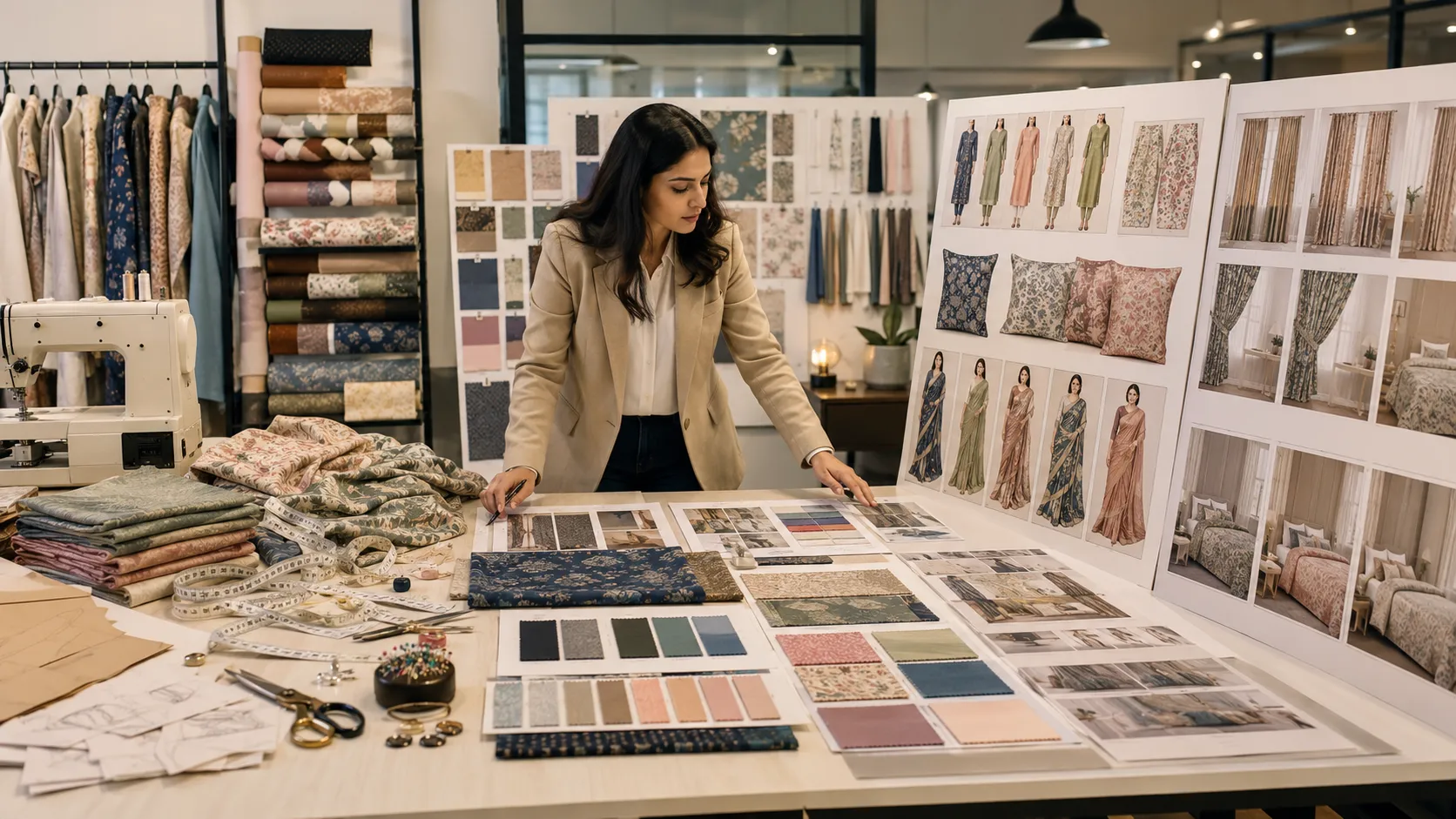
The Indian textile and apparel industry is undergoing a quiet but significant transformation. For decades, physical garment samples have been the backbone of design approvals, buyer negotiations, and export deals. In 2026, that long-standing process is beginning to change.
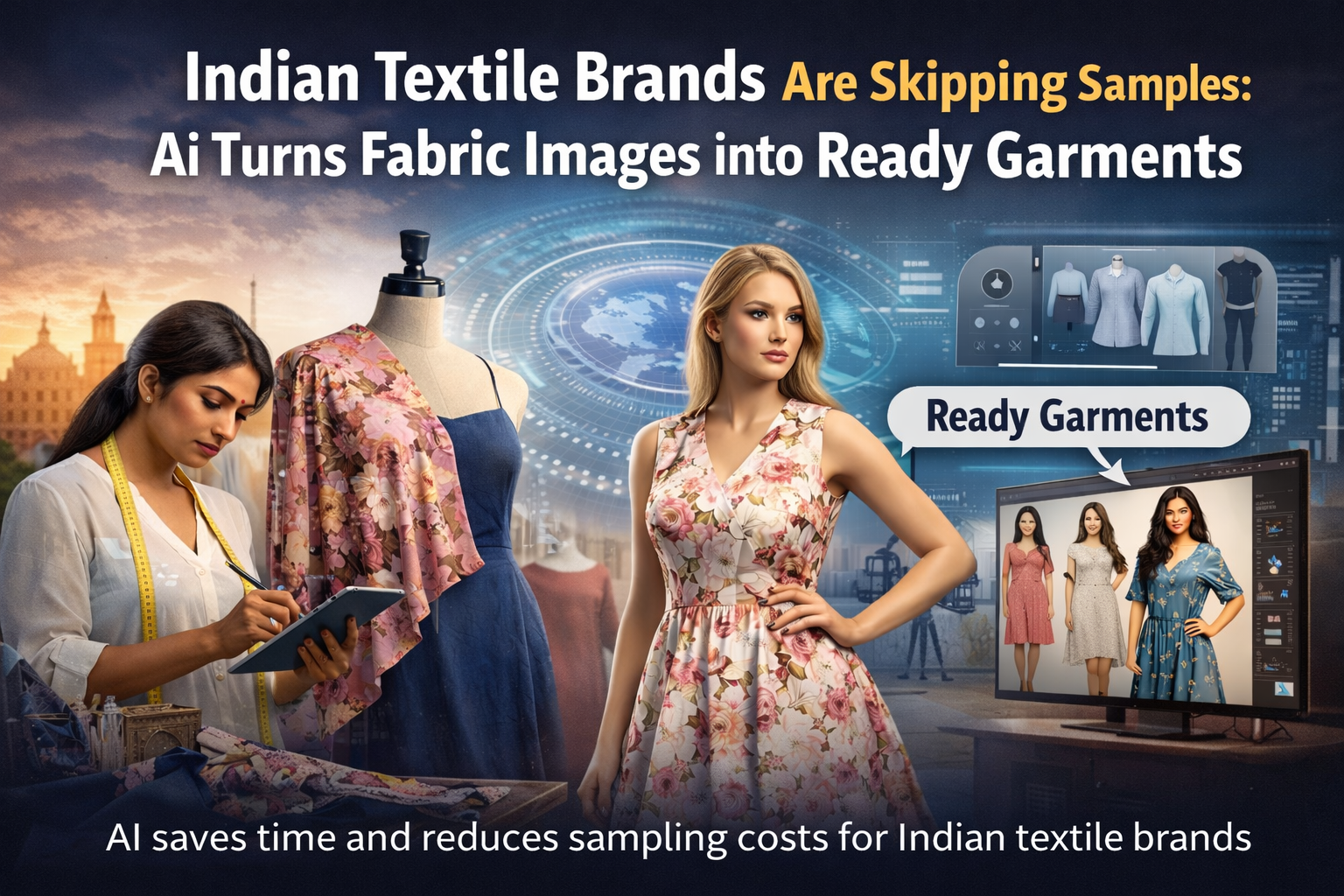
Across textile hubs such as Surat, Tiruppur, Ludhiana, Jaipur, and Mumbai, many Indian textile brands and manufacturers are now skipping physical samples altogether. Instead, they are using fabric-to-garment AI technology to convert simple fabric images into realistic garment visuals—before a single piece of cloth is stitched.
This shift is redefining how fashion products are designed, approved, and sold.
The Traditional Sampling Problem
Sampling has always been one of the most expensive and time-consuming steps in the fashion supply chain.
A typical process involves:
-
Designing a garment concept
-
Stitching multiple physical samples
-
Sending samples to buyers
-
Making revisions after feedback
-
Repeating the cycle several times
For export-focused Indian textile brands, this process often includes international courier delays, repeated stitching costs, and fabric wastage. In many cases, samples are approved late—or rejected entirely—after weeks of effort.
With global buyers demanding faster timelines and lower costs, traditional sampling is becoming increasingly unsustainable.
How Fabric-to-Garment AI Changes the Workflow
Fabric-to-garment AI introduces a digital-first approach.
Instead of stitching samples, brands upload a fabric image into an AI system. The technology analyzes the fabric’s pattern, color, texture, and scale, then applies it to selected garment styles such as kurtis, dresses, shirts, sarees, or gowns.
Within minutes, the system generates high-quality garment visuals that show how the fabric would look when stitched and worn.
These visuals are used for:
-
Buyer presentations
-
Design approvals
-
Collection planning
-
Online catalogs
The result is a clear, realistic garment preview—without physical production.
Why Indian Textile Brands Are Adopting AI Faster
India’s textile ecosystem is uniquely positioned to benefit from fabric-to-garment AI.
1. Fabric-First Industry
Unlike many Western fashion brands, Indian manufacturers often start with fabric rather than finished designs. AI aligns naturally with this workflow by letting fabric lead the design process.
2. Export-Driven Business
Indian textile brands work with buyers in Europe, the Middle East, and the US. Digital garment visuals allow instant sharing, faster approvals, and fewer revisions—without shipping delays.
3. Cost Sensitivity
Sampling costs add up quickly. AI reduces expenses related to stitching, labor, and logistics, making it especially attractive for mid-sized and growing exporters.
4. Speed to Market
With shorter fashion cycles, brands can no longer wait weeks for approvals. AI enables same-day design validation.
Reducing Fabric Waste and Improving Sustainability
Fabric waste is a major concern in the textile industry. Traditional sampling often results in unused or discarded fabric after multiple iterations.
By shifting design decisions to a digital stage:
-
Fewer physical samples are needed
-
Fabric is used only after final approval
-
Trial-and-error wastage is reduced
This aligns with growing sustainability expectations from global buyers, especially in European markets where environmental compliance is becoming mandatory.
Impact on Buyers and Merchandisers
Buyers are also adapting to this new workflow.
Digital garment visuals:
-
Are easier to understand than flat fabric swatches
-
Provide clarity on drape and appearance
-
Allow faster internal approvals
Many buyers now prefer visual garment previews early in the process, using physical samples only at final confirmation stages—or skipping them entirely for repeat orders.
Merchandisers benefit as well, since they can present more options using the same fabric without additional cost.
A Broader Shift Toward Digital Fashion Operations
Fabric-to-garment AI is part of a larger trend toward digital fashion infrastructure.
Brands are increasingly using AI to:
-
Visualize collections before production
-
Create catalogs without photoshoots
-
Reduce dependency on physical processes
This does not replace designers or craftsmanship. Instead, it supports better decision-making earlier in the workflow.
The Role of Platforms Like The Textile AI
Platforms such as The Textile AI are helping Indian textile brands adopt this new approach by focusing specifically on fabric-to-garment visualization.
By enabling brands to turn fabric images into garment visuals, such platforms help:
-
Speed up buyer communication
-
Reduce sampling cycles
-
Improve confidence in design decisions
The focus is not on replacing traditional production, but on making the process smarter, faster, and more efficient.
What This Means for the Future
As AI adoption grows, skipping samples may become standard practice rather than an exception—especially for early-stage approvals and design exploration.
For Indian textile brands, this represents:
-
Better margins
-
Faster global reach
-
Lower operational risk
For the global fashion industry, it signals a move toward digital-first garment creation, where physical production follows only after clarity and confidence are achieved.
Conclusion
Indian textile brands are no longer relying solely on physical samples to move their businesses forward. With fabric-to-garment AI, a simple fabric image can now become a ready garment visualization—changing how fashion decisions are made.
What started as a technology experiment is quickly becoming an industry shift.
In 2026, skipping samples is not about cutting corners.
It is about designing smarter.