Imagine you want to bake a new type of chocolate cake. But to get the recipe exactly right, you have to bake one hundred cakes. Even worse, you have to throw ninety of those cakes into the trash bin because they did not look perfectly right.
That sounds very silly and like a big waste of money, right?
Well, for a very long time, this is exactly how clothes were made. A clothing manufacturer would have to make hundreds of test shirts, dresses, and pants just to see if they looked good. Most of these tests were thrown away. This test is called a "sample."
But today, things are changing. This is the story of how a factory in Surat, India, stopped wasting money and time. They used clever computer programs to help them. This story will show you how AI in manufacturing is changing the way our clothes are made.
If you are curious about how the shirts in your closet are made, and how computers are helping make them better, you are in the right place. Let us dive into the amazing world of the textile industry!
Chapter 1: The Old Way of Making Clothes
To understand how amazing this new computer magic is, we first need to understand how hard it was to make clothes in the past.
When you go to a store and buy a shirt, you only see the final product. But the manufacturing process to make that shirt is very long.
What is a Sample?
Before a factory can make one thousand red shirts to sell in a store, they must make just one red shirt first. This first shirt is called a sample.
The clothing manufacturer makes this sample to check a few things:
- Does the fabric feel nice?
- Do the colors look bright and pretty?
- Does the shirt fit a real person correctly?
- Is the textile design nice to look at?
If the store owner does not like the sample, the factory has to make another one. Sometimes, they have to make ten or twenty samples before the store owner says, "Yes, I like this one!"
Why Samples Cost So Much Money
Making these samples is the hardest part of apparel manufacturing. Here is why it costs so much money:
- Wasting Fabric: Every time you cut fabric to make a sample, you are using up materials. If the sample is rejected, that fabric is wasted. Fabric manufacturing takes a lot of time and water, so throwing it away is bad.
- Wasting Time: A worker has to sit at a sewing machine and sew the sample by hand. This takes hours or even days.
- Shipping Costs: After the sample is sewn, the factory has to put it in a box and mail it to the store owner. Sometimes the store owner lives in another country! Sending boxes on airplanes costs a lot of money.
Quote: "In the past, making samples was like guessing in the dark. We spent so much money just hoping the customer would like our design." - A Factory Owner.
This old way of doing things was too slow and too expensive. Factories needed a new way to work. They needed fashion technology.
Chapter 2: Welcome to Surat, The Silk City
Now, let us travel to a real place. Surat is a very big, busy city in the country of India. It is famous all over the world for making fabric and clothes. People call it the "Silk City."
In Surat, there are thousands of factories. These factories make the cloth that is used to make dresses, suits, and everyday clothes for people everywhere.
Meet the Manufacturer
Let us look at one specific clothing manufacturer in Surat. For many years, this factory worked the old-fashioned way. They had a big team of people whose only job was to cut and sew samples.
Every month, the factory spent thousands of dollars just on buying extra fabric for samples, paying for airplanes to mail the samples, and paying workers to sew things that would just be thrown away.
The owner of the factory was worried. He wanted to achieve cost reduction. Cost reduction means finding a way to spend less money so the business can be healthy and strong. He knew that if he kept spending so much money on samples, his factory might have to close down.
He started looking for a solution. He read about something new and exciting. He read about AI technology.
Chapter 3: What is AI in Manufacturing?
You might have heard the letters "A" and "I" before. AI stands for Artificial Intelligence.
But what does that mean?
Think of AI as a very smart computer brain. When you learn math at school, your brain remembers how to add numbers together. AI is a computer program that has been taught to remember things, recognize pictures, and even draw new pictures!
How Does the Computer Brain Work in a Factory?
AI in manufacturing means putting these smart computer brains into factories to help workers do their jobs faster and better.
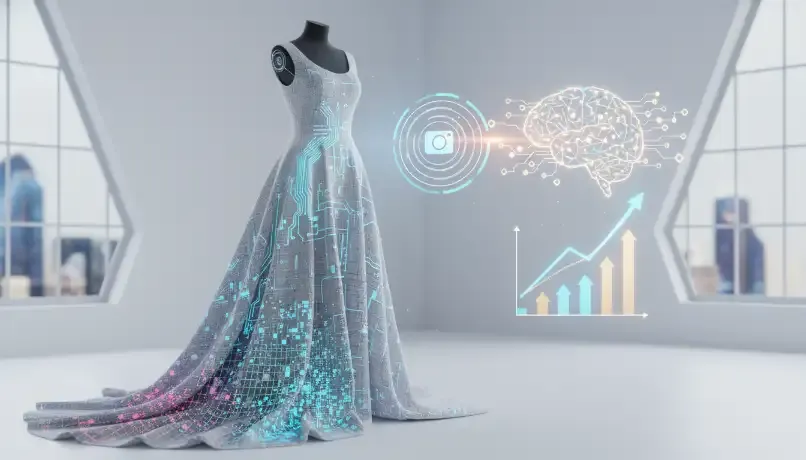
In the textile industry, AI can do something magical. It can look at a flat, plain picture of a piece of cloth, and then draw a picture of a human wearing that cloth as a dress or a shirt!
It draws this so perfectly that it looks like a real photograph.
Note: AI does not replace human workers. Instead, it is like a super-tool that helps human workers do their jobs without getting so tired.
Instead of cutting real cloth and using a real sewing machine, the computer creates a "virtual sample." Virtual means it exists only on the computer screen. You cannot touch it with your hands, but you can see exactly what it looks like with your eyes.
This is a huge part of modern fashion technology.
Chapter 4: The Factory Tries Something New
The factory owner in Surat decided he wanted to try this AI technology. He found a special tool made just for his business. It is a system built by The Textile AI, a company that helps factories use computer brains to make clothes.
At first, the workers at the factory were confused. They were used to holding scissors and thread. Now, they had to look at computer screens. But the tools were very easy to use, even if you are not an expert at computers.
They started using the main AI Tool to change the way they worked.
Here is how their days changed.
The Old Morning
In the past, the factory owner would arrive at work and say, "We need to make a sample of our new blue flower fabric." A worker would find the big roll of blue flower fabric. They would cut out the pieces. They would sew the shirt. Then they would put it on a plastic doll called a mannequin to see how it looked. This took the whole morning.
The New Morning
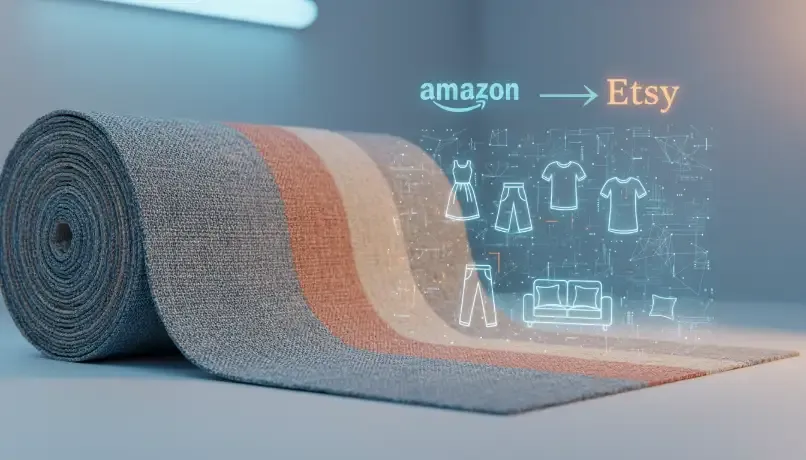
Now, the factory owner arrives and says the same thing. But the worker does not get scissors. The worker just takes a digital photograph of the blue flower fabric. They put that picture into the computer. Then, they use the Fabric to Garment tool.
In just a few seconds, the computer screen shows a beautiful picture of a real-looking person wearing a shirt made of the blue flower fabric.
The work that used to take five hours now takes five minutes!
Chapter 5: How the Magic Works (Step-by-Step)
Let us break down exactly how this manufacturing process works. It is as easy as one, two, three.
Step 1: Taking the Picture
Everything starts with fabric manufacturing. The factory makes a new type of cloth. They lay a small piece of this cloth on a table and take a very clear, bright picture of it. This captures the textile design perfectly.
Step 2: Turning Cloth into Clothes
Next, the worker uploads the picture to the computer. They use the Fabric to Product system. The computer asks, "What do you want to make with this fabric?" The worker can click on a shirt, a dress, a skirt, or pants.
Step 3: Seeing it on a Person
Then comes the best part. Clothes do not look the same on a flat table as they do on a human body. Fabric folds, stretches, and moves.
The worker uses the Virtual Try On tool. The computer puts the digital clothes onto a digital model. You can see how the dress flows or how the shirt fits over the shoulders.
Tip: If you are a factory worker and forget how to do this, you do not need to panic. You can always read the helpful instructions on the Docs page to remember the steps!
Step 4: Making a Book of Clothes
After creating many different virtual samples, the factory needs to show them to the people who buy clothes for the big stores.
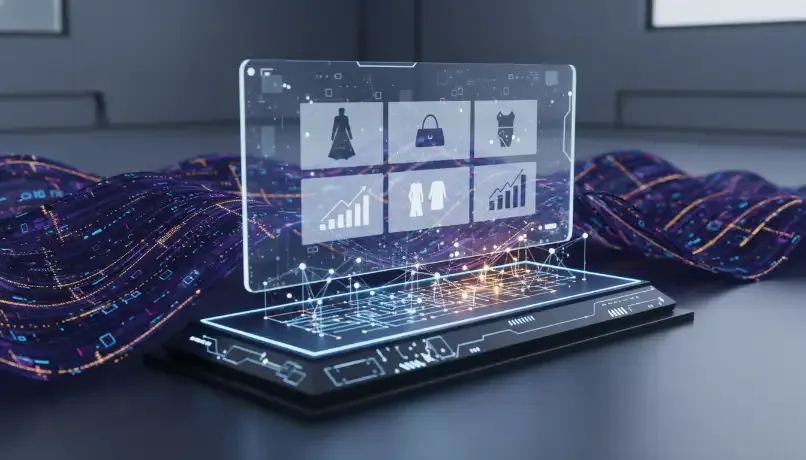
In the old days, they would pack fifty heavy shirts into a large suitcase. Now, they use the Catalog feature. The computer takes all the beautiful digital pictures and puts them into a neat digital book. The factory owner can just email this book to a store in America, Europe, or anywhere in the world instantly!
Chapter 6: The Amazing Results (Cost Reduction)
Now we get to the most important part of our story. What happened to the Surat clothing manufacturer after they started using AI in manufacturing?
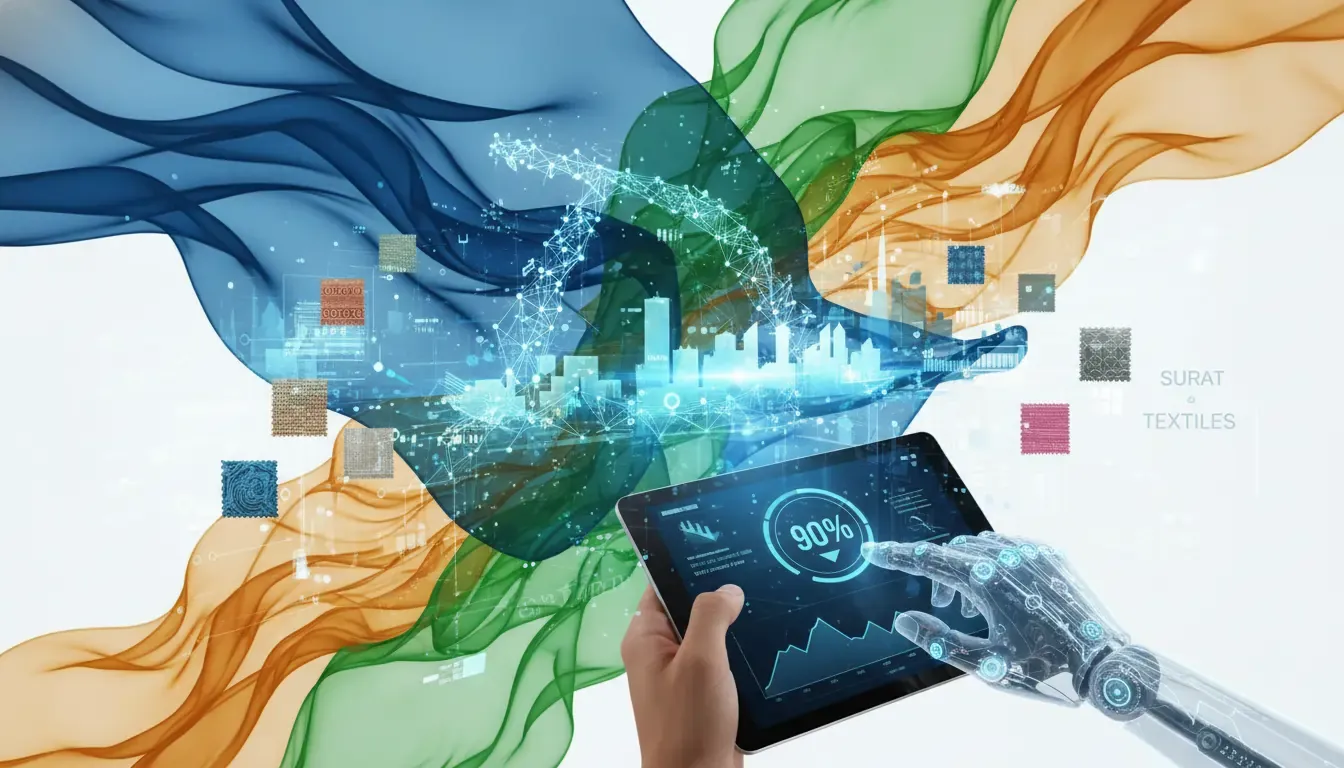
The results were completely amazing. They achieved a massive cost reduction. In fact, they cut their sampling costs by 90%!
What does 90% mean? Imagine you used to spend 100 dollars every day to make samples. Cutting the cost by 90% means you only spend 10 dollars now. You get to keep 90 dollars in your piggy bank!
Here is exactly how they saved so much money:
1. No More Wasted Fabric
Because they only made virtual samples on the computer, they stopped cutting up good fabric. All the fabric they made could now be sold to make real clothes, instead of being thrown away as bad samples.
2. No More Airplane Bills
Mailing heavy boxes of sample clothes to other countries is very expensive. Emailing a digital catalog of computer pictures is completely free. The factory saved thousands of dollars on shipping.
3. Faster Approvals
In the past, mailing a sample took a week. The store owner would look at it for a week. Then they would mail an answer back. It took nearly a month just to agree on one shirt!
With AI technology, the factory owner emails the picture. The store owner looks at it on their phone that same day. They can say "Yes" in just five minutes. Because time is money, working faster saves a lot of money.
4. Trying Endless Ideas
Because making virtual samples is so cheap and fast, the factory's textile design team can be very creative. If they have a crazy idea for a bright yellow polka-dot jacket, they can make it on the computer just to see if it looks good. If it looks bad, they just delete the picture. It costs nothing to make a mistake on a computer!
Remember: AI in manufacturing is not just about robots building cars. It is about using computers to make smarter choices before we spend money on physical materials.
Chapter 7: Planning for Holidays with AI
One of the coolest things about this fashion technology is how it helps factories plan for big holidays.
During holidays, people like to buy very specific clothes. For example, in many parts of the world, people wear special red and pink clothes in February for Valentine's Day.
For a factory, preparing for an Event takes a long time. They have to design the clothes months before the holiday actually happens.
Our factory in Surat used AI to plan for a huge Valentine holiday sale.
Instead of guessing what people might want to buy, they created hundreds of digital samples of lovely red dresses and pink shirts. They even created special pictures of couples wearing matching clothes.
If you want to see how cool this looks, you can actually watch a video of how the computer designs matching outfits.
By creating these pictures and showing them to store buyers early, the factory got huge orders. They knew exactly how many red shirts to actually sew on the sewing machines, so they did not make too many or too few. Everything was perfect.
Chapter 8: Why AI is Great for Our Planet Earth
We have talked a lot about money. But AI in manufacturing is also a superhero for our planet.
The textile industry is one of the biggest industries in the world. Because almost eight billion people live on Earth, we need a lot of clothes. But making clothes can sometimes hurt nature.
The Problem of Fashion Waste
When factories make physical samples that get rejected, those clothes often end up in places called landfills. A landfill is a giant hole in the ground where we put our trash.
Also, growing cotton or making synthetic fabrics takes huge amounts of water and energy. If we waste the fabric, we are wasting water and energy.
According to reports from trusted groups like the World Economic Forum, making clothes creates a lot of pollution. We need to find ways to make clothes without making so much trash.
The AI Solution to Pollution
This is why apparel manufacturing needs computers.
By using virtual sampling, our Surat factory stopped throwing away hundreds of pieces of clothing every month.
When you do not make a real sample:
- You save water that would be used to dye the fabric.
- You save electricity that would run the sewing machines.
- You stop airplanes from burning fuel to deliver the sample boxes.
So, by saving money, the factory is also saving trees, water, and keeping the air cleaner. It is a win for the factory owner, and a win for the planet!
Chapter 9: What Does the Final Picture Look Like?
You might be wondering, "Do these computer pictures really look like real clothes?"
Yes, they do! AI technology has become so smart that it adds shadows, wrinkles, and light to the digital clothes. If you saw the picture, you would think a real human model went to a photography studio and took a picture with a camera.
If you are curious and want to look at some of these amazing pictures, you can visit the Gallery. You will see dresses, shirts, and traditional clothes that look 100% real but were actually drawn by a computer brain.
It is like looking at a magic trick!
Chapter 10: How Can You Use This Technology?
Maybe you are reading this and you own a clothing store. Or maybe your family works in the textile industry. You might be thinking, "This is wonderful, but is it too expensive for me to use?"
The great news is that computer tools are actually very affordable.
Remember, the goal is cost reduction. The tool is designed to save you money, not take your money. You can look at the Pricing page to see how a small monthly fee can save a factory thousands of dollars every week.
It is very easy to get started. You do not need to buy huge machines or hire scientists. All you need is a normal computer and an internet connection.
Steps to Start
- Sign Up: First, a factory owner goes to the website and creates an account. They will Login to their special dashboard.
- Learn: They can read helpful articles and Blogs to learn tips and tricks from other people who use the software.
- Upload: They take a picture of their fabric and upload it.
- Create: They push a button and watch the AI make a beautiful piece of clothing!
It is so simple that almost anyone can learn how to do it in just one afternoon.
Chapter 11: Real Statistics You Should Know
Sometimes, it helps to look at the real numbers to understand how big of a change this is. Let us look at some statistics about AI in manufacturing and the textile industry. (Statistics are just numbers that give us facts).
- Time Saved: According to studies on fashion technology, using digital samples can reduce the time it takes to get a product to the store from 3 months down to just 3 weeks!
- Money Saved: Like our Surat factory, many businesses report saving between 70% and 90% on their sampling budgets.
- Accuracy: Reports from business experts like McKinsey & Company show that using digital tools helps fashion brands reduce errors and sell more of what people actually want.
These numbers prove that AI is not just a toy. It is a very serious tool that helps businesses survive and grow.
Chapter 12: The Future of Clothes Making
What will happen next? If AI can do all of this today, imagine what it will do in ten years!
In the future, the manufacturing process will become even smoother. You might be able to go to a store, scan your body with your phone, and a factory will use AI to design a shirt that fits your exact body perfectly.
The apparel manufacturing world is moving away from guessing and moving toward knowing exactly what customers want.
For the clothing manufacturer in Surat, taking the chance to learn AI technology changed everything. His workers are happier because they do not have to do boring, repetitive work. His customers are happier because they get to see new designs instantly. And his bank account is happier because of the massive cost reduction.
Note: The future of fashion is digital. Factories that learn to use computers today will be the most successful factories tomorrow.
Conclusion: A Smarter Way to Sew
Let us think back to our chocolate cake example at the beginning of this story.
Instead of baking 100 cakes and throwing 90 away, imagine having a magic computer that tells you exactly how the cake will taste before you even mix the flour and sugar. You would only have to bake the one perfect cake.
That is exactly what AI in manufacturing has done for the textile industry.
The story of the Surat textile manufacturer is proof that we do not have to keep doing things the hard way just because "that is how we always did it." By embracing fashion technology, this factory cut their sampling costs by 90%. They saved time, they saved fabric, and they helped the environment.
Whether it is everyday clothes, or special clothes for a Valentine event, AI tools like the ones from Textile AI are making the world of apparel manufacturing brighter, faster, and much less wasteful.
So, the next time you put on your favorite shirt, think about the incredible journey it took. It might have started as a simple picture on a computer screen, brought to life by the magic of Artificial Intelligence!
Are you ready to see the magic for yourself? Explore the world of digital fashion today!