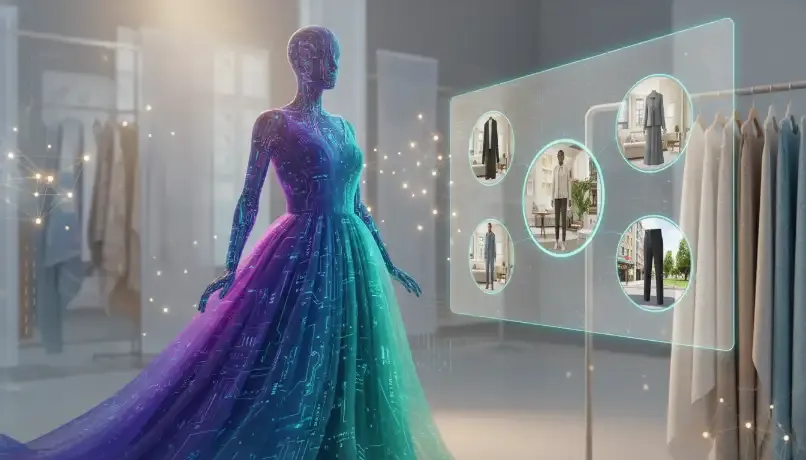
Creating multiple pattern variations has always been one of the most time-consuming tasks in textile and fashion design. Designers often spend hours adjusting motifs, experimenting with layouts, and generating different color combinations for a single collection.
With the introduction of Textile AI, this process has become significantly faster and more efficient. Today, a single design input can be transformed into more than 100 pattern variations within seconds, without compromising quality or design consistency.
Why Pattern Variation Is Important in Textile Design
In the textile industry, variation is essential for building strong product catalogs. A single motif can be adapted into multiple styles for sarees, kurtis, dresses, upholstery, and more.
Traditionally, designers had to manually:
- redraw layouts
- adjust repeat patterns
- test color combinations
- create multiple versions for clients
This made scaling design production slow and expensive.
How AI Generates 100+ Pattern Variations
1. Motif Detection and Extraction
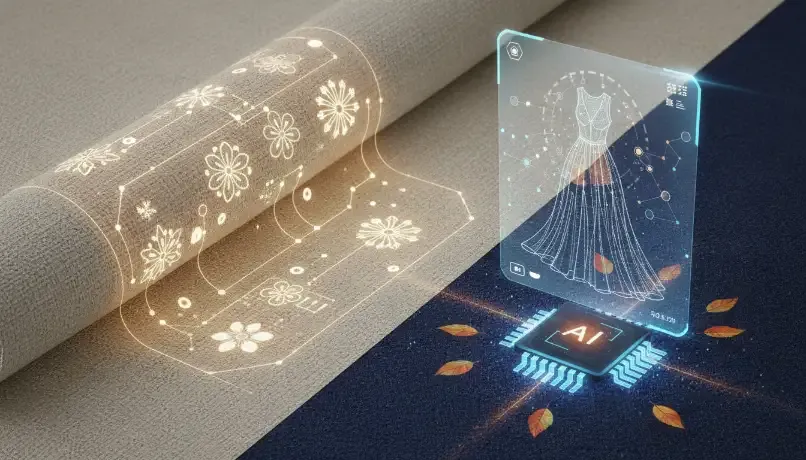
The first step is identifying key elements within a design. AI scans the artwork and separates motifs such as florals, geometric shapes, borders, and textures.
This allows the system to reuse and rearrange these elements without losing the original design identity.
2. Intelligent Pattern Reconstruction
Once motifs are extracted, AI applies different repeat structures such as:
- straight repeat
- half-drop repeat
- brick repeat
- mirror repeat
- scattered layout
Each structure creates a completely new pattern style, multiplying design possibilities.
3. Automated Color Variation
AI can instantly generate multiple color combinations based on design trends and palette logic.
These include:
- pastel tones
- high-contrast palettes
- monochrome variations
- seasonal color themes
- gradient blends
By combining multiple color sets with different layouts, the total number of variations increases rapidly.
4. Layout and Density Control
Different products require different pattern densities. AI automatically adjusts spacing and composition to create:
- dense all-over prints
- medium balanced layouts
- minimal scattered designs
This makes the same motif usable across multiple product categories.
5. Border and Placement Optimization
For ethnic and structured designs, AI adjusts border placement and motif alignment. This is especially useful for:
- saree borders
- kurti panels
- dupatta layouts
- embroidery-style patterns
The system ensures proper alignment and visual balance across all variations.
6. High-Resolution Output Generation
Every generated variation is export-ready in high resolution. These designs can be directly used for:
- digital fabric printing
- sublimation printing
- product catalogs
- e-commerce mockups
Benefits of Using AI for Pattern Generation
Speed and Productivity
Designers can generate hundreds of variations in seconds instead of spending hours on manual work.
Cost Reduction
Businesses reduce dependency on manual design work and external resources, lowering overall production costs.
Creative Exploration
AI allows designers to experiment with multiple ideas without worrying about time constraints.
Consistency in Design
All generated patterns maintain proper alignment, proportion, and visual balance.
Scalability
Designers and businesses can create large collections quickly, making it easier to meet market demand.
Use Cases in Textile Industry
- Boutique Brands: Create multiple design options for custom collections
- Fabric Sellers: Expand catalog size with more pattern options
- Print Shops: Provide quick design samples to clients
- Manufacturers: Speed up production-ready design workflows
AI enables even small businesses to compete with large-scale production houses.
Common Questions About AI Pattern Generation
How does AI generate so many variations quickly?
AI uses trained models to detect motifs, apply repeat structures, and generate color combinations automatically, allowing it to produce hundreds of variations within seconds.
Are AI-generated patterns ready for printing?
Yes, most AI-generated patterns are seamless and high-resolution, making them suitable for direct use in textile printing.
Do designers need technical skills to use AI tools?
No, most Textile AI tools are designed to be user-friendly. Designers simply upload a design and select preferences.
Can AI work with traditional or hand-drawn designs?
Yes, AI can process hand-drawn artwork, block prints, and traditional motifs while maintaining their original style.
Is AI affordable for small businesses?
Many platforms offer flexible pricing, making AI tools accessible for freelancers, boutique brands, and small textile businesses.
Conclusion
AI has completely transformed how pattern variations are created in the textile industry. By automating motif extraction, layout generation, color variations, and density control, designers can now generate over 100 pattern variations instantly.
This not only improves efficiency but also opens new creative possibilities for designers and businesses. As AI continues to evolve, pattern generation will become even faster, smarter, and more accessible across the textile ecosystem.