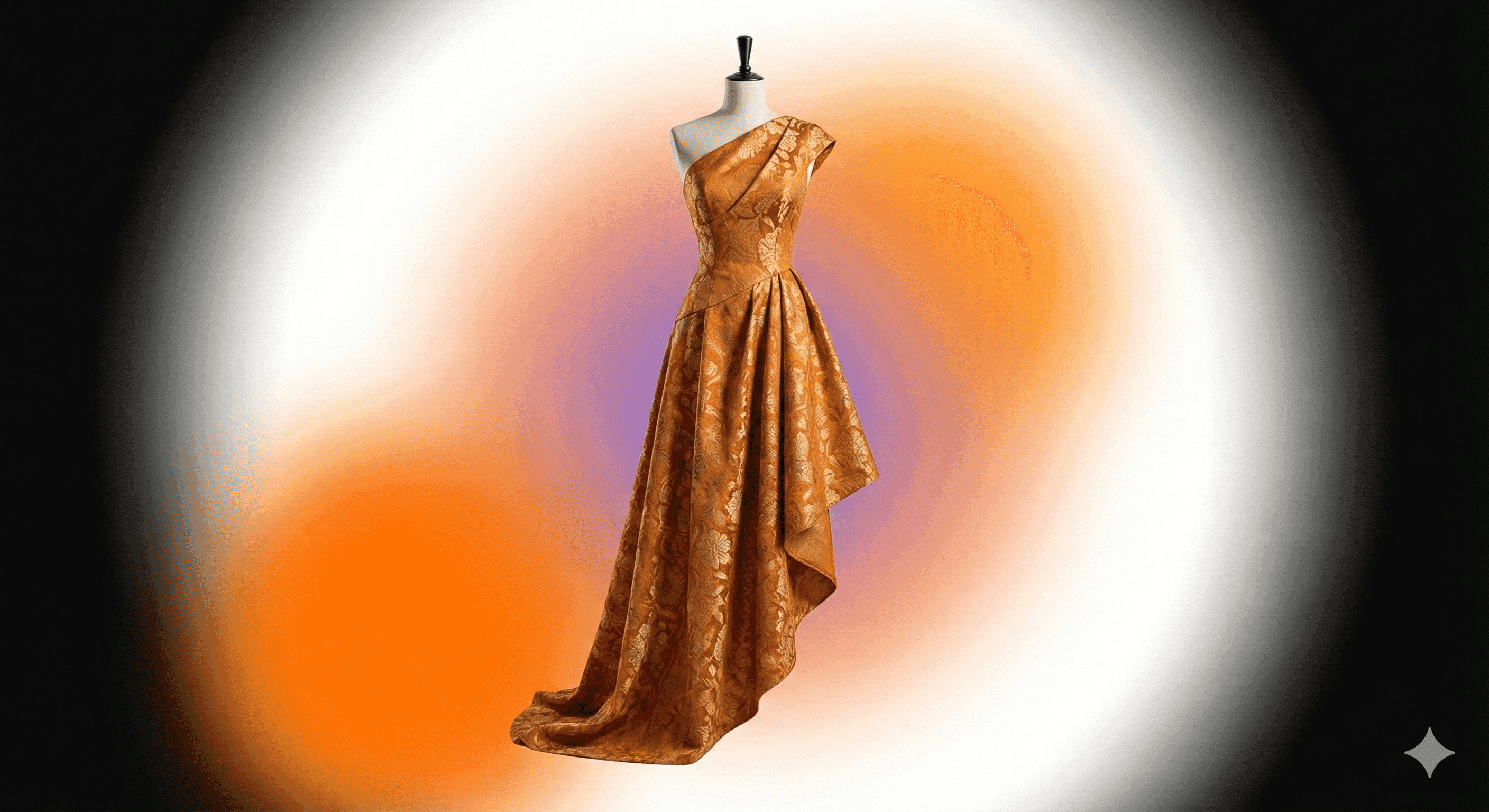
How AI Helps Create Full Fashion Catalogs in Minutes
Introduction
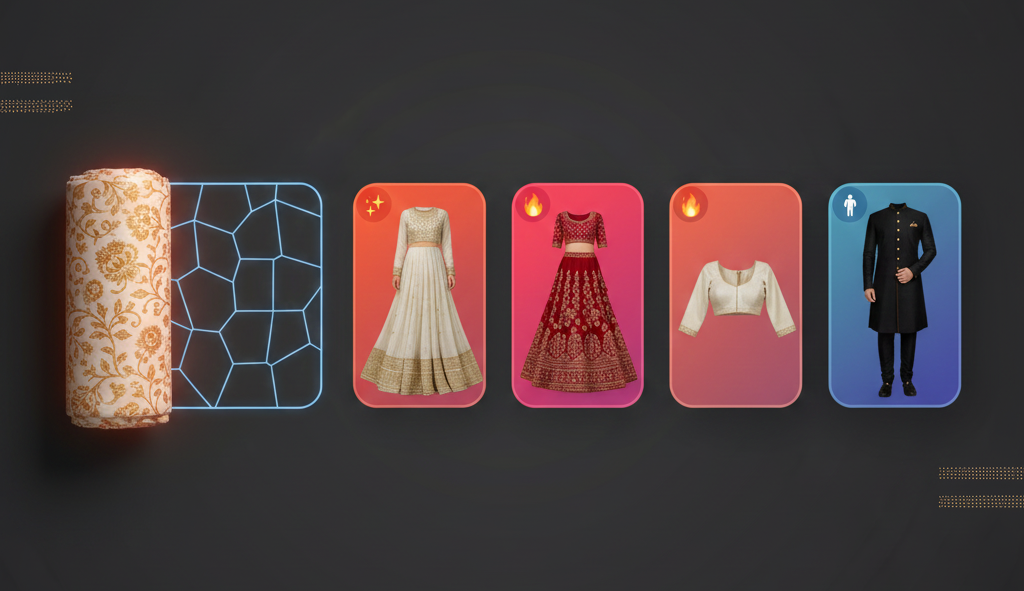
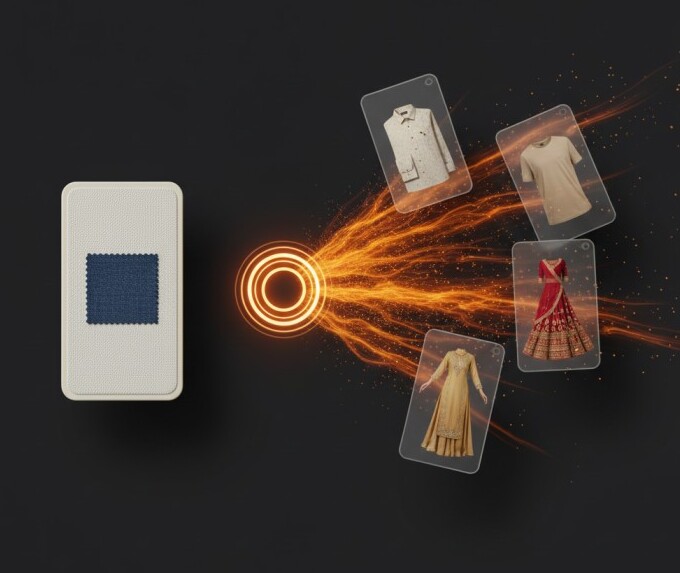
Fashion catalog creation has traditionally required professional photography, models, makeup artists, lighting setups, editors, and multiple days of work. For boutique designers and small fashion brands, this process is expensive and time-consuming. AI now makes it possible to generate a complete fashion catalog in minutes, using only fabric photos or garment images. This breakthrough allows fashion businesses to scale faster, reduce production costs, and publish collections instantly.
How Textile AI Understands Fabric Characteristics
Pattern Structure Detection
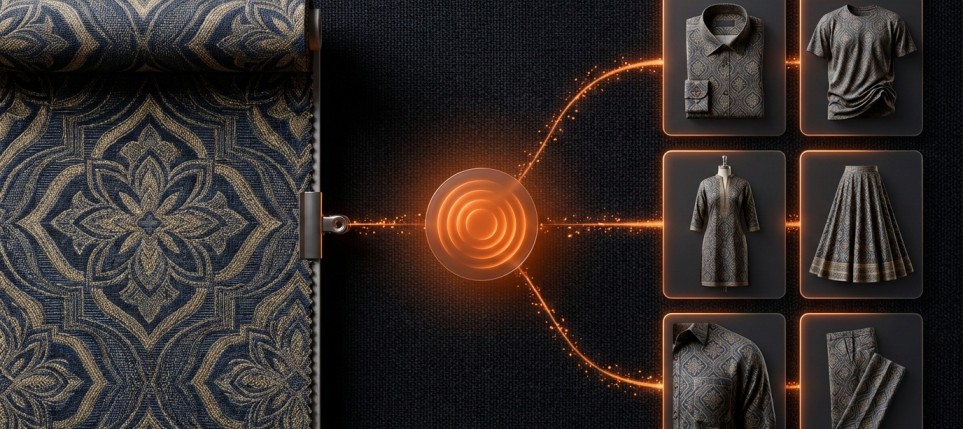
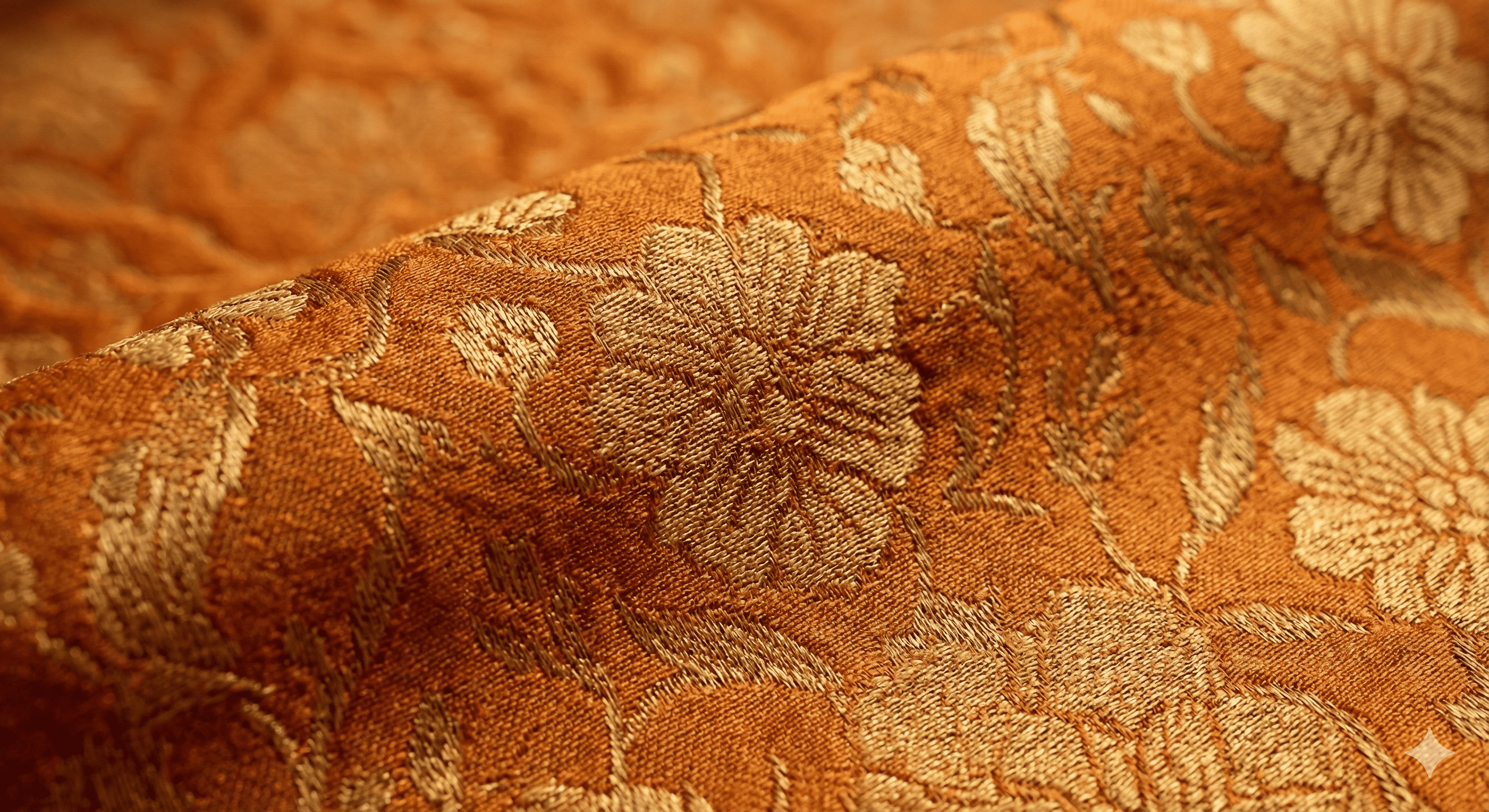
Textile AI identifies the core pattern structure from the fabric photo. It can detect whether the design includes floral motifs, geometric shapes, textured repeats, borders, scattered prints, symmetrical elements, or abstract artwork. This understanding allows AI to place the design naturally onto various garment silhouettes without distortion.
Color Flow and Tonal Interpretation
AI reads color intensity, contrast levels, and the distribution of tones across the fabric. This ensures that when the design is applied to a dress, the visual balance remains accurate. Small motifs and large motifs are scaled proportionally based on the garment type. For example, a motif that appears balanced on a kurti may need resizing when used on a long gown.
Texture and Material Behavior Simulation
Textile AI evaluates the texture of the uploaded fabric. Whether it is soft cotton, flowy chiffon, silky satin, textured jacquard, or stretchy knitted material, the AI adjusts the draping behavior accordingly. A chiffon fabric will appear lighter and flowier, while jacquard will appear more structured and dense. This helps designers visualize how the material behaves in real life.
How AI Applies Fabric to Different Garment Types
Silhouette Mapping
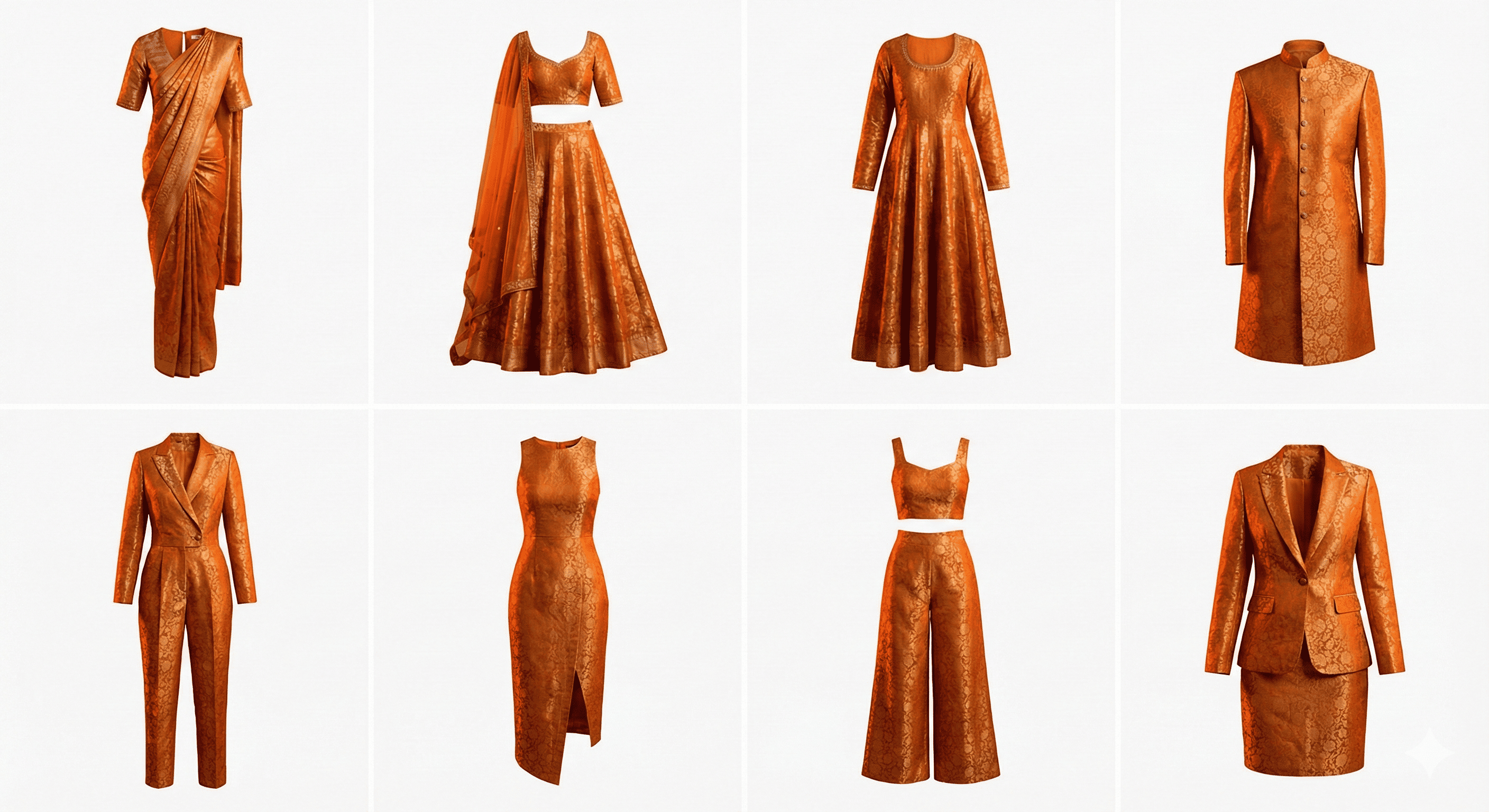
The AI system maps the fabric onto different silhouettes such as A-line gowns, umbrella cuts, straight kurtis, flare dresses, tunics, or contemporary tops. Each silhouette requires unique pattern placement techniques. Textile AI ensures that the motif orientation looks correct from every angle.
Border and Panel Integration
If the fabric has a border or panel-style design, AI places it precisely on hems, sleeves, necklines, and yokes. This is essential for textiles like block prints, bandhani borders, kalamkari edges, and digitally printed borders. Proper panel placement gives the final design a stitched and finished appearance.
Motif Distribution Control
AI adjusts motif density depending on garment type. For example:
-
A maxi dress may need evenly distributed motifs.
-
A kurti may require a structured layout.
-
A tunic may benefit from minimalistic scattered motifs.
This flexibility allows AI to create visually appealing catalog-ready garments for multiple tastes and markets.
Why AI Catalog Outputs Look Realistic
Shadow and Light Simulation
AI adds soft shadows, gentle highlights, and natural lighting angles to match real photography. This creates a realistic presentation without needing a physical lighting setup.
Body Fit and Fabric Compression Logic
AI simulates how fabric wraps around curves, falls naturally, or stretches across certain areas. This helps designers understand how the final stitched garment might look on different body structures.
Seam and Stitch Interpretation
When generating outfit previews, AI recognizes where seams, joints, and stitch lines would naturally appear. This helps the garment look authentic rather than artificially placed.
Automatic Model Generation for Catalog Consistency
AI plays a major role in maintaining visual consistency across fashion catalogs. Instead of relying on different models, photographers, and studio settings, textile AI generates digital models that follow the same posture, lighting quality, body proportions, and display style. This creates a cohesive look for the entire catalog, something that traditionally requires multiple crew members and highly controlled studio conditions.
Consistent Model Appearance Across All Catalog Pages
One of the challenges in catalog production is keeping the model presentation uniform. Variations in physical models, facial expressions, body structures, or lighting setups can make a catalog look unorganized. Textile AI solves this by generating models that maintain the same appearance across all product images. This gives the brand a clean, uniform identity and increases customer trust.
The AI ensures:
-
Consistent body shape and proportions
-
Matching lighting and shadow balance
-
Uniform styling and presentation format
-
Balanced framing and cropping for every pose
This consistency results in catalog pages that look curated, professional, and aligned with brand standards.
Customization Options for Brand Identity
Textile AI allows designers to adjust the generated model to match their target audience and brand style. Designers can choose:
-
Pose categories (simple e-commerce, premium editorial, runway-inspired, casual standing, formal catalog posture)
-
Styling tones (minimal, elegant, modern, ethnic, or hybrid styles)
-
Height range and proportions
-
Skin tone variations
-
Body structure options
These customization settings help boutique designers, wholesalers, and fabric sellers maintain a consistent brand personality across every catalog release.
E-Commerce Ready Poses for Better Product Display
Different catalog types require different pose styles. Textile AI supports multiple pose categories that are optimized for catalog and online product listing use. These include:
-
Standard front-facing poses
-
Semi-angled catalog poses
-
Full-length standing poses
-
Walking pose variations
-
Still mannequin-like poses for fabric-focused display
Each pose is generated with clean structure, symmetrical framing, and standard lighting that works well for websites, marketplaces, and social media listings.
Eliminating Traditional Photoshoot Challenges
Traditional catalog photoshoots involve coordinating models, photographers, lighting setups, makeup artists, and post-production editors. Inconsistent lighting or mismatched poses often disrupt catalog flow and make the collection look less professional.
With textile AI:
-
No photoshoot scheduling is required
-
No need for garment stitching
-
No dependence on weather or studio availability
-
No retakes, no reshoots, and no editing delays
AI generates perfectly aligned model images every time, ensuring stable catalog quality without additional human effort.
A Professional and Cohesive Catalog Look
Because all catalog images follow the same model structure and lighting style, the resulting layout looks refined and commercially strong. Every outfit is showcased with the same clarity, making it easier for buyers to evaluate designs. This cohesive look also helps brands build a strong visual identity, which is crucial for online sales and customer recognition.
AI Produces Multiple Poses and Angles Instantly
Traditional catalog photoshoots require capturing garments from various angles to highlight fit, drape, construction, and design details. This usually involves multiple model adjustments, lighting repositioning, and repeated shots. AI removes this complexity by generating all essential angles and poses instantly from a single fabric upload or garment reference. This accelerates catalog production and gives brands complete control over how each outfit is presented.
Comprehensive Angle Generation From One Fabric Input
AI fashion tools can create every angle that a professional catalog requires, making the result suitable for e-commerce and print. From a single fabric image or garment reference, AI can generate:
-
Front view
-
Back view
-
Side view (left and right)
-
Angled three-quarter pose
-
Full-length standing shot
-
Upper-body close-ups
-
Hemline and neckline detail views
-
Motion-inspired poses
-
Standard still poses for product listings
These angles provide customers with a complete understanding of the outfit’s structure without needing physical garments or model photoshoots.
Detailed Close-Up Views for Enhanced Customer Confidence
Close-up views are essential for fabrics with intricate textures, embroidery, borders, or motifs. AI automatically crops and enhances these areas, generating clean close-up images that showcase details such as stitch lines, motifs, prints, and pattern alignment. These are especially useful for online marketplaces where customers rely on zoom-level clarity.
Motion-Inspired and Dynamic Poses Without a Real Photoshoot
Creating natural movement in a catalog usually requires expensive photoshoots and choreography. AI can simulate motion-inspired poses, such as gentle walking stances or flow-enhanced dress movements. These poses help customers visualize how the outfit looks in real-life motion, improving engagement on websites and social platforms.
Consistency Across All Poses and Outfits
Unlike traditional photography, where lighting, posture, and angles may differ between shoots, AI ensures complete consistency. Every pose generated maintains matching lighting, framing, and presentation style, allowing the catalog to look unified. This is critical for brands that want clean, professionally aligned listings across multiple outfits.
Optimized for Omnichannel Display
Because AI can generate various poses instantly, the outputs are suitable for every type of display channel, including:
-
E-commerce product pages
-
Print catalogs
-
Website banners
-
Lookbooks
-
Social media posts
-
Marketplace listings
-
Mobile apps
-
Advertising creatives
Each pose is rendered with clarity and clean composition, allowing designers to repurpose the same outfit across different platforms without additional editing.
No Need for Live Models or Physical Garments
By generating all required poses digitally, textile AI eliminates dependency on:
-
Model booking
-
Photoshoot scheduling
-
Garment preparation
-
Lighting and equipment setups
-
Editing and retouching teams
Brands can launch an entire season’s catalog without producing any stitched samples.
Pattern Alignment and Drape Simulation
One of the biggest challenges in fashion catalog production is maintaining pattern alignment and accurate drape. With printed fabrics, even minor misalignment can distort the design. Textile AI solves this through automated pattern mapping.
The AI:
-
Detects motifs and border placements
-
Applies them to the correct garment sections
-
Manages alignment at sleeves, hems, panels, and yokes
-
Maintains symmetry for structured prints
-
Simulates realistic gravity and drape
This results in clear, natural, and production-ready visuals. Designers can confidently visualize how a fabric will behave once stitched, helping them make faster decisions regarding style selection and production.
Fast Background Cleanup and Lighting Correction
Traditional fashion photography depends heavily on controlled lighting and background setup. AI automatically optimizes this by removing unwanted backgrounds, smoothing shadows, adjusting brightness levels, and creating consistent lighting across all catalog items. This ensures that each image looks clean, professional, and ready for use.
AI tools also correct color tones to match real fabric color values more closely. This avoids issues where fabrics appear too bright or too dull in photos, ensuring catalog accuracy and reducing customer complaints related to color mismatch.
AI Supports Multiple Dress Styles and Fashion Categories
Modern textile AI platforms are capable of generating catalogs across multiple categories. This includes:
-
Women’s ethnic wear
-
Women’s western wear
-
Men’s shirts, kurtas, and jackets
-
Kidswear
-
Plus-size catalogs
-
Fusion wear
-
Home furnishing collections
-
Curtain and bedding prints
-
Fabric roll previews
-
Accessory mockups
Brands can produce seasonal or festival-based catalogs quickly, such as festive wear, summer collections, wedding edits, casual sets, and luxury collections. This helps businesses launch multiple collections per month without increasing workload or cost.
Ready-to-Publish Catalog Pages
AI organizes generated images into well-structured catalog pages. The system can export content as:
-
High-resolution JPGs
-
Transparent PNGs
-
Web-ready images
-
PDF catalog books
-
Social-media-ready square posts
-
Vertical reels-style mockups
-
Marketplace optimized images
This eliminates the need for designers, editors, layout artists, or graphics teams. Even a small boutique can publish a professionally designed catalog in minutes.
How Textile AI Platforms Reduce Cost and Time
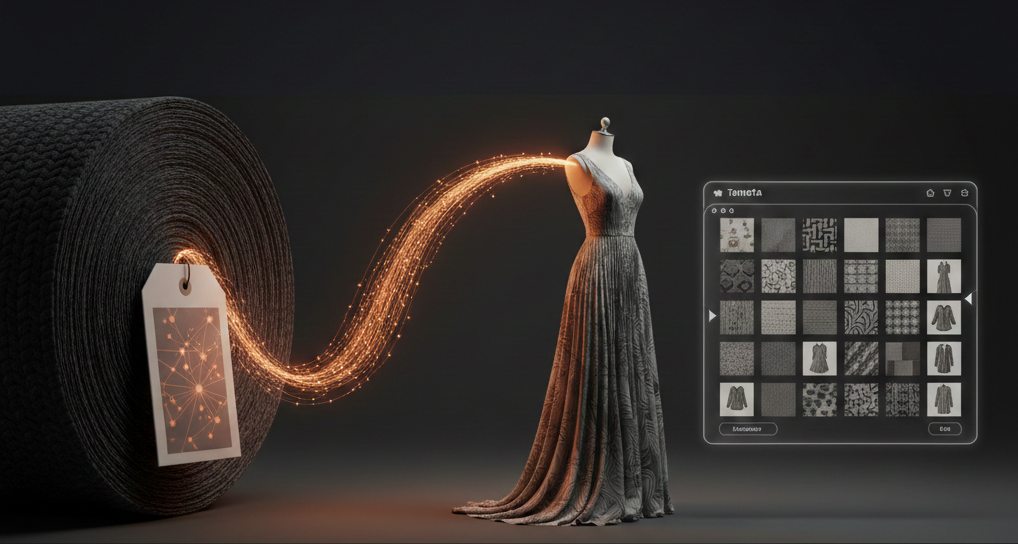
Textile AI platforms like Tameta Textile AI drastically reduce the financial and operational burden of catalog creation. Instead of paying for:
-
Fabric cutting
-
Trial stitching
-
Model hiring
-
Makeup and styling
-
Studio lighting
-
Photography teams
-
Editors and designers
-
Retouching and post-production
designers only need to upload a fabric photo. The AI system generates the full catalog instantly.
This credit-based system makes advanced catalog creation accessible to small boutiques, wholesalers, and online sellers. It allows them to operate like large-scale brands without needing large capital or in-house resources.
The speed of textile AI helps businesses launch new drops, test new designs, and update product listings instantly. This faster workflow increases sales, improves customer engagement, and strengthens brand identity.
FAQ
1. How does AI generate a full fashion catalog so quickly?
AI analyzes fabric images, applies them to multiple dress silhouettes, generates model poses, aligns patterns, and outputs catalog-ready images automatically. This removes the need for photography or manual editing.
2. Do I need models or stitched garments to create an AI catalog?
No. AI generates digital models and creates outfits directly from fabric photos, eliminating the need for photoshoots, stitching, or real garments.
3. Are AI-generated catalogs accurate for real production?
Yes. AI ensures accurate draping, correct pattern alignment, and realistic fabric flow, giving designers a clear idea of how the final stitched garment will look.
4. Can AI produce catalogs for different fashion categories?
Yes. AI supports women’s wear, men’s wear, kidswear, home textiles, fusion wear, and complete seasonal collections.
5. Is this method affordable for small boutique designers?
AI-based catalog creation is significantly cheaper than traditional photography and sample-making, making it ideal for small and medium businesses.
6. Can AI replace manual editing and background cleanup?
Yes. AI automatically enhances lighting, removes backgrounds, corrects shadows, and standardizes the entire catalog layout.
7. Are the outputs ready for online stores and social media?
AI outputs high-resolution catalog pages suitable for websites, PDFs, e-commerce listings, and social platforms without additional editing.
Conclusion
AI has reinvented the fashion catalog creation process. Instead of days of manual work, designers can now produce complete fashion catalogs in minutes. Fabric-to-garment transformation, virtual models, multiple poses, seamless pattern alignment, and ready-to-use layouts make AI the fastest and most cost-effective solution for modern fashion businesses. With tools like textile ai, even small boutiques can launch new collections instantly and present professional catalogs across websites, social platforms, and online stores.