If you sell fabric, garments, or textile collections online or you supply to buyers and manufacturers—you’ve felt the same bottleneck again and again:
You can create great products, but you can’t create great visuals fast enough.
New fabric arrives. You want to show it as finished clothing. Your buyer wants to see how it looks stitched. Your ecommerce store needs consistent product listing images. Your marketplace listings need clean catalog photos. And your WhatsApp customers keep asking: “Stitched look hai?”
Traditionally, there are only two options:
-
Do a photoshoot (time + cost + scheduling + editing)
-
Don’t do a photoshoot (and accept lower trust + lower conversion)
This is why we’re launching a new feature on Textile AI: fabric to garment package—a one-click system that generates multiple garment visuals from a single fabric photo.
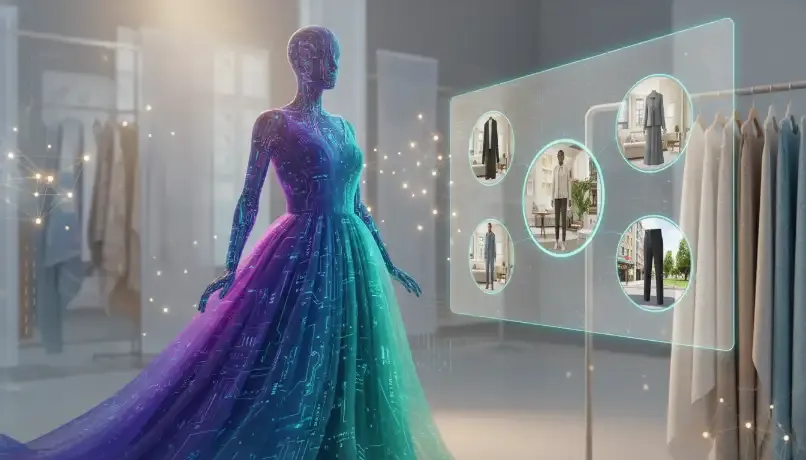
Instead of generating one preview at a time, you’ll upload one fabric image, choose a package (menswear or womenswear), and generate a full set of garment visuals instantly—built for catalogs, ecommerce, and buyer approvals.
This blog explains what the fabric to garment package is, how it works, why it matters for both B2B and ecommerce, and how it helps you produce ecommerce catalog photos and product listing images that convert faster.
Why catalog speed matters more than ever
Textiles and fashion are now visual-first industries. Buyers decide faster when the presentation is clear. The faster you can show fabric as finished garments, the faster you move:
-
inquiry → interest
-
interest → approval
-
approval → order
-
order → repeat buying
But most businesses are stuck at the same point: visuals take too long.
A catalog isn’t just a “nice-to-have.” In the modern textile ecosystem, a catalog is your sales engine:
-
For manufacturers/exporters, it shortens approval cycles
-
For boutiques, it increases WhatsApp conversions
-
For ecommerce sellers, it improves clicks and trust
-
For marketplaces, it supports listing consistency
So the question becomes:
How do you generate multiple garment visuals without multiple photoshoots?
That’s exactly what the one-click package system is built to solve.
What is a fabric to garment package?
A fabric to garment package is a pre-built bundle of garment styles that you can generate from one fabric image in a single run.
Instead of choosing one style, generating, then repeating the process again and again, you simply pick a package and get multiple outputs at once.
What makes it “package-based” (and why it’s powerful)
Packages are structured around real selling needs:
-
Menswear package: shirt, t-shirt, and other menswear styles
-
Womenswear package: kurti, lehenga, and other womenswear styles
(Exact package contents can expand over time as we add more variants and default selections.)
This is not just “AI generation.” This is workflow design—built for people who need catalogs weekly or daily.
The big upgrade: one click garment generation
The best part of the new system is the simplicity.
How it will work (soon on Textile AI)
-
Upload one fabric photo
-
Select a package
-
Click generate
-
Get multiple garment visuals together
This is true one click garment generation—and it’s designed so even a small team can create consistent catalogs without spending hours per product.
Instead of generating one image and stopping, you’re generating a mini-collection of visuals that can power:
-
buyer presentations
-
WhatsApp selling packs
-
ecommerce product pages
-
marketplace listings
-
ad creatives and social posts
Why an AI garment bundle beats single previews
A single garment preview helps. But in real sales, buyers don’t just want “one look.” They want confidence.
A bundled set of visuals gives you:
-
multiple garment interpretations from the same fabric
-
clearer understanding of how prints scale
-
stronger catalog storytelling (not random images)
-
faster decision-making for buyers and internal teams
That’s why an AI garment bundle is a real business advantage. You’re not creating one output—you’re creating a catalog unit.
How the fabric to garment package supports fabric to garment design
Your buyers and customers don’t buy “fabric image files.” They buy what the fabric can become.
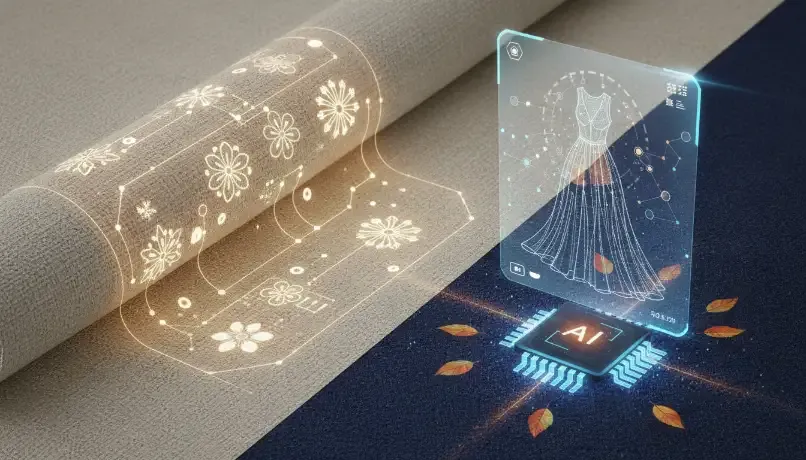
That’s the core idea behind fabric to garment design: turning fabric into a stitched-look outcome preview.
When the output looks like a real garment concept, it helps people answer:
-
Will this print look good on a shirt?
-
Does this pattern feel premium or too busy?
-
Is it better as a kurti or lehenga?
-
How does the motif sit on a full body silhouette?
With package generation, you don’t need to guess the answer—you show multiple outcomes instantly.
That’s the biggest upgrade: fabric to garment design becomes faster, more complete, and easier to sell.
AI garment visualization for B2B approvals
If you sell fabric to global buyers, approvals can take time:
-
buyer asks for more angles
-
buyer wants stitched sample
-
buyer needs internal approvals
-
buyer delays until the next meeting
That delay is expensive—not just in time, but in lost opportunities.
AI garment visualization makes approvals faster because it becomes a “shared reference” across teams. The buyer can forward visuals internally, stakeholders understand the outcome, and discussions become practical:
-
“Use this silhouette.”
-
“Change to darker colorway.”
-
“Approve for sampling.”
Even when physical samples are needed later, AI reduces unnecessary back-and-forth by improving alignment early.
Menswear catalog images from one fabric
Menswear often looks simple, but the selling challenge is subtle:
-
texture matters
-
print scale matters
-
fit and silhouette matter
-
“premium feel” matters
A menswear package that generates menswear catalog images can quickly show:
-
how the fabric reads as a shirt
-
how it looks as a t-shirt
-
how it appears in clean catalog lighting
For manufacturers selling menswear fabric programs (shirts, uniforms, basics), this helps buyers visualize the final product without waiting for stitched samples.
Womenswear catalog images from one fabric
Womenswear is where variety sells. The same fabric can feel completely different depending on silhouette:
-
kurti looks elegant
-
lehenga looks festive
-
dress looks modern
-
set looks premium
A womenswear package that generates womenswear catalog images helps boutiques, brands, and exporters show the full “potential” of a fabric—without manually building it.
This is extremely powerful for collections because it turns one fabric into multiple selling stories.
Ecommerce catalog photos that look consistent
In ecommerce, consistency is a ranking advantage. A store that looks clean and uniform feels more trustworthy.
A fabric to garment package helps create consistent ecommerce catalog photos because:
-
outputs are structured
-
styles are repeated across products
-
framing and presentation stay uniform
-
you can build a catalog look across hundreds of SKUs
Once you have consistent ecommerce visuals, you can reuse them across:
-
product pages
-
Instagram grids
-
ads
-
WhatsApp catalogs
-
marketplace listings
Product listing images that increase trust
When shoppers see a listing, they decide in seconds. The biggest reason they don’t buy is doubt.
Strong product listing images reduce doubt by showing:
-
clear full view
-
realistic stitched look
-
details and texture
-
multiple wearable interpretations
With package generation, you can quickly build a full listing image set without separate creative work for each SKU.
Where this feature fits inside Textile AI
This upcoming feature is designed as part of a larger visual selling workflow:
-
Upload fabric
-
Generate garment visuals (packages)
-
Build catalogs and listings
-
Sell via B2B, ecommerce, WhatsApp, marketplaces
When you want catalog-style image sets for ecommerce, you can also use Tameta’s catalog tool here:
https://www.thetextileai.com/catalogs
When you want more guides and strategies, use:
https://www.thetextileai.com/blog
For AI + textile industry updates (helpful for credibility and staying current), use:
https://www.thetextileai.com/news
These internal links are not just navigation—they’re part of your SEO ecosystem. Linking product + blog + news builds topical authority and improves crawl flow.
Best practices: how to upload fabric for the best results
The best results start with a clean input. You don’t need a professional camera. You do need clarity.
Upload rules that improve output quality
-
Use bright, even lighting (daylight works well)
-
Keep fabric flat (avoid heavy folds)
-
Avoid filters that change real color
-
Capture enough pattern area to show repeat/texture
-
Keep the image sharp (no blur)
Think of it like this: your fabric photo is the “raw material.” Clean raw input = premium output.
How manufacturers and exporters benefit most
Faster approvals
When a buyer can see the stitched look instantly, approvals move faster.
Better presentations
Instead of sending fabric photos only, you send garment visuals that look like a professional range.
Less rework
When print scale or pattern density is wrong, you find out earlier—before production or repeated sampling.
Stronger global outreach
When you message global buyers, garment visuals create stronger first impressions than fabric-only photos. It increases response rates because buyers understand your offering instantly.
How boutiques and ecommerce sellers benefit most
More WhatsApp conversions
WhatsApp selling is visual. Package outputs give you ready “sell packs” quickly.
Daily Instagram content
Instead of waiting for photoshoots, you generate visuals for new fabrics daily.
Faster listing workflow
Upload fabric → generate garment visuals → generate catalog images → publish.
This reduces the time between new stock arrival and online listing.
Credit and quality note
We’re designing the experience to be seller-friendly. If an image generation fails (technical failure), the intent is that you should not lose credits unfairly. The goal is simple: pay for usable results, not errors.
And if you want fully custom catalog styles, custom package setups, or marketplace-specific outputs, you can contact us on chat for pricing so we can build the perfect workflow for your brand.
Simple conversion tips to include in your launch blog
If you want this feature to drive sales (not just feature excitement), use these proven content moves:
1) Show the “before → after” story
-
Before: fabric photo only
-
After: full garment bundle in one click
2) Sell packages as outcomes, not features
Don’t say “AI package.” Say:
-
“Menswear visuals in one click”
-
“Womenswear catalog bundle instantly”
3) Explain time savings clearly
Example:
-
“One fabric photo becomes multiple garment visuals.”
-
“Catalog-ready outputs without a photoshoot.”
4) Add a clear CTA
-
“Try the fabric to garment package soon”
-
“Generate catalogs here”
-
“Contact us for custom packages”
Conclusion: the future is one fabric, many visuals
The fashion and textile industry is moving toward faster decisions and more digital selling. The businesses that win will be the ones who can show outcomes quickly.
A fabric to garment package is a practical step in that direction:
-
One click garment generation
-
A complete AI garment bundle
-
Faster fabric to garment design workflows
-
Better AI garment visualization for approvals
-
Ready menswear catalog images and womenswear catalog images
-
Strong ecommerce catalog photos and product listing images
This feature is coming soon to Textile AI—and it’s built for real sellers, real manufacturers, and real catalog workflows.
Want to prepare your catalog pipeline right now? Start with catalogs here:
https://www.thetextileai.com/catalogs