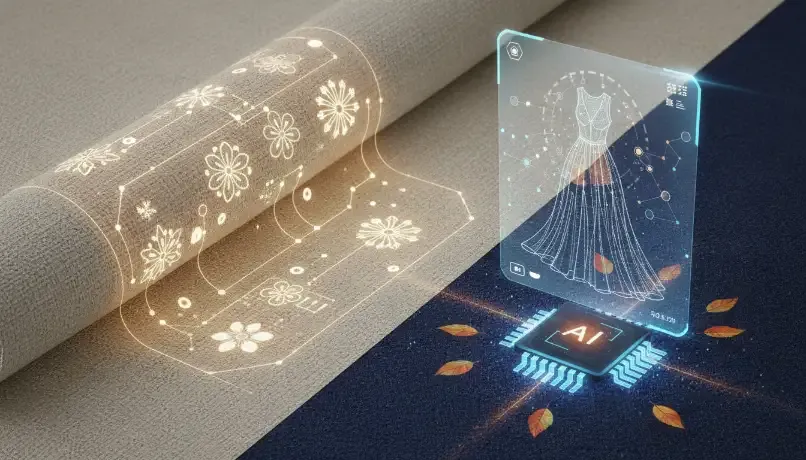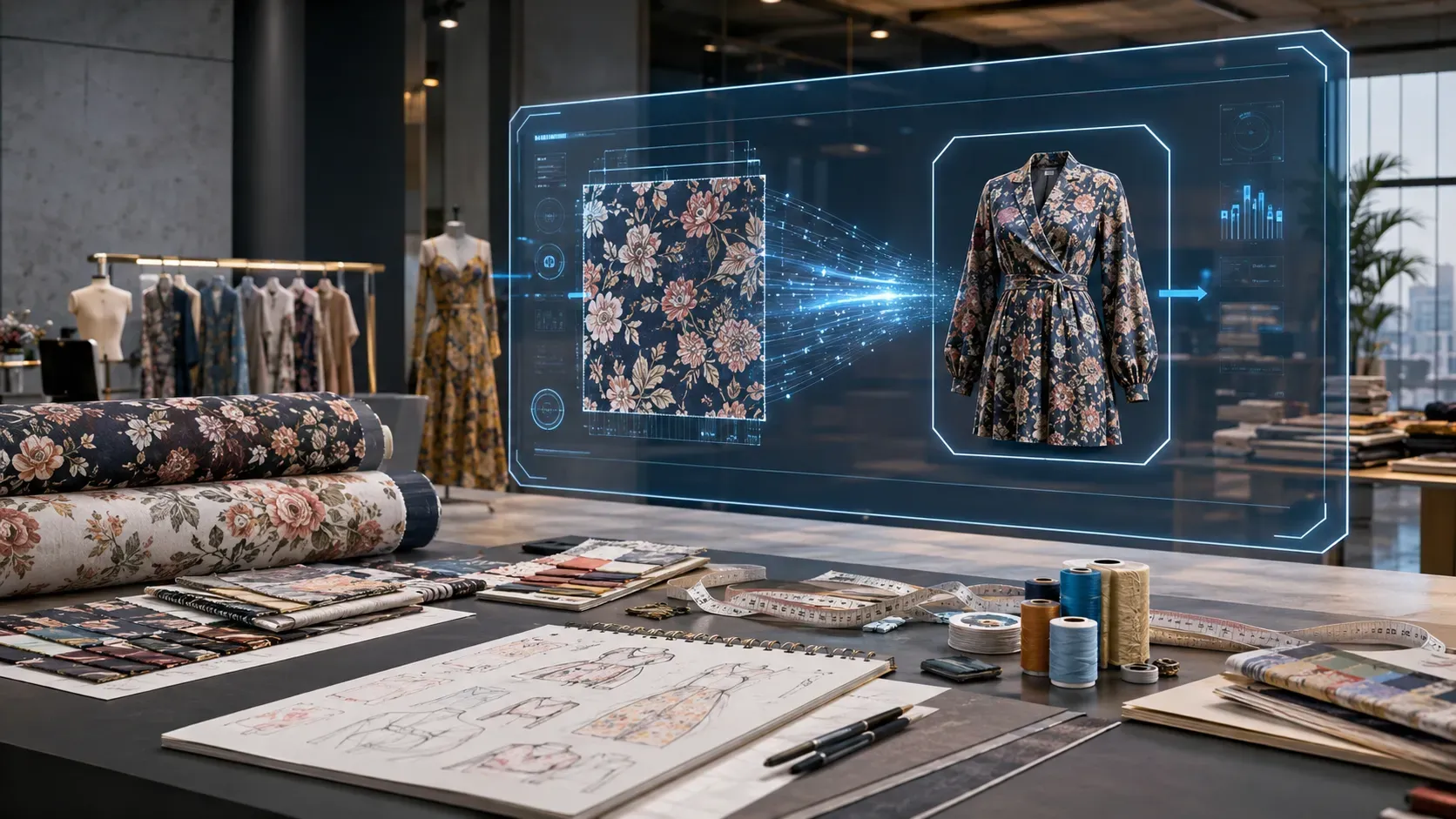
Imagine uploading a simple fabric design and seeing it instantly transformed into a realistic dress, kurti, gown, shirt, or fashion product image.
No stitching.
No physical sample.
No expensive photoshoot.
Just your fabric turned into a beautiful garment visual within minutes.
This is exactly what AI is now making possible for the textile and fashion industry.
For years, textile sellers and fashion brands had one big challenge. They could show customers a fabric swatch, but customers still had to imagine how that fabric would look after stitching.
Sometimes the fabric looked beautiful in flat form, but buyers were unsure about the final garment look.
Now, with fabric to garment AI, that problem is becoming much easier to solve.
Using The Textile AI, you can convert fabric designs into realistic garment visuals and product mockups faster than traditional methods.
Tool page: https://www.thetextileai.com/ai-tool/fabric-to-garment
What is Fabric to Garment AI?
Fabric to Garment AI is a smart technology that takes your fabric design, textile print, pattern, or swatch and applies it to a garment style.
The AI understands the fabric color, print, texture, and design placement. Then it creates a realistic garment image that shows how the fabric may look as a finished fashion product.
For example, if you have:
- Floral fabric
- Ethnic print
- Digital textile design
- Embroidery-style pattern
- Premium fabric swatch
- Repeat textile print
AI can help show it as a dress, kurti, gown, top, shirt, or other garment.
Note: Fabric to garment AI is not just for big fashion companies. Small boutiques, fabric sellers, textile manufacturers, and online sellers can also use it to create professional visuals.
Why Fabric Designs Need Garment Visualization
A flat fabric photo does not always show the real beauty of the design.
Customers often ask simple questions before buying fabric:
- How will this fabric look after stitching?
- Will this print suit a kurti or dress?
- Can this fabric work for western wear?
- Will the pattern look good on the body?
- Will the final garment look premium in photos?
- Can I use this same fabric for multiple products?
These questions are very important because customers do not only buy fabric. They buy the idea of the final product.
That is why garment visualization matters.
When customers can see the fabric as a finished garment, they understand the design better. It becomes easier for them to make a buying decision.
“A fabric swatch shows the material, but a garment visual shows the final dream.”
How AI Converts Fabric Designs into Garments
The process is simple. You do not need advanced technical skills. You only need your fabric image and the right AI tool.
Step 1: Upload Your Fabric Design
First, upload a clear image of your fabric, pattern, texture, or textile design.
This can be:
- A printed fabric photo
- A digital textile pattern
- A scanned fabric swatch
- A flat fabric image
- A repeat print design
- An embroidery or motif design
For best results, use a clean image where the design is visible. Avoid blurry photos, dark lighting, heavy shadows, or folded fabric areas.
Tip: The better your fabric image, the better your AI garment result will look.
Step 2: Choose the Garment Type
Next, select what type of garment you want to create.
This can include:
- Kurti
- Dress
- Gown
- Top
- Shirt
- Ethnic wear
- Western wear
- Fashion product mockup
- Catalog-style garment
This step helps AI understand how your fabric should be placed on the garment shape.
For example, a small floral print may look different on a kurti compared to a long gown. A bold pattern may work better on a statement dress. AI helps you test these ideas quickly.
Step 3: Generate the Garment Image
After uploading the fabric and choosing the garment style, AI creates the garment visual.
It applies the design to the clothing shape and gives you a realistic preview.
You can see:
- How the print flows
- How the color looks
- How the fabric may appear as a finished product
- How the garment design may look in real life
You can also try The Textile AI Fabric to Product workflow here:
https://www.thetextileai.com/dashboard/fabric-to-product
This is useful when you want to turn fabric into product mockups for catalogs, client previews, and online selling.
Step 4: Use the Result for Business
Once the AI-generated garment image is ready, you can use it in many ways.
You can use it for:
- Product catalogs
- Client presentations
- WhatsApp sharing
- Website product previews
- Social media posts
- Online store listings
- Buyer approval
- Design testing
- Collection planning
This helps you move faster from fabric idea to product presentation.
Remember: AI garment visuals help customers understand the final product before actual production begins.
Why Textile Businesses Should Use Fabric to Garment AI
The textile industry is becoming more visual and faster than ever. Buyers do not want to wait many days just to see how a fabric will look after stitching.
They want quick previews, better product images, and clear design options.
Fabric to garment AI helps solve this.
It gives textile businesses a faster way to show fabric designs as finished garments without creating physical samples every time.
Benefit 1: Save Time
Traditional garment sampling takes time.
You need to select fabric, cut it, stitch it, arrange photography, edit photos, and then show it to the client.
This can take days or even weeks.
With AI, you can create garment previews in minutes. This is very useful when you have many fabric designs and want to test them quickly.
Benefit 2: Reduce Sampling Cost
Physical samples are expensive.
If you want to test 20 fabric designs on different garments, you may need to spend money on stitching, labor, photography, and editing.
AI helps reduce this cost by allowing you to first preview the designs digitally.
You can shortlist the best designs and only then move them into real production.
“AI does not remove creativity. It removes the slow and expensive steps before creativity becomes visible.”
Benefit 3: Better Client Presentation
Clients understand visuals faster than flat fabric images.
When you show a realistic garment image, the client can easily imagine the final product. This makes your presentation more professional and convincing.
For textile sellers and boutiques, this can improve customer trust.
Instead of saying, “This fabric will look good after stitching,” you can actually show how it may look.
Benefit 4: Test More Designs
AI gives you freedom to test more ideas.
You can apply the same fabric to different garments. You can test one print as a dress, kurti, gown, and top.
This helps designers and brands find the best use of every fabric.
For example, one fabric may look average on a shirt but amazing on a long dress. AI helps you discover that before production.
Benefit 5: Create Catalog Images Faster
Catalog creation is one of the most important parts of fashion selling.
But creating catalog photos manually takes a lot of time.
Fabric to garment AI helps you create product-style visuals that can be used for catalogs, social media, website previews, and buyer communication.
This is especially useful for brands that launch new collections regularly.
Who Can Use Fabric to Garment AI?
Fabric to garment AI is useful for many types of textile and fashion businesses.
Textile Manufacturers
Manufacturers can show their fabrics as finished garments. This helps buyers understand the fabric’s real product potential.
Fabric Wholesalers
Wholesalers can create better product previews and make their fabric collections look more attractive to buyers.
Fashion Designers
Designers can test new concepts faster without creating every sample physically.
Boutiques
Boutiques can show customers how a fabric may look after stitching. This helps customers choose designs with more confidence.
Online Sellers
Online sellers can create product mockups and fashion visuals for websites, social media, and marketplaces.
D2C Fashion Brands
Fashion brands can speed up design testing, catalog creation, and product presentation.
Tip: If your business works with fabric, prints, garments, or fashion visuals, fabric to garment AI can save time in your daily workflow.
Fabric to Garment AI vs Traditional Sampling
Traditional sampling is still important for final production. But it is not always needed at the early idea stage.
In the traditional method, you need to create a sample first. Only after that can you see the final look.
This means you spend time and money before knowing whether the design will work.
With AI, you can preview the garment first. Then you can decide which designs are worth sampling.
This makes the process smarter.
Traditional sampling is useful for:
- Final fitting
- Fabric feel
- Stitching quality
- Production approval
AI garment visualization is useful for:
- Early design testing
- Client presentation
- Catalog planning
- Fast decision-making
- Product preview creation
Both can work together.
Note: AI does not replace the final manufacturing process. It improves the design and presentation stage before manufacturing.
Why The Textile AI is Useful for This Workflow
The Textile AI is built for textile, fashion, and fabric-based businesses.
It includes tools that help users create:
- Fabric mockups
- Garment visuals
- Fashion photoshoots
- Catalog images
- Color variants
- Virtual try-on results
- Product visuals
You can visit the main website here:
For this specific workflow, the Fabric to Garment tool helps you convert textile designs into garment-style visuals.
Tool page:
https://www.thetextileai.com/ai-tool/fabric-to-garment
You can also use the Fabric to Product tool when you want to map fabric designs into product mockups.
Tool link:
https://www.thetextileai.com/dashboard/fabric-to-product
This makes it easier for textile businesses to move from raw fabric to finished product presentation.
Real Example: From Fabric Swatch to Product Visual
Let us say you have a new printed fabric.
In the old workflow, you would need to make a garment sample first. Then you would arrange a photoshoot. Then you would edit the images. Only after that could you show the final product to customers.
In the AI workflow, the process is faster.
You upload the fabric image.
You choose the garment style.
AI creates a realistic garment preview.
You share the image with buyers or customers.
You collect feedback.
You decide which design should go into production.
This saves time and helps avoid unnecessary sampling.
“The faster you can show the final look, the faster your customer can say yes.”
Best Use Cases for Fabric to Garment AI
Fabric to garment AI can be used in many practical ways.
You can use it for:
- Creating garment previews from fabric designs
- Showing prints on dresses, kurtis, gowns, and tops
- Testing whether a fabric suits ethnic or western wear
- Creating client presentation images
- Making product mockups before sampling
- Planning new fashion collections
- Generating social media visuals
- Creating catalog-ready previews
- Testing multiple garment ideas from one fabric
- Improving online product storytelling
This makes the tool useful for both creative and business purposes.
How This Helps Online Fashion Selling
Online customers cannot touch fabric. They cannot see the final stitched garment in real life.
That is why visuals are very important.
If you only show a flat fabric image, customers may not understand the final product. But if you show the same fabric as a garment visual, they can imagine the result clearly.
This can help improve customer confidence.
Better visuals can also make your product page, Instagram post, WhatsApp catalog, or website listing look more professional.
Remember: In online fashion, strong visuals can make the difference between interest and purchase.
The Future of Fabric Design and Garment Creation
AI is becoming a major part of fashion technology.
In the future, textile businesses may not create physical samples for every idea. Instead, they may first test designs digitally, collect feedback, and then produce only the best-performing styles.
This can reduce waste, save money, and speed up the product development cycle.
Fabric to garment AI is not just a trend. It is becoming a practical tool for modern textile businesses.
As fashion becomes faster and more digital, AI tools will help brands create, test, present, and sell designs more efficiently.
Final Thoughts
Converting fabric designs into garments using AI is one of the most useful innovations for textile and fashion businesses.
It helps you show the final product before production. It saves time, reduces sampling cost, improves client presentations, and makes online selling easier.
Whether you are a textile manufacturer, boutique owner, fashion designer, wholesaler, or online seller, fabric to garment AI can help you present your designs in a better way.
Instead of showing only a flat fabric swatch, you can now show a realistic garment visual.
That is a big step forward for the textile industry.
Try The Textile AI Fabric to Garment tool here:
https://www.thetextileai.com/ai-tool/fabric-to-garment
You can also explore Fabric to Product here:
https://www.thetextileai.com/dashboard/fabric-to-product
The future of textile design is faster, smarter, and more visual with AI.