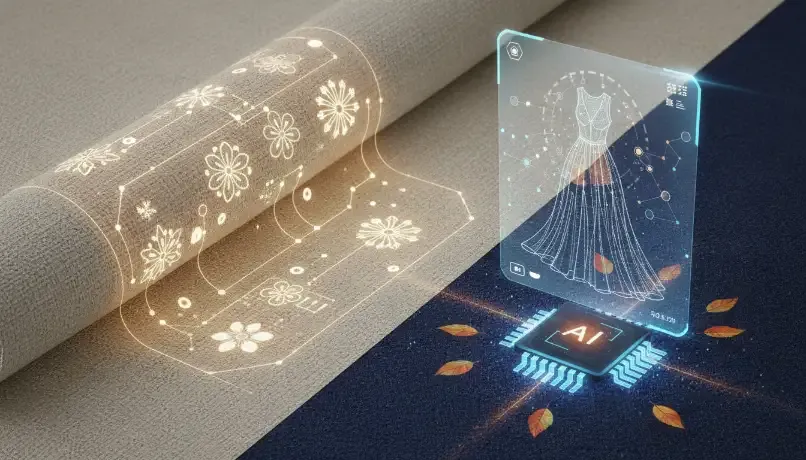
Artificial Intelligence is rapidly transforming the textile industry, changing how fabrics are designed, processed, and converted into finished garments. What was once a labor-intensive and time-consuming process is now becoming faster, smarter, and more efficient with AI-driven technologies.
In India, one of the world’s largest textile hubs, AI adoption is helping manufacturers, designers, and fashion brands improve productivity while reducing costs and material wastage. From fabric selection to garment production, AI is reshaping the complete textile value chain.
Understanding the Fabric-to-Garment Process
The journey from raw fabric to a finished garment involves multiple stages, including fabric selection, design creation, pattern making, sampling, and production. Traditionally, each of these steps required manual effort, making the process slow and prone to errors.
With AI integration, these stages are becoming automated and data-driven. AI tools analyze large datasets, identify patterns, and provide accurate recommendations, helping businesses make better decisions at every stage.
How AI Is Transforming Each Stage
1. Fabric Analysis and Selection
AI systems can evaluate fabric quality, texture, durability, and performance based on historical and real-time data. This helps manufacturers choose the most suitable materials for specific garment types, reducing the chances of defects and improving product quality.
2. AI-Based Pattern Generation
Designing fabric patterns manually can take hours or even days. AI-powered tools can generate hundreds of design variations within minutes by analyzing trends, color combinations, and customer preferences. This enables designers to experiment more and bring innovative ideas to life quickly.
3. Virtual Sampling and Prototyping
Creating physical samples is expensive and time-consuming. AI allows designers to create digital prototypes of garments, test different styles, and make adjustments before production begins. This reduces material waste and speeds up the design approval process.
4. Smart Manufacturing and Automation
AI-driven machines optimize cutting, stitching, and assembly processes in textile factories. Predictive maintenance ensures that machines operate efficiently, reducing downtime and increasing production speed.
Real-World Applications in India
India’s textile industry is actively adopting AI technologies to stay competitive in the global market.
- Manufacturers in Surat and Ahmedabad use AI tools for fabric design and printing optimization
- Fashion startups leverage AI for virtual try-ons and personalized recommendations
- Export-focused companies use AI to meet international quality and sustainability standards
These real-world applications highlight how AI is no longer optional but essential for growth.
Benefits of AI in Textile Industry
Improved Efficiency
AI reduces manual work and speeds up production processes, enabling businesses to handle larger volumes with fewer resources.
Cost Reduction
By minimizing errors and optimizing material usage, AI helps reduce operational and production costs.
Enhanced Product Quality
AI ensures consistency in design and production, resulting in better-quality garments.
Sustainability
AI helps reduce fabric waste and promotes eco-friendly production practices, supporting sustainable fashion initiatives.
Personalization
Brands can use AI to offer customized clothing options based on customer preferences, improving user experience.
Challenges of AI Adoption
Despite its advantages, AI adoption in the textile sector comes with certain challenges:
- Lack of skilled professionals to operate AI tools
- High initial investment for technology setup
- Dependence on quality data for accurate results
However, as technology becomes more accessible, these challenges are gradually being addressed.
Role of AI Platforms in Textile Innovation
Modern AI platforms are playing a crucial role in simplifying textile processes. These platforms provide tools for design automation, fabric simulation, and production optimization.
Businesses can use such platforms to:
- Generate multiple design variations instantly
- Visualize garments before production
- Improve workflow efficiency
- Reduce time-to-market
This makes AI accessible even for small and medium-sized textile businesses.
Future of AI in Textile Industry
The future of textiles lies in smart, data-driven manufacturing. AI will continue to evolve, enabling innovations such as smart fabrics, real-time customization, and fully automated production lines.
India, with its strong textile foundation, has the potential to become a global leader in AI-driven textile innovation.
Conclusion
AI is transforming the textile industry from fabric selection to finished garment production. By improving efficiency, reducing costs, and enabling innovation, AI is helping businesses stay competitive in a rapidly evolving market.
Companies that adopt AI today will be better positioned to lead the future of fashion and textile manufacturing.