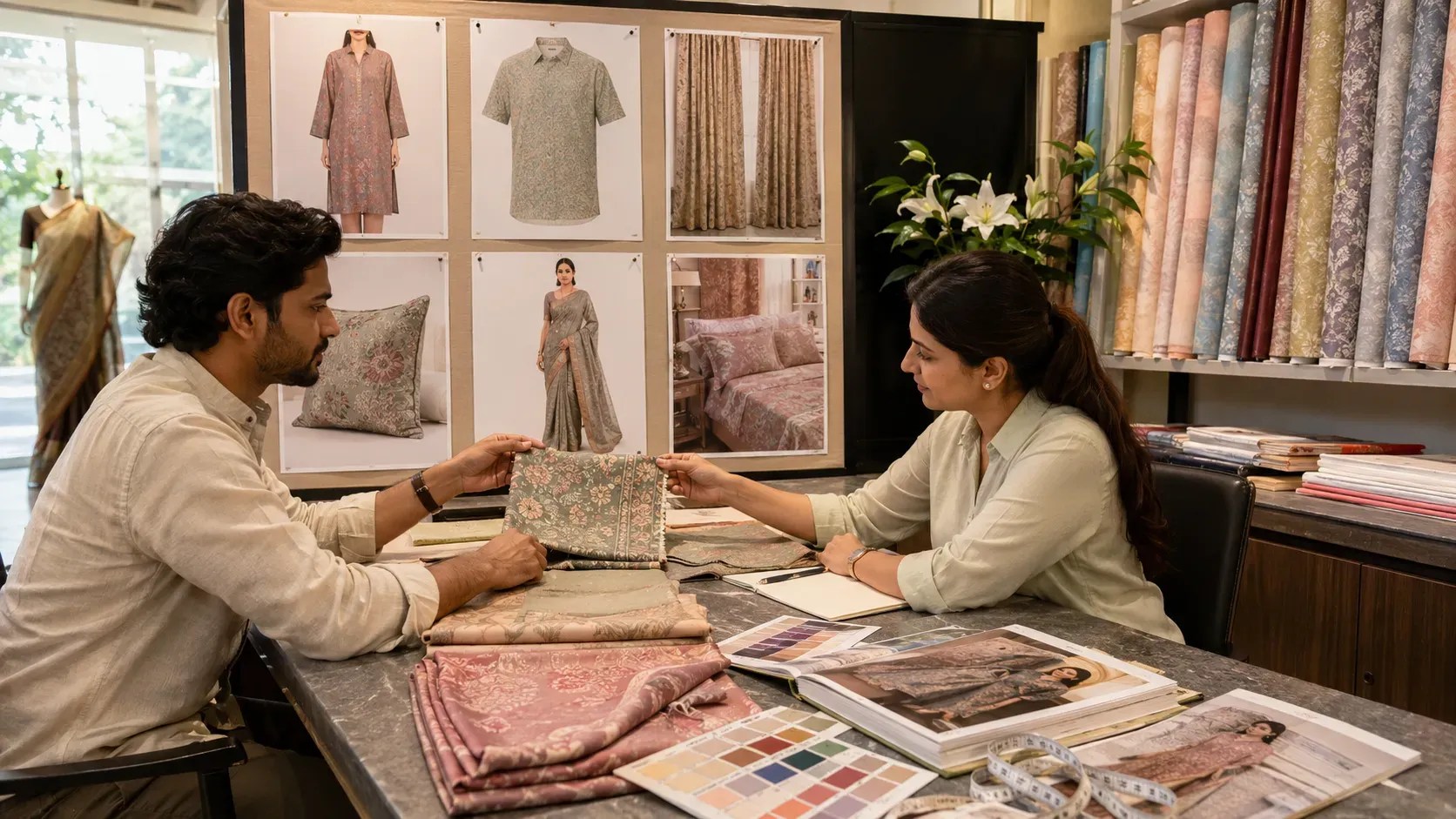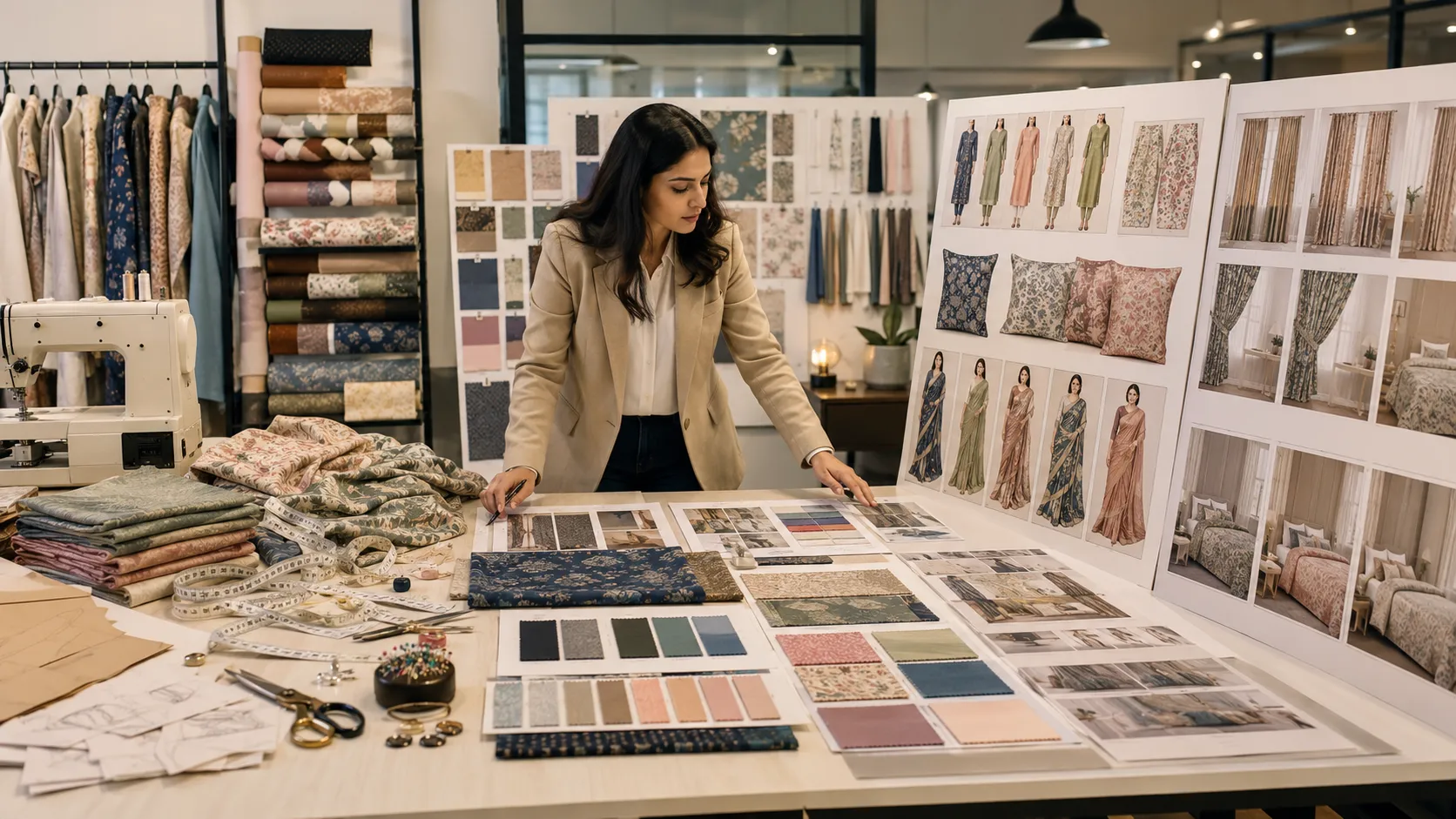
Textile businesses have always depended on samples.
Before a buyer approves a fabric, garment, saree, cushion cover, curtain, table runner, or fashion product, they usually want to see how the final product will look. This is why physical samples have been an important part of textile selling for many years.
A physical sample gives real proof.
It shows fabric feel, stitching quality, product shape, finishing, color, drape, weight, and production feasibility. For final approval, physical samples are still very important.
But the problem is that physical samples take time and cost money.
Every sample needs material, cutting, stitching, finishing, photography, review, and sometimes shipping. If the buyer rejects the design or asks for changes, the seller may need to create another sample.
For textile businesses that handle many designs, colorways, and product categories, this process becomes slow and expensive.
This is where AI product mockups are becoming useful.
AI product mockups help textile sellers and brands visualize products before creating physical samples. A fabric can be shown as a garment, home textile product, saree drape, catalog image, or lifestyle visual. This allows teams to test ideas, present options, and get buyer feedback faster.
The Textile AI helps textile businesses create product mockups, fabric-to-garment visuals, fabric-to-product previews, saree catalog images, catalog visuals, color variants, and marketing-ready product images faster.
Website:
https://www.thetextileai.com/
What Are AI Product Mockups?
AI product mockups are digital product previews created using artificial intelligence.
In textile business, this means showing a fabric, print, pattern, saree, garment, or textile design as a finished product without physically producing every sample first.
For example, a fabric swatch can be turned into a kurti mockup. A printed textile can be shown as a shirt. A furnishing fabric can become a curtain or cushion cover. A saree can be visualized as a model-worn drape. A home textile print can be shown as a table runner, sofa throw, or table cloth.
AI product mockups help buyers understand the product possibility.
They do not replace the real product, but they make the idea easier to see.
Earlier, sellers had to explain product possibilities using fabric photos, sketches, or physical samples. AI makes this process more visual and faster.
“AI product mockups help textile businesses show the product idea before creating the physical sample.”
What Are Physical Samples?
Physical samples are real product samples created before final production.
They are made from actual fabric and finished using real cutting, stitching, printing, embroidery, finishing, or product construction processes.
Physical samples are important because they show real product quality. They help check fabric feel, fall, fit, stitching, shrinkage, color accuracy, wash behavior, product size, finishing, and manufacturing feasibility.
For final approval, physical samples are still necessary.
A buyer may approve a design visually through AI mockups, but before bulk production, the actual sample needs to be checked. Textile quality cannot be fully judged from a digital image alone.
So physical samples are not going away.
But AI product mockups can reduce how many samples need to be made in the early stage.
Remember: Physical samples confirm the final product. AI mockups help decide which product is worth sampling.
Why Textile Sampling Becomes Expensive
Sampling is expensive because every sample uses real resources.
A textile business may need fabric, trims, stitching labor, embroidery work, finishing, washing, packaging, photography, and shipping. If the product is rejected, the sample cost may not return as revenue.
This becomes harder when a business has many designs.
A fabric seller may have 100 new prints. A home textile brand may want to test each print as curtains, cushion covers, and table runners. A fashion brand may want to test one fabric as a kurti, shirt, blazer, and dress. A saree seller may need draped visuals for many designs.
Creating physical samples for every possibility is not practical.
It slows down the sales process and increases cost.
AI product mockups help businesses test more ideas digitally before creating real samples.
Tip: Use AI mockups for first-round product visualization and physical samples for final approval.
The Main Difference Between AI Product Mockups and Physical Samples
The main difference is purpose.
AI product mockups are used for visual decision-making. They help teams and buyers see how a fabric or design may look as a finished product.
Physical samples are used for real product validation. They help check whether the product can actually be produced with the expected quality.
AI mockups are faster.
Physical samples are more accurate in real-world feel.
AI mockups help with early presentation, product direction, buyer communication, and content creation.
Physical samples help with fit, finishing, production approval, fabric behavior, and final quality checking.
Both are useful, but they should be used at different stages.
“AI mockups help textile teams choose better ideas. Physical samples help confirm those ideas in real life.”
Speed Comparison
Speed is one of the biggest advantages of AI product mockups.
A physical sample may take days or weeks depending on the product. The fabric must be prepared, cut, stitched, finished, checked, photographed, and sometimes shipped to the buyer.
If changes are needed, the process may repeat.
AI product mockups can be created much faster from fabric images, product references, or design inputs. A seller can generate a garment preview, home textile mockup, catalog image, or saree visual without waiting for stitching and production.
This is useful when buyers need quick options.
It is also useful when teams want to test multiple product directions quickly.
For fast-moving fashion and textile businesses, speed matters because buyers do not wait forever.
Remember: Faster visualization can lead to faster buyer feedback.
Cost Comparison
Physical samples cost more because they require actual production work.
Even one sample can include fabric cost, stitching, labor, trims, embroidery, printing, finishing, product handling, photography, and shipping. If many variations are needed, the cost increases quickly.
AI product mockups reduce early-stage cost.
Instead of producing every idea physically, businesses can first create digital previews. They can show buyers multiple product possibilities and then make physical samples only for shortlisted designs.
This helps reduce unnecessary sampling.
AI mockups do not remove all costs. They may use credits or subscriptions. But compared to repeated physical sampling, they can make early visualization more affordable.
Tip: Use AI product mockups to filter ideas before spending money on sample production.
Accuracy Comparison
Physical samples are more accurate for final product testing.
They show the real fabric feel, stitching quality, fit, size, weight, drape, shrinkage, finishing, and construction. This is why physical samples are still important before bulk production.
AI product mockups are accurate for visual direction, but they should be reviewed carefully.
A good AI mockup should preserve fabric color, pattern scale, border details, embroidery, texture, and product placement. But the seller should always check whether the output represents the real product properly.
For textile products, accuracy matters because buyers expect the final product to match the visual.
AI should improve presentation, not mislead the buyer.
Remember: AI mockups are excellent for visual planning, but physical samples are needed for final quality confirmation.
Buyer Presentation Comparison
AI product mockups can make buyer presentations much stronger.
A buyer may not fully understand a fabric from a swatch photo. But when the same fabric is shown as a garment, saree, curtain, cushion cover, or catalog product image, the idea becomes clearer.
This helps the seller present more professionally.
A textile manufacturer can show one print in multiple product applications. A home textile seller can show a fabric as cushions, curtains, and table linen. A fashion brand can show a fabric as different garments. A saree seller can show a raw saree as a model-worn drape.
Physical samples are still powerful in buyer meetings, but AI mockups help sellers start the conversation faster.
“AI mockups help buyers see possibilities before they ask for physical samples.”
Product Development Comparison
Product development is easier when teams can test more ideas.
In traditional workflows, every product idea may need sketching, sampling, stitching, and review. This limits how many ideas a team can test.
AI product mockups allow teams to explore more options.
A designer can test the same fabric on different garment styles. A seller can compare home textile product applications. A buyer can review different color variants. A brand can test product presentation before final sampling.
This makes product development more flexible.
Teams can reject weak ideas early and focus on the strongest ones.
Tip: AI mockups are useful during the idea testing stage, before the product goes into final sampling.
E-Commerce Content Comparison
Physical samples are useful for final product photography.
Once a product is approved and produced, real photography can show the actual item. This is important for final e-commerce listings, premium campaigns, and customer trust.
AI product mockups are useful for creating early product visuals and supporting content.
A seller can use AI mockups for product previews, buyer decks, launch planning, social media teasers, and catalog drafts. In some cases, AI visuals can also support product pages, especially when combined with real fabric close-ups and accurate descriptions.
For online selling, images matter.
A product without visuals cannot sell properly. AI helps create visuals earlier in the process.
Remember: AI mockups help create content before the final product photoshoot is ready.
AI Product Mockups for Fabric Sellers
Fabric sellers benefit strongly from AI product mockups.
A fabric photo alone may not show the full value of the design. Buyers may need to see how the fabric will look after stitching or product making.
AI product mockups help sellers show the fabric as a finished garment or product.
A printed fabric can be shown as a kurti, shirt, blazer, t-shirt, curtain, cushion cover, table runner, or sofa throw. This helps buyers understand possible applications faster.
Instead of saying, “This fabric is good for fashion wear,” the seller can show a visual example.
This makes communication clearer and more convincing.
Website:
https://www.thetextileai.com/ai/tools/fabric-to-garment
AI Product Mockups for Home Textile Businesses
Home textile businesses often need product context.
A fabric used for home decor may not look special as a swatch, but it can look premium as curtains, cushion covers, table cloths, table runners, napkins, sofa throws, or aprons.
AI product mockups help home textile brands create these previews faster.
This is useful for exporters, furnishing fabric suppliers, decor brands, interior textile sellers, and online home product stores.
Before producing every sample, businesses can show buyers how the fabric may look in a real product format.
Remember: Home textile buyers often need to see the fabric in product form before they understand its full value.
AI Product Mockups for Fashion Brands
Fashion brands can use AI product mockups to test garment ideas before production.
A brand may have a fabric print, but it may not know whether the design will look better as a dress, kurti, shirt, blazer, co-ord set, or t-shirt.
AI can help preview different garment directions.
This supports design decisions and reduces wasted sampling.
Fashion brands can also use AI catalog tools and virtual try-on tools to create model-worn product visuals before final photoshoots.
This helps with product planning, buyer presentations, e-commerce content, and launch preparation.
Tip: Use AI mockups to compare garment silhouettes before creating physical samples.
AI Product Mockups for Saree Sellers
Saree sellers also need product visualization.
A raw saree image can show fabric, but customers often want to see the draped look. They want to understand pallu, pleats, border, blouse, fabric fall, and overall styling.
AI saree mockups and drape visuals can help sellers show sarees as model-worn catalog images.
This is useful for Shopify saree stores, Instagram sellers, boutiques, manufacturers, wholesalers, and ethnic wear brands.
Physical saree photoshoots are still useful for premium campaigns, but AI saree visuals help create catalog previews faster.
Website:
https://www.thetextileai.com/ai/tools/saree-drape-e-commerce-studio
Physical Samples for Final Approval
Physical samples are still important because textiles are real-world products.
A digital mockup cannot show hand feel, fabric weight, stretch, shrinkage, stitching strength, color matching under real light, or product durability.
Before bulk production, physical samples help check all these things.
This is why the right workflow is not to remove samples completely.
The better workflow is to reduce unnecessary samples.
Use AI mockups first to test ideas and get buyer interest. Then create physical samples for the designs that are most likely to move forward.
“AI helps reduce sample waste, but physical samples protect final product quality.”
How AI Reduces Sampling Waste
Sampling waste happens when too many samples are made before the right product direction is clear.
A seller may create samples that buyers reject. A designer may test products that do not work. A brand may spend money on variations that never go into production.
AI mockups help reduce this waste.
By creating digital previews first, teams can identify which designs look strong and which ones are weak. They can test colors, garment styles, product categories, and catalog visuals before using fabric and labor.
This saves time and reduces unnecessary material use.
For textile businesses, this can support a more efficient and responsible product development workflow.
Remember: Every sample should have a purpose. AI helps decide that purpose earlier.
How AI Helps Buyer Approval
Buyer approval often takes time because buyers need clarity.
They may like the fabric but ask for product previews. They may request multiple product options. They may want to see different colorways. They may ask how the fabric looks on garments or home products.
AI product mockups make this process faster.
A seller can send visual options quickly. The buyer can review and respond. If the buyer likes one direction, the seller can move toward physical sampling.
This makes approval smoother.
It also makes the seller look more responsive and prepared.
Tip: Use AI mockups in the first buyer discussion to reduce back-and-forth.
How AI Helps Small Textile Businesses
Small textile businesses often have limited budgets for sampling, photography, catalog design, and product development.
AI product mockups give them a faster and more affordable way to present products professionally.
A small fabric seller can show fabric as garments. A home textile seller can create product mockups. A boutique can show customer previews. A saree seller can create draped catalog visuals.
This helps small businesses look more polished online and in buyer meetings.
It also helps them compete visually with larger businesses.
“AI product mockups make professional product presentation more accessible for small textile businesses.”
How AI Helps Large Textile Businesses
Large textile businesses need AI for scale.
A manufacturer or exporter may handle hundreds of fabrics, product lines, colorways, buyers, and seasonal collections. Creating physical samples for every idea can slow down the entire workflow.
AI product mockups help large teams test more ideas faster.
Sales teams can create buyer previews. Design teams can compare product directions. E-commerce teams can prepare early product visuals. Marketing teams can plan campaign content before final production.
For large businesses, AI mockups can become part of the regular product development and sales workflow.
Remember: At scale, reducing sampling delay can improve the full business process.
AI Mockups vs Physical Samples for Buyer Trust
Buyer trust comes from both visuals and real proof.
AI mockups help create visual trust because they show the product idea clearly. Physical samples create product trust because they confirm real quality.
A buyer may first respond to an AI mockup because it makes the product look understandable. But before final order confirmation, the buyer may still need a physical sample.
This is normal.
The strongest workflow uses AI mockups to attract interest and physical samples to confirm quality.
“AI mockups start the conversation. Physical samples close the quality check.”
Common Mistakes to Avoid with AI Product Mockups
AI product mockups work best when the input is clear.
One mistake is uploading poor fabric images. If the fabric photo is blurry, dark, folded badly, or does not show the pattern clearly, the mockup may not look accurate.
Another mistake is using AI visuals without review. The seller should check fabric color, pattern scale, border placement, embroidery, texture, and product shape.
A third mistake is presenting AI mockups as final physical proof. Buyers should understand that AI mockups are previews, not production samples.
This protects trust.
Tip: Use AI mockups honestly as visual previews and use physical samples for final quality confirmation.
Common Mistakes with Physical Samples
Physical sampling also has mistakes.
One mistake is making too many samples too early. This increases cost and wastes time.
Another mistake is sampling without clear buyer direction. If the buyer has not approved the product idea visually, the physical sample may not convert.
A third mistake is not documenting sample feedback properly. If changes are needed, teams should record what changed in fabric, fit, color, stitching, or finishing.
Physical sampling should be planned carefully.
Remember: Physical samples are expensive. Use them when the product direction is already strong.
Best Workflow: AI Product Mockups First, Physical Samples Next
The smartest workflow is to use AI product mockups and physical samples together.
Start with fabric or product references.
Use AI to create product mockups, garment previews, home textile visuals, saree drape images, catalog images, and color variants.
Show these visuals to buyers or internal teams.
Shortlist the strongest designs.
Then create physical samples only for approved or high-potential options.
This workflow saves time and reduces unnecessary sampling.
It also makes buyer communication smoother because the buyer sees the product direction before the real sample is made.
“Use AI for faster decision-making and physical samples for final product confidence.”
Why The Textile AI is Useful for Product Mockups
The Textile AI is useful because it gives textile and fashion businesses multiple AI tools for product visualization.
A fabric seller can use Fabric to Garment to show fabric as clothing. A home textile seller can use fabric-to-product workflows to create product previews. A saree seller can use Saree Drape E-commerce Studio for model-worn saree images. A clothing brand can use Catalog Generator and Virtual Try-On to create product visuals. A marketing team can use Banner Generator, Video Studio, Color Variant, and Image Upscale to prepare content.
This makes The Textile AI useful across design, sampling, catalog, sales, and marketing workflows.
Instead of waiting for every physical sample, businesses can first create visual product possibilities.
Website:
https://www.thetextileai.com/
The Future of Sampling in Textile Business
The future of textile sampling will be more digital in the early stage and more focused in the final stage.
Businesses will use AI mockups to explore more ideas, compare product options, create buyer visuals, and reduce unnecessary samples. Physical samples will still be used for final approval, quality checking, and production confirmation.
This hybrid workflow can make textile businesses faster and more efficient.
Buyers will see ideas sooner.
Sellers will reduce wasted sampling.
Designers will test more product directions.
Manufacturers will prepare better presentations.
AI will not remove physical samples, but it will change when and how they are used.
Final Thoughts
AI product mockups and physical samples both matter for textile businesses.
AI product mockups help teams visualize products faster. They are useful for early-stage ideas, buyer presentations, product mockups, catalog visuals, color options, and e-commerce planning.
Physical samples help confirm real quality. They are needed for fabric feel, stitching, fit, durability, finishing, and final production approval.
The best workflow is not AI mockups versus physical samples.
The best workflow is AI mockups before physical samples.
This helps textile businesses save time, reduce unnecessary sampling cost, improve buyer communication, and make better product decisions.
Explore The Textile AI here: