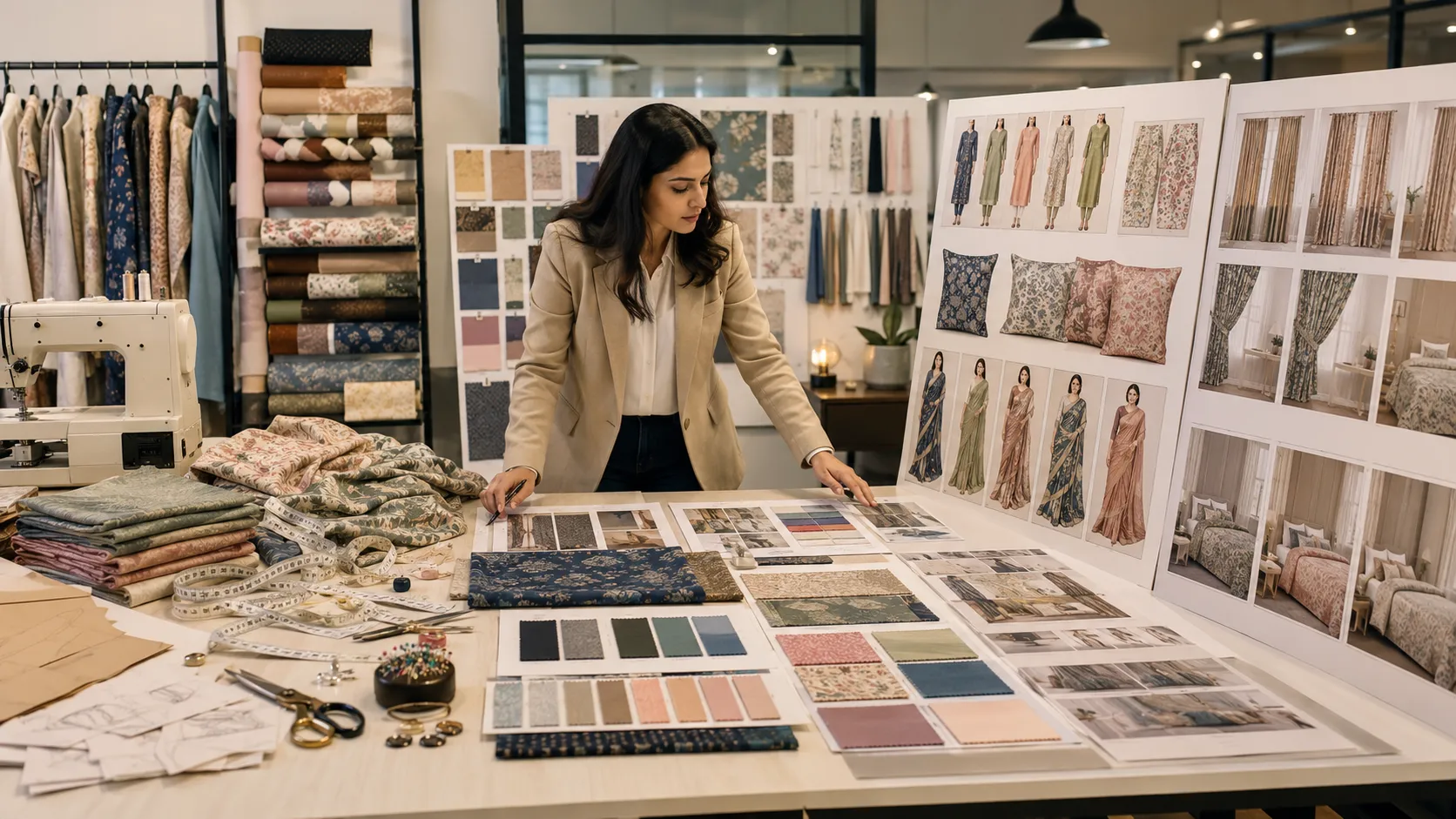
Sampling is one of the most expensive and time-consuming parts of the textile business.
Before a fabric design becomes a final product, businesses often need to create physical samples, test colors, stitch garments, arrange model photoshoots, make catalog images, and show options to buyers.
This process takes time. It also costs money.
For textile manufacturers, fashion designers, boutiques, fabric wholesalers, exporters, and online sellers, sampling can become a big challenge when there are many designs, colors, fabrics, and product ideas to test.
This is where AI is changing the textile industry.
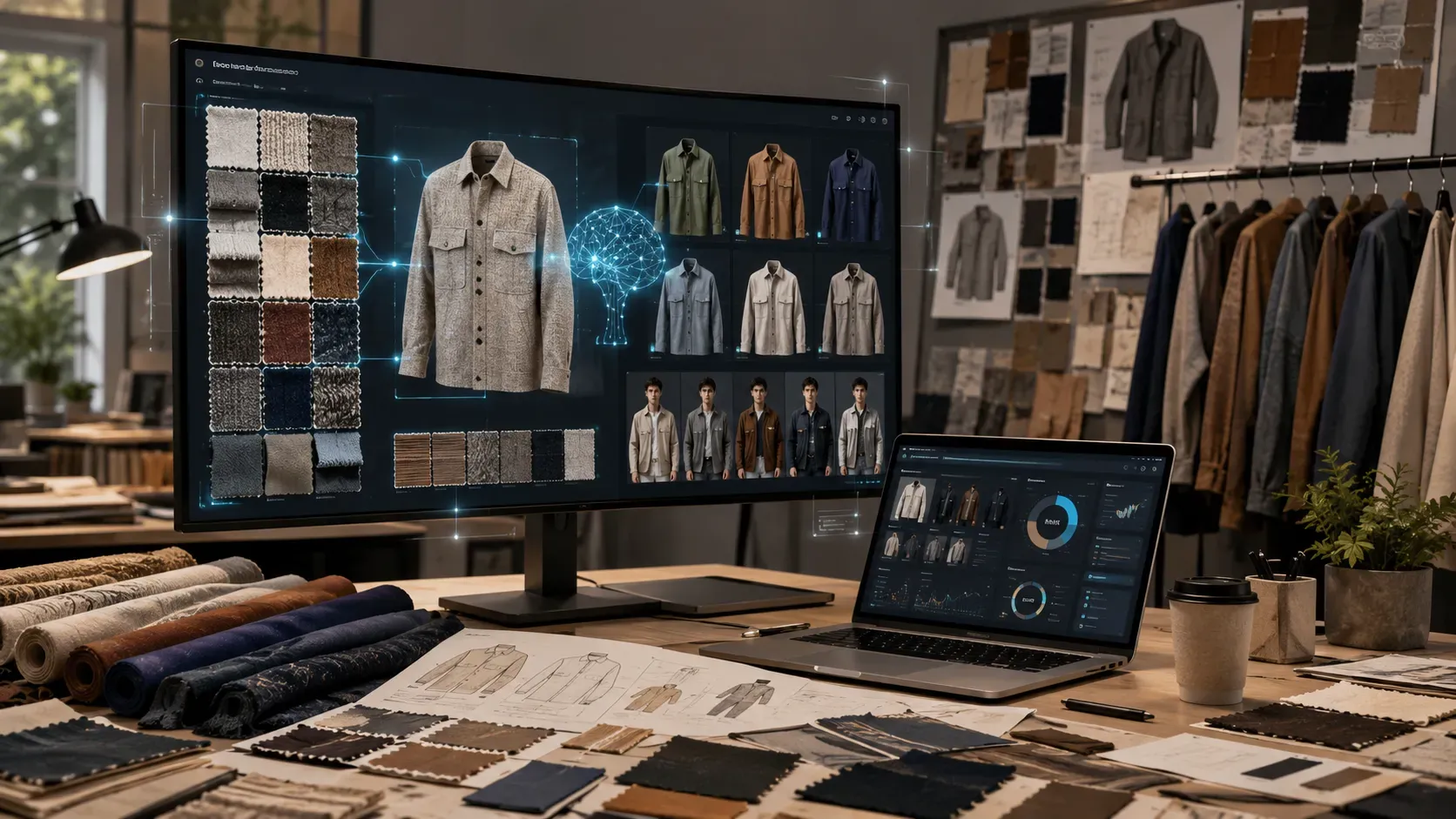
With AI tools, textile businesses can now preview designs digitally before creating physical samples. They can test fabrics, generate garment mockups, create color variants, visualize product ideas, and make catalog images much faster.
The Textile AI helps textile and fashion businesses create digital design previews, fabric-to-garment visuals, AI fashion photoshoots, product mockups, color variants, and catalog images.
Website:
https://www.thetextileai.com/
Why Sampling Costs Are a Big Problem in Textile Businesses
In the textile industry, sampling is important.
It helps businesses test whether a design will look good, whether a fabric suits a garment, whether a color combination works, and whether a buyer will approve the product.
But traditional sampling can be expensive.
A business may need to spend money on:
- Fabric cutting
- Stitching
- Printing
- Embroidery testing
- Dyeing
- Pattern correction
- Garment construction
- Model photoshoots
- Photo editing
- Catalog preparation
- Courier and shipping
- Buyer revisions
If the buyer rejects the sample, the cost is wasted.
If the design needs changes, the process starts again.
“In textile business, every rejected sample is not only a design issue. It is also a cost issue.”
The Traditional Sampling Workflow
A traditional textile sampling workflow usually looks like this:
- Create a design
- Print or weave the fabric
- Prepare a physical sample
- Stitch the garment
- Check the final look
- Arrange photoshoot or catalog image
- Share with buyer or customer
- Collect feedback
- Make changes
- Create another sample
This can take days or weeks.
If there are many colors or design variations, the cost becomes even higher.
For example, if a brand wants to test one fabric design in 10 colors and 5 garment styles, physical sampling becomes very costly.
That is why textile businesses need a smarter workflow.
How AI Helps Reduce Sampling Costs
AI helps reduce sampling costs by allowing businesses to test and present ideas digitally before spending money on physical production.
Instead of creating every sample physically, businesses can first create digital previews.
This helps them shortlist only the best designs for real sampling.
AI does not remove the need for final physical samples completely. But it helps reduce unnecessary early-stage samples.
Remember: AI is most useful before production, when you want to test ideas, colors, garments, and presentation quickly.
AI Helps Test Fabric Designs Digitally
Fabric design testing is one of the first areas where AI can save money.
Traditionally, a designer may need to create multiple print samples to see how a design looks on fabric.
With AI textile tools, businesses can preview fabric designs digitally.
They can test:
- Print scale
- Pattern placement
- Color combinations
- Texture appearance
- Repeat patterns
- Motif directions
- Design variations
This reduces the need to print every idea physically.
For example, a designer can test 20 pattern options digitally and only print the best 3.
Tip: Use AI to explore many design directions first. Then spend money only on the designs that look strongest.
AI Creates Seamless Patterns Faster
Seamless patterns are very important in textile design.
Creating repeat patterns manually can take time, especially when a design needs to be clean, balanced, and production-ready.
AI can help create seamless patterns from a reference image, motif, or design idea.
This helps designers make repeat-ready textile patterns faster.
For textile businesses, this reduces trial-and-error work.
Instead of spending hours manually adjusting repeats, designers can use AI to generate options quickly and then refine the best ones.
This saves time and reduces design development cost.
AI Converts Sketches into Production Ideas
Many textile ideas start as simple sketches.
A designer may draw a motif, embroidery concept, or pattern idea on paper. Traditionally, converting that sketch into a usable design can take manual work.
AI can help convert sketches into cleaner design directions.
For embroidery businesses, this is especially useful.
Sketch-to-embroidery workflows can help turn hand-drawn motifs into more polished embroidery concepts.
This reduces manual correction time and helps businesses move faster from idea to production planning.
“AI helps convert rough ideas into presentable design concepts before expensive sampling begins.”
AI Helps Visualize Fabric on Garments
One of the biggest questions in textile sampling is simple:
How will this fabric look as a finished garment?
A flat fabric swatch does not always answer this.
A fabric may look good in flat form, but it may not look good on a dress, kurti, shirt, gown, saree, or product mockup.
Traditionally, businesses stitch a physical garment sample just to check the final look.
AI can reduce this need.
With fabric-to-garment AI, users can upload a fabric image and visualize it as a garment.
Fabric to Garment tool:
https://www.thetextileai.com/ai-tool/fabric-to-garment
This helps textile businesses test fabric suitability before stitching.
For example, one fabric can be tested as:
- Kurti
- Dress
- Gown
- Top
- Shirt
- Ethnic wear
- Western wear
- Product mockup
This saves time and reduces unnecessary sample stitching.
AI Turns Fabric into Product Mockups
Textile businesses do not always need to create a full physical product to show an idea.
Sometimes, a digital product mockup is enough for early approval.
AI can help convert fabric swatches into realistic product visuals.
The Textile AI Fabric to Product tool helps users map fabric designs into product-style mockups.
Fabric to Product tool:
https://www.thetextileai.com/dashboard/fabric-to-product
This is useful for:
- Buyer presentations
- Product previews
- Catalog planning
- Design approval
- Client communication
- Collection development
Instead of making every product physically, businesses can first show a digital version.
If the buyer likes the idea, then the business can move to real production.
Remember: Digital mockups help businesses test product ideas before spending on physical samples.
AI Generates Color Variants Without Reprinting
Color sampling is one of the most common cost areas in textiles.
A buyer may ask:
- Can I see this design in blue?
- Can I see it in pastel shades?
- Can I see festive colors?
- Can I see it in dark tones?
- Can I see 10 more color options?
Traditionally, creating color variants may require manual editing, reprinting, or sample preparation.
AI can generate color variants quickly from one design.
This helps businesses show multiple colorways without creating physical samples for each option.
For example, a textile seller can present 20 color options where earlier they could only show 3.
This improves buyer choice while reducing cost.
Tip: Use AI color variants for early buyer selection. Create physical swatches only for approved colorways.
AI Reduces Photoshoot-Based Sampling Cost
Many textile and fashion businesses create samples mainly because they need product photos.
They stitch garments, arrange a model, book a studio, take photos, edit images, and create catalogs.
This is expensive.
AI fashion photoshoot tools help reduce the need for repeated studio shoots.
Businesses can create model-based visuals, catalog-style images, and campaign previews using AI.
This is especially useful for:
- Fashion brands
- Boutiques
- Online sellers
- D2C brands
- Textile catalogs
- Social media campaigns
Instead of shooting every product physically, businesses can create AI visuals for early promotion, buyer previews, and catalog planning.
“AI photoshoots help brands create visual samples without creating full photoshoot expenses every time.”
AI Helps Create Catalog Images Faster
Catalog creation is another expensive stage.
A professional catalog needs clean product images, consistent styling, background, lighting, layout, and editing.
Manual catalog preparation can take a lot of time.
AI catalog generation can help create product visuals faster.
This is useful when businesses have many products or frequent collection launches.
AI-generated catalog visuals can help with:
- Online product pages
- Buyer PDFs
- Wholesale catalogs
- Shopify stores
- Instagram content
- Marketplace listings
- Collection previews
This reduces dependency on manual editing and repeated photography.
AI Helps Buyers Approve Designs Faster
Sampling cost is not only about production.
It is also about delay.
When buyers take too long to approve designs, the business loses time.
AI helps make presentations clearer.
Instead of showing only a flat fabric swatch, a business can show:
- Fabric design preview
- Garment mockup
- Product visualization
- Model-worn image
- Color variants
- Catalog-style presentation
This helps buyers understand the final product faster.
When buyers can visualize the product clearly, approvals can become faster.
Remember: Faster approval means fewer revisions, fewer samples, and lower cost.
AI Reduces Waste from Unused Samples
Traditional sampling can create waste.
Many physical samples are made only for approval. If they are rejected, they may never be used.
This can waste:
- Fabric
- Dye
- Thread
- Packaging
- Shipping
- Labor
AI helps reduce early-stage waste by allowing digital testing first.
Businesses can test more ideas without producing every option physically.
This supports a smarter and more sustainable textile workflow.
Tip: Digital sampling is not only cost-friendly. It can also reduce material waste.
Where AI Fits in the Textile Sampling Workflow
AI works best when used at the early and middle stages of product development.
A smart workflow can look like this:
- Create or upload design
- Generate digital textile preview
- Create seamless patterns
- Test color variants
- Apply design to fabric texture
- Convert fabric into garment visual
- Create product mockup
- Share with buyer
- Collect feedback
- Shortlist best options
- Create physical sample only for approved ideas
This workflow reduces unnecessary production.
It helps businesses spend money only where it matters.
AI Sampling vs Physical Sampling
AI sampling and physical sampling are not enemies.
They work together.
AI Sampling is Useful For
- Early design testing
- Color exploration
- Fabric visualization
- Garment preview
- Buyer presentation
- Catalog concept creation
- Digital mockups
- Fast revisions
Physical Sampling is Useful For
- Final fabric feel
- Actual stitching quality
- Production approval
- Fit testing
- Material behavior
- Final buyer confirmation
- Bulk production planning
The best approach is to use AI first and physical sampling later.
“Use AI to decide what is worth sampling. Use physical samples to confirm what is worth producing.”
Who Can Benefit from AI Sampling Tools?
AI sampling tools are useful for many textile and fashion businesses.
Textile Manufacturers
Manufacturers can test fabrics, patterns, and product mockups before creating physical samples.
Fabric Wholesalers
Wholesalers can show buyers more design options without printing every sample.
Fashion Designers
Designers can visualize collections faster and reduce unnecessary stitching.
Boutiques
Boutiques can show customers garment previews before making custom outfits.
Exporters
Exporters can send digital product previews to international buyers before shipping physical samples.
D2C Fashion Brands
Brands can test product ideas, catalog visuals, and campaign images before production.
Online Sellers
Online sellers can create product mockups and catalog images without arranging expensive shoots.
Textile Startups
New businesses can reduce initial product development costs by testing ideas digitally.
How AI Helps Small Textile Businesses
Small textile businesses often have limited budgets.
They may not be able to afford large sampling costs, professional shoots, or repeated design revisions.
AI gives them access to professional design and visualization tools at a lower cost.
A small boutique can show a customer how a fabric may look as a kurti.
A small fabric seller can create product mockups for Instagram.
A startup fashion brand can test designs before manufacturing.
This makes AI very useful for businesses that want to look professional without spending too much upfront.
Remember: AI helps small businesses compete visually with bigger brands.
How AI Helps Large Textile Companies
Large textile companies handle many designs, buyers, and product lines.
For them, sampling cost becomes huge because of scale.
AI helps large businesses reduce repetitive work.
They can test thousands of design directions digitally, create faster buyer presentations, and reduce unnecessary physical samples.
This helps improve speed and efficiency.
AI can also support internal teams by making design reviews and product planning faster.
How The Textile AI Supports Cost Reduction
The Textile AI is built for textile and fashion workflows.
It includes tools that help businesses reduce manual effort and create better visuals faster.
Useful tools include:
- Sketch to Embroidery
- Seamless Pattern AI
- Design to Fabric
- Fabric to Garment
- Virtual Try-On
- Advanced Fabric
- Fashion Photoshoot
- Catalog Generation
- Banner Generator
- Video Studio
- Color Variant
- Image Upscale
- Fabric to Product
These tools help businesses move from idea to visual output faster.
Instead of depending only on physical samples, teams can create digital previews, mockups, photoshoot images, catalog visuals, and marketing assets.
Website:
https://www.thetextileai.com/
Real Example: Reducing Sampling Cost with AI
Imagine a fabric manufacturer has 50 new fabric designs.
Traditionally, they may print samples, stitch garments, arrange photography, and send physical options to buyers.
This can become expensive.
With AI, the workflow can be different.
First, the manufacturer uploads the designs.
Then they create digital fabric previews.
Next, they generate color variants.
Then they convert selected fabrics into garment visuals.
After that, they create catalog-style images.
Finally, they share the best options with buyers.
Only the approved designs move to physical sampling.
This saves time, money, and material.
“AI helps textile businesses test more ideas digitally and produce fewer unnecessary samples physically.”
Best Use Cases for AI in Sampling Cost Reduction
AI can help reduce sampling cost in many practical ways.
Best use cases include:
- Testing fabric designs before printing
- Creating seamless patterns faster
- Generating color variants digitally
- Converting fabric into garment visuals
- Creating product mockups from swatches
- Generating AI model photoshoots
- Preparing catalog images faster
- Showing buyers realistic previews
- Reducing physical sample revisions
- Creating marketing visuals before production
- Testing collection ideas quickly
- Shortlisting designs before stitching
This makes AI useful for both design teams and business teams.
Mistakes to Avoid When Using AI for Sampling
AI can save cost, but it should be used properly.
Avoid these mistakes:
- Using unclear fabric images
- Skipping close-up texture references
- Expecting AI to replace final physical approval
- Not checking color accuracy
- Using poor prompts or unclear instructions
- Publishing outputs without review
- Ignoring final production feasibility
AI is powerful, but the business still needs human judgment.
Designers, merchandisers, and production teams should review the AI outputs before final decisions.
Tip: AI speeds up the process, but your team should still control quality and brand direction.
The Future of Textile Sampling
Textile sampling is becoming more digital.
In the future, businesses may not create physical samples for every idea.
They will first test concepts using AI.
Only the best designs will move to real sampling and production.
This will help the industry reduce cost, save time, reduce waste, and launch collections faster.
AI will become a normal part of textile design and product development.
Businesses that adopt AI early can move faster than competitors.
Final Thoughts
AI helps textile businesses reduce sampling costs by making the early design and visualization process faster, cheaper, and smarter.
Instead of creating physical samples for every idea, businesses can first use AI to test fabric designs, garment visuals, color variants, product mockups, catalog images, and buyer presentations.
This reduces unnecessary sampling, saves time, improves decision-making, and helps brands launch faster.
AI does not fully replace physical sampling. Final samples are still important for fabric feel, fit, stitching quality, and production approval.
But AI reduces the number of samples needed before reaching that final stage.
For textile manufacturers, designers, boutiques, wholesalers, exporters, and fashion brands, AI can become a powerful cost-saving tool.
Explore The Textile AI here: