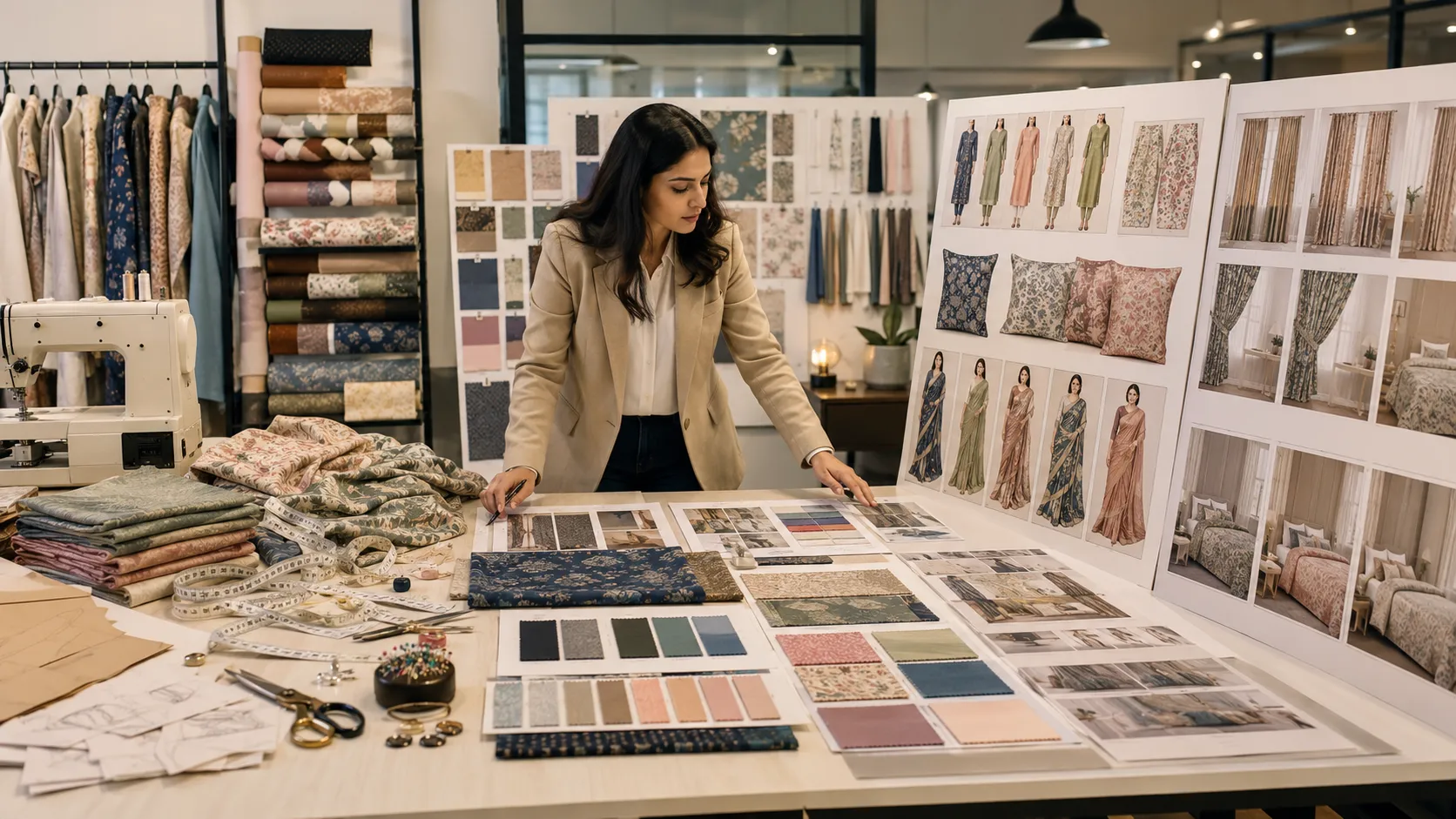
Textile design is no longer only about creating beautiful prints and patterns. Today, textile businesses also need strong visuals that help buyers understand the final product.
A fabric design may look good as a flat swatch, but it becomes more powerful when it is shown as a garment, catalog image, product photo, home textile mockup, or lifestyle hero visual.
This is why Textile Design AI is becoming useful for modern textile and fashion businesses.
With AI, brands can move faster from fabric idea to product presentation. Instead of waiting for physical samples, long photoshoot planning, manual catalog editing, and repeated design revisions, businesses can use AI to create professional visuals quickly.
These visuals can help in buyer presentations, online product pages, Shopify stores, social media campaigns, advertisements, and collection launches.
For textile manufacturers, fabric sellers, fashion brands, boutiques, home textile businesses, catalog teams, and e-commerce sellers, AI is becoming a practical tool for daily work.
The Textile AI helps users create fabric-to-garment visuals, product mockups, AI fashion photoshoots, catalog images, lifestyle banners, virtual try-on results, color variants, videos, and upscaled product visuals.
Website:
https://www.thetextileai.com/
What is Textile Design AI?
Textile Design AI means using artificial intelligence to create, visualize, and present textile designs faster. It helps turn fabric swatches, prints, patterns, garment ideas, and product concepts into useful visual content.
In a traditional workflow, a textile business may need to create a design, print a sample, stitch a product, arrange photography, edit images, prepare a catalog, and then present the product to customers or buyers.
This process takes time, and every revision adds more cost.
AI changes this workflow by helping businesses create digital previews before physical production. A fabric can be shown as a dress, kurti, shirt, blazer, curtain, cushion cover, table runner, or product mockup. A garment can be shown on a model using virtual try-on. A product image can be turned into a catalog visual, banner, or campaign asset.
Textile Design AI does not replace creativity. The design idea, fabric taste, collection direction, and final decision still come from people. AI simply helps that creativity become visible faster.
“Textile Design AI does not remove creativity. It helps textile creativity reach buyers faster.”
Why Textile Businesses Need Better Visuals
Textile selling depends heavily on imagination. A buyer may like a fabric swatch, but they still need to imagine how it will look as a finished product. This gap between fabric and final use can slow down decisions.
A fashion buyer may want to see the same fabric as a kurti, shirt, blazer, or dress. A home textile buyer may want to see it as curtains, cushion covers, sofa throws, table cloths, or table runners. An online customer may want to see the fabric in real product context before trusting the purchase.
Flat fabric images are useful, but they are not always enough.
When a fabric is shown as a finished product visual, the buyer understands the design faster. The pattern scale becomes clearer. The color impact becomes easier to judge. The product use becomes more practical.
This makes the presentation stronger and more professional.
Remember: In textile business, better visuals help buyers understand the final product faster.
The Problem with Traditional Textile Content Creation
Traditional textile content creation is slow because it depends on many manual steps. A business may need physical samples, stitched garments, product arrangements, models, photographers, studio setups, editors, designers, and catalog formatting.
This process becomes harder when a brand has many designs and product categories.
For example, a fabric seller may have 100 new patterns. A home textile brand may need to show one fabric as curtains, cushions, table runners, and sofa throws. A fashion brand may need the same print shown as a dress, shirt, kurti, and blazer.
Creating all of these visuals manually takes time and money. If a buyer rejects the sample or asks for changes, the process starts again.
AI helps reduce this delay. It allows businesses to create digital previews first, test ideas faster, and prepare buyer-ready visuals before investing in full production.
Tip: Use AI before production to understand which fabric design has the strongest product potential.
How Textile Design AI Helps Create Catalog Images
Catalog images are very important for textile and fashion businesses. A catalog helps buyers compare designs, understand product options, and make purchase decisions. But creating a professional catalog manually can take many days or even weeks.
Textile Design AI helps create catalog visuals faster by converting fabric images, garment photos, and design references into product-ready visuals.
A fabric swatch can become a garment preview. A raw saree image can become a model-worn catalog image. A home textile fabric can be shown as curtains or cushion covers. A product photo can be cleaned, enhanced, and prepared for online use.
This is helpful for businesses that launch collections regularly. Instead of waiting for every physical product and photoshoot, brands can prepare early catalog visuals and use them for buyer approvals, internal planning, and online product presentation.
A textile manufacturer can create a digital catalog before producing every sample. A fabric wholesaler can show buyers different product uses from the same fabric. A Shopify seller can prepare product images faster for new listings.
“AI catalog generation helps textile businesses turn fabric collections into buyer-ready visuals faster.”
How AI Helps Create Product Photos
Product photos are the foundation of e-commerce selling. Customers cannot touch fabric online, so they judge the product through images.
If the image looks unclear or weak, the product may not feel valuable. If the image looks clean, realistic, and premium, the product becomes easier to trust.
AI can help create product photos in different ways. It can convert fabric swatches into product mockups, show garments on AI models, create virtual try-on outputs, generate product backgrounds, create color variants, and upscale low-quality images.
This gives brands more flexibility. They do not need to wait for a full photoshoot every time they need a product visual.
They can create early product images, test visual styles, and prepare content for websites, catalogs, social media, and ads.
For fashion brands, this means faster product launches. For textile sellers, it means better fabric presentation. For home textile businesses, it means more realistic product previews.
Remember: Better product photos help customers understand the product and reduce hesitation.
What Are Lifestyle Hero Visuals?
Lifestyle hero visuals are large, attractive images used for website banners, collection launches, ad campaigns, social media promotions, and brand storytelling.
They are not just normal product photos. They show the product in a more complete and aspirational way.
For example, a home textile brand may show curtains, cushions, sofa throws, and table linen inside a premium living room setup. A fashion brand may show model-worn garments in a campaign-style scene. A fabric brand may show a full collection as ready-to-use product visuals.
These hero visuals help a brand look professional and active. They are useful for website homepage sections, product category pages, festive campaigns, collection pages, email banners, paid ads, and launch promotions.
Traditionally, creating lifestyle hero images required photography, styling, location setup, models, props, editing, and creative direction. AI can reduce this workload by helping businesses generate lifestyle visuals from fabric references, product images, or design concepts.
Tip: Use lifestyle hero visuals when you want to show not only the product, but also the mood and value of the collection.
Why Lifestyle Hero Images Matter for Textile Brands
A fabric swatch explains the design, but a lifestyle image creates desire.
A buyer may understand the fabric from a flat image, but they feel the product value when they see it in real use. A curtain fabric looks more attractive inside a beautiful room. A cushion design looks more useful on a sofa. A dress fabric looks more premium when shown on a model. A saree looks more convincing when it is draped properly.
Lifestyle visuals help buyers imagine the product in real life. This is why they are powerful for e-commerce, ads, and brand presentation.
For textile brands, AI-generated lifestyle hero visuals can make collections look more complete. They help transform raw fabric ideas into finished campaign assets that can be used across websites, catalogs, and marketing channels.
“A swatch explains the design. A lifestyle visual explains the desire.”
Textile Design AI for Fashion Products
Fashion brands can use Textile Design AI to speed up product visualization. A brand may start with a fabric print or pattern, but before stitching the final garment, the team needs to know how it will look as clothing.
AI helps test this visually.
The same fabric can be previewed as a kurti, shirt, blazer, dress, t-shirt, saree, or custom garment. This helps designers and merchandisers decide which product direction works best.
Some prints look strong on long silhouettes. Some patterns work better on shirts. Some fabrics are more suitable for ethnic wear, while others may look better in western wear.
AI also helps fashion brands create model-worn product photos using virtual try-on or AI fashion photoshoot workflows. These visuals can support product pages, catalogs, social media posts, ad creatives, and collection planning.
This is especially useful for brands that need to launch quickly and test many product ideas before final production.
Textile Design AI for Home Textile Products
Home textile businesses also need strong visual presentation. Products like curtains, cushion covers, table runners, table cloths, sofa throws, aprons, and napkins depend heavily on product context.
A fabric may look simple as a swatch but beautiful as curtains in a room. A pattern may feel ordinary on a flat image but look premium on a cushion cover. A large motif may suit table cloths, while a smaller repeat may be better for napkins.
AI helps home textile businesses test these product directions digitally before production. This is useful for manufacturers, exporters, decor brands, interior textile sellers, and online home furnishing stores.
Instead of creating physical samples for every home decor product, businesses can first generate digital mockups and lifestyle visuals. This makes product planning faster and buyer presentations stronger.
Remember: Home textile buyers often need to see fabric in real interior context before they understand its full value.
AI Catalog Software for Textile Businesses
AI catalog software is useful because textile businesses need speed, consistency, and scale. Manual catalog creation can be slow, especially when a brand has many fabrics, product types, and color options.
AI helps create the product visuals needed for catalogs. Once the visuals are ready, businesses can organize them into product pages, buyer PDFs, website galleries, e-commerce listings, social media product cards, and marketplace listings.
This is helpful for wholesale catalogs, export buyer presentations, Shopify product galleries, fashion collection previews, and home textile lookbooks.
The biggest advantage is visual consistency. When product images follow similar lighting, background, framing, and quality, the catalog looks more professional. A consistent catalog also makes a large collection easier to browse.
Tip: A clean catalog can make even a large textile collection feel organized and premium.
AI Product Photography for Complex Fabric Patterns
Textile products often have complex patterns. Heavy prints, embroidery, borders, zari, woven textures, dense motifs, and detailed surface designs need careful handling.
One challenge with AI product photography is pattern distortion. If the AI does not preserve details properly, the output may look beautiful but inaccurate.
For textile businesses, accuracy is very important because buyers expect the final product to match the original fabric.
A good AI workflow should preserve fabric color, pattern scale, embroidery, border placement, texture, and overall design identity. The output should not invent new motifs or change the fabric too much.
This is especially important for sarees, ethnic fabrics, printed textiles, premium embroidery, home furnishing fabrics, and complex catalog products.
The fabric should not look like a flat sticker placed on a product. It should follow folds, curves, shadows, drape, and product structure naturally.
“For textile AI, realism is not only about a beautiful image. It is about keeping the fabric design accurate.”
How AI Helps Reduce Sampling Cost
Sampling is one of the biggest cost areas in the textile industry. Before production, businesses often create physical samples to test whether a fabric will work as a finished product.
This takes fabric, labor, stitching, photography, editing, and time.
AI helps reduce early-stage sampling by allowing digital visualization first.
A textile seller can test one fabric as a kurti, shirt, curtain, cushion cover, and table runner before making physical samples. A fashion brand can test multiple colors digitally before producing approved options. A home textile company can preview products in lifestyle scenes before creating real prototypes.
Physical samples are still important for final fabric feel, stitching quality, fit, and production approval. But AI helps reduce unnecessary early samples and helps teams shortlist better options first.
Remember: AI helps businesses sample smarter, not blindly.
How AI Helps with Color Variants
Color variants are very important in textile and fashion. Buyers often want to see the same design in different colors before making a decision.
Traditionally, creating multiple colorways required manual editing, reprinting, physical samples, and extra production time. This can slow down the approval process.
AI can generate color variants faster. The same textile pattern can be shown in pastel shades, dark tones, festive colors, seasonal palettes, neutral colors, or client-specific colorways.
This makes buyer presentations stronger. Instead of showing only two or three options, brands can present more variations and increase the chance of approval.
Tip: Use AI color variants for early buyer discussions, then create physical samples only for selected colors.
How AI Helps Textile Sellers Reach Buyers Faster
Speed matters in textile selling. If a buyer asks for a visual and the seller takes too long, the opportunity may move to another supplier.
AI helps sellers respond quickly with product previews, mockups, color options, catalog images, and lifestyle visuals. This makes communication more professional and reduces waiting time.
For B2B textile businesses, fast visual presentation can become a competitive advantage. Buyers often compare multiple suppliers. The seller who presents fabric clearly and visually may get more attention.
AI helps sellers show product value without waiting for long manual production.
“The faster you show the final product possibility, the faster the buyer can say yes.”
How AI Helps Shopify and E-Commerce Stores
Shopify and e-commerce stores need fresh visuals regularly. A product page needs clean images. A collection page needs consistent product cards. A homepage needs a strong hero banner. Ads need campaign visuals. Social media needs regular content.
AI helps create these assets faster.
A fashion or textile store can use AI-generated product photos, catalog images, lifestyle hero visuals, product mockups, color variants, banners, and videos across different parts of the website and marketing funnel.
This is useful for new launches, festive collections, seasonal offers, category pages, and paid campaigns.
For online selling, visual freshness matters. A store that looks updated and professional can create more trust.
Remember: E-commerce brands do not only need products. They need content that helps those products sell.
How AI Helps Small and Large Textile Businesses
Small textile businesses often have good products but limited content budgets. They may not be able to afford frequent photoshoots, professional catalog design, model shoots, or large creative teams.
AI gives them a faster way to create better visuals with fewer resources.
A small fabric seller can turn swatches into product mockups. A boutique can create garment previews for customers. A home textile seller can create lifestyle-style product images. A small Shopify brand can create product photos and banners more quickly.
Large textile brands also benefit from AI, but for a different reason: scale.
A large brand may have hundreds or thousands of SKUs, multiple collections, seasonal campaigns, color variants, and regional catalogs. Manual content creation at this scale is slow and expensive.
AI helps large teams generate more visual options, test faster, prepare buyer presentations, and support marketing teams with more content.
Tip: For small businesses, AI helps reduce content cost. For large businesses, AI helps increase content speed and scale.
Best Use Cases for Textile Design AI
Textile Design AI can support many real business workflows.
It can help create catalog images, product photos, lifestyle hero visuals, fabric-to-garment previews, home textile mockups, model-worn images, virtual try-on outputs, saree drape images, color variants, banners, social media creatives, and video-ready content.
The most useful use cases include:
- Showing fabric as finished garments
- Creating catalog images for textile collections
- Generating lifestyle hero visuals for product launches
- Creating product photos for Shopify and marketplaces
- Testing home textile products before production
- Creating model-worn product visuals
- Generating multiple color variants
- Preparing buyer presentation images
- Creating ad and banner visuals
- Improving low-quality product images with upscaling
These use cases make AI useful for design, sales, catalog, and marketing teams.
Common Mistakes to Avoid with Textile Design AI
AI can create visuals quickly, but businesses should use it carefully.
The biggest mistake is using poor input images. If the fabric photo is blurry, folded, dark, or unclear, the output may not look accurate.
Another mistake is ignoring fabric accuracy. Textile visuals should preserve color, print, scale, embroidery, border, and texture as much as possible.
Businesses should also avoid using AI outputs without review. Every image should be checked before publishing on a product page or sending to a buyer.
AI should support decision-making, not replace quality control.
Remember: Fast visuals are useful only when they are also trustworthy.
How to Get Better Results from Textile Design AI
To get better AI results, start with clean fabric or product images. Make sure the design is visible and the color looks natural.
Use clear instructions when you want a specific output style.
If you want a catalog image, mention clean background and product-focused framing. If you want a lifestyle hero visual, mention the room, campaign mood, product placement, and lighting. If you want accurate textile mockups, mention that the fabric color, pattern, and texture should remain unchanged.
For complex fabric patterns, provide close-up references whenever possible. If the design has embroidery, border work, zari, or special texture, close-up references help preserve those details better.
Tip: Treat AI like a creative production assistant. Give it clear material, clear purpose, and clear quality rules.
Why The Textile AI is Useful for This Workflow
The Textile AI is designed for textile and fashion businesses that need visual content faster.
It includes tools for fabric visualization, garment previews, product mockups, AI model images, catalog generation, banners, videos, color variants, and image upscaling.
This makes it useful for businesses that want to move from design to product content quickly.
A textile seller can show fabric as finished products. A fashion brand can create model-worn images. A home textile business can generate decor mockups. A Shopify seller can create product images and hero banners. A catalog team can prepare visual assets faster.
Useful tools include Fabric to Garment, Fabric to Product, Virtual Try-On, Fashion Photoshoot, Catalog Generation, Banner Generator, Video Studio, Color Variant, Image Upscale, and Saree Drape E-commerce Studio.
The Future of Textile Design AI
The future of textile design will be more visual, faster, and more connected to e-commerce.
Businesses will not only design fabric and wait for samples. They will use AI to instantly see how that fabric can become different products.
A single fabric may be shown as a garment, home decor item, catalog image, lifestyle banner, product photo, ad creative, and video asset.
This will help teams make better decisions earlier. It will also help brands launch faster and reduce unnecessary production waste.
Textile Design AI will become a normal part of design, sampling, product presentation, and marketing workflows.
Final Thoughts
Textile Design AI is changing how fabric ideas become business-ready visuals.
It helps textile and fashion brands create catalog images, product photos, lifestyle hero visuals, product mockups, model-worn previews, color variants, banners, and marketing content faster.
For textile sellers, it makes fabric easier to present. For fashion brands, it speeds up product content creation. For home textile businesses, it helps show products in real-use settings. For e-commerce stores, it improves visual quality and launch speed.
AI does not replace textile creativity. It helps that creativity reach buyers faster.
Explore The Textile AI here: