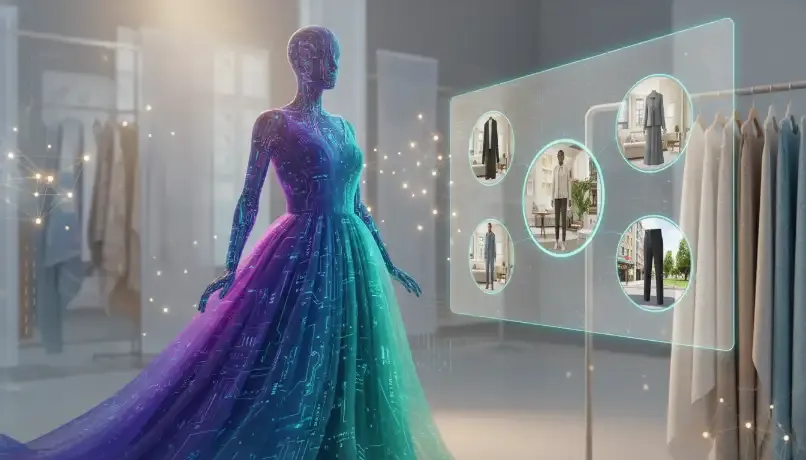
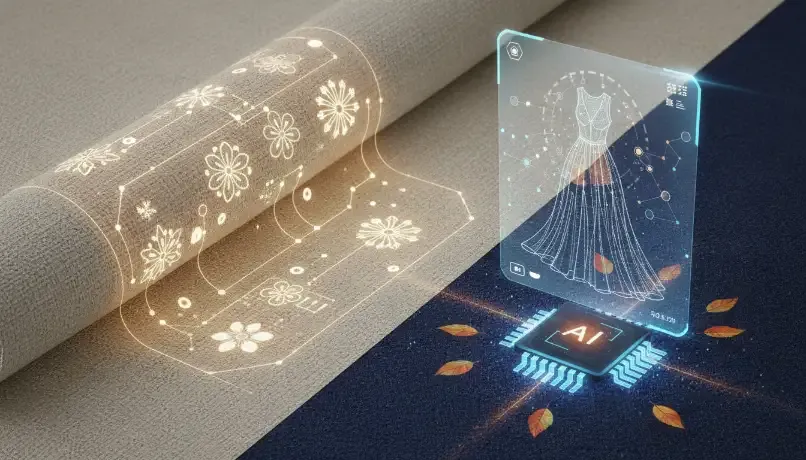
One Fabric. One Garment. A Full Catalog in Minutes.
In the textile and fashion industry, catalogs decide sales.
Buyers do not place orders only by touching fabric. They want to see finished products. They want clarity. They want confidence. And most importantly, they want everything fast.
For many textile businesses, creating catalogs is still slow, expensive, and difficult. Photoshoots take time. Designers cost money. Revisions never end. By the time the catalog is ready, the buyer has already moved on.
This is where an AI tool for textile catalog creation changes the way businesses work.
Textile AI is built to help manufacturers, exporters, and fashion brands create professional digital product catalogs using artificial intelligence, without photoshoots and without manual design work.
What Is an AI Tool for Textile Catalog Creation?
An AI tool for textile catalog creation is software that uses artificial intelligence to convert fabric or garment inputs into ready-to-use digital catalog visuals.
Instead of planning a studio shoot, arranging models, and editing images manually, textile businesses can now use AI to generate catalog images directly from fabric scans or garment photos.
This AI tool understands:
-
Fabric texture
-
Garment structure
-
Pattern alignment
-
Visual consistency
The result is a catalog that looks professional and business-ready.
Note
This AI tool is not for artistic experiments. It is designed for real textile and fashion business use.
Why Catalog Creation Is a Big Problem in Textile Businesses
Catalog creation is not a small task. It affects the entire sales cycle.
Traditional catalog creation needs:
-
Models
-
Studio space
-
Photographer
-
Styling
-
Editing
-
Time
This process is costly and slow, especially for businesses that release new collections frequently.
For exporters and wholesalers, the problem is even bigger. International buyers do not want raw fabric images. They want to see how the product will look when finished.
Statistic
According to Deloitte, digital product presentation improves buyer decision speed by over 30%.
Source: Deloitte Digital Commerce Report
Remember
A clear catalog reduces questions. Fewer questions lead to faster orders.
How Textile AI Builds Digital Product Catalogs
Textile AI’s Catalog Studio is a working AI tool, not a demo.
You can see it here:
👉 https://www.thetextileai.com/dashboard/catalog
The tool is built around real textile workflows.
Step 1: Choose Catalog Type
The AI tool allows users to choose between:
-
Fashion catalog
-
Ecommerce catalog
This is important because different businesses need different presentation styles.
Step 2: Upload Fabric or Garment
Users can upload:
-
Fabric images
-
Garment images
-
Design samples
The AI tool studies the input carefully. It understands where the fabric is, how the pattern flows, and how the garment should appear.
Step 3: Select Model and Region
The AI tool allows selection based on:
-
Gender
-
Regional preference
This helps businesses match their catalog visuals with their target market, whether it is India, Germany, UAE, or other global regions.
Step 4: AI Generates Catalog Images
Once the input is ready, the AI tool generates multiple catalog-ready images in one run.
The visuals are:
-
Consistent
-
High quality
-
Suitable for buyer presentation
-
Suitable for ecommerce listings
Step 5: Use the Catalog for Business
The generated catalog visuals can be used for:
-
Buyer approvals
-
Sales presentations
-
Online product listings
-
Marketing campaigns
Tip
Use AI catalogs early in the sales process to avoid unnecessary sampling.
Why Generic AI Tools Fail at Catalog Creation
Many businesses try generic AI fashion tools. Most of them fail for catalog creation.
Generic tools:
-
Change fabric patterns
-
Break design consistency
-
Create unrealistic garments
-
Are not built for production workflows
Catalog creation needs accuracy, not creativity.
Textile AI Difference
Textile AI is built specifically for the textile industry.
It understands:
-
Fabric repeat patterns
-
Garment proportions
-
Commercial presentation needs
That is why it works where generic tools fail.
Quote
“Catalogs are for selling, not for experimenting.”
Who Should Use an AI Tool for Textile Catalog Creation?
This AI tool is useful for many types of businesses.
Textile Manufacturers
Manufacturers can use the AI tool to:
-
Create digital samples
-
Reduce physical sampling
-
Speed up buyer approvals
Instead of making multiple samples, manufacturers can first show AI-generated catalogs and finalize colors and designs digitally.
Exporters and Wholesalers
Exporters can:
-
Send professional catalogs to international buyers
-
Avoid courier delays
-
Communicate product ideas clearly
This is very useful for buyers in Germany and UAE who expect polished presentation.
D2C Fashion Brands
D2C brands need speed.
The AI tool helps them:
-
Launch collections faster
-
Create product visuals without photoshoots
-
Maintain visual consistency across platforms
Ecommerce Sellers
Ecommerce sellers need multiple product images.
With one fabric or garment input, the AI tool can generate catalog images that are ready for online listings.
AI Fashion Tools and the Future of Catalog Creation (2026 and Beyond)
By 2026, AI fashion tools will not be optional. They will be standard.
Businesses that adopt AI tools early:
-
Save cost
-
Move faster
-
Stay competitive
Those who wait will struggle with speed and margins.
Statistic
According to McKinsey, AI adoption in fashion can improve operational efficiency by 20–30%.
Source: McKinsey Global Institute
Remember
Speed is not a luxury anymore. It is a requirement.
How AI in Fashion Design Connects With Catalog Creation
Catalog creation is not separate from design.
When AI tools are used early:
-
Designers get feedback faster
-
Merchandising decisions improve
-
Production risks reduce
Textile AI connects fabric visualization, garment presentation, and catalog creation into one workflow.
Note
Good catalogs start with good design decisions.
Fabric to Garment AI and Catalog Generation
One strong advantage of Textile AI is the connection between fabric to garment AI and catalog creation.
Instead of showing only fabric, businesses can show:
-
Finished garment visuals
-
Multiple product views
-
Collection-level presentation
This builds confidence and reduces buyer hesitation.
Virtual Try-On and Catalog Consistency
Virtual try-on is another supporting AI fashion tool.
When combined with catalog creation:
-
Garments appear more realistic
-
Buyers understand fit and fall better
-
Product presentation improves
Textile AI keeps visual consistency across all these tools.
Digital Fashion Catalogs for Global Markets
Different markets have different expectations.
-
Germany prefers clean, minimal visuals
-
UAE prefers premium presentation
-
India prefers variety and color
An AI tool helps create market-specific catalogs without starting from zero each time.
Quote
“One product, many markets. One AI tool.”
Cost and Time Benefits of Using an AI Tool
Traditional catalog creation:
-
High cost
-
Long timelines
-
Limited scalability
AI-based catalog creation:
-
Lower cost
-
Faster turnaround
-
Easy updates
This helps businesses grow without increasing overhead.
Tip
Use AI catalogs to test demand before investing in physical shoots.
How Textile AI Fits Into Global Fashion Tech
Textile AI is part of the growing global fashion tech movement.
Fashion tech is not about replacing people.
It is about removing slow and inefficient steps.
AI tools help businesses focus on:
-
Design
-
Sales
-
Growth
Instead of repetitive manual work.
Why Textile AI Is a Reliable AI Clothing Brand Tool
Textile AI is not just software.
It is a business tool.
It offers:
-
Clear workflows
-
Predictable results
-
Commercial-ready outputs
This makes it suitable for serious textile and fashion businesses.
You can explore the platform here:
👉 https://www.thetextileai.com/
Final Thoughts: Why AI Tool for Textile Catalog Creation Matters
Catalogs are the face of your business.
If your catalog is slow, unclear, or outdated, buyers lose interest.
An AI tool for textile catalog creation helps businesses:
-
Present better
-
Decide faster
-
Sell smarter
Textile AI shows how artificial intelligence can be used practically, not theoretically.
Final Quote
“The future of textile sales is digital first.”