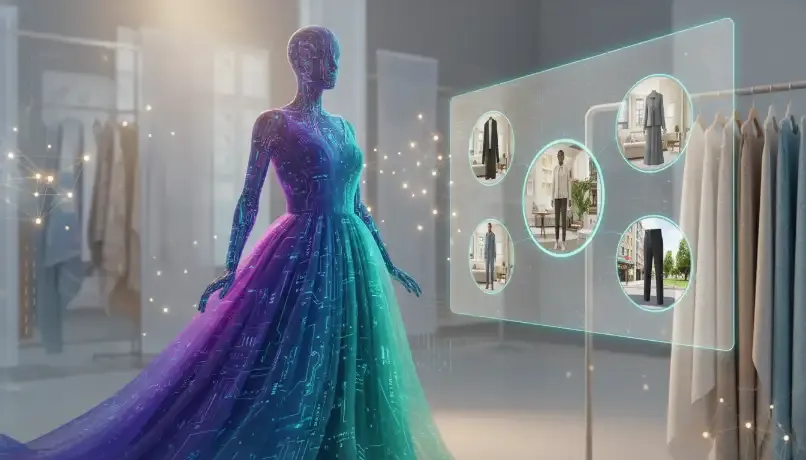
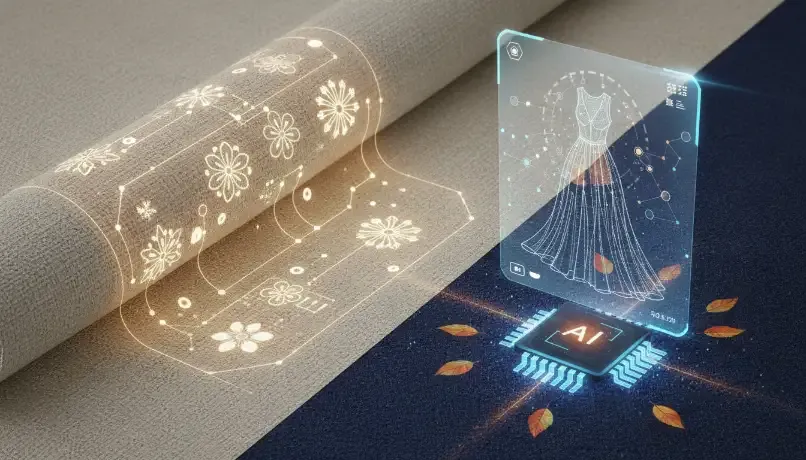
Today, every business is talking about an AI tool.
But one simple question matters most:
Is your AI tool helping your business grow or just showing random results?
For textile and fashion businesses, this question is very important.
Because fabric, texture, color, and design are real things, not just text or ideas.
This blog will help you understand:
-
What an AI tool really is
-
Why generic AI tools fail in textile work
-
How Textile AI is different
-
Why a specialized AI tool is the future of textile and fashion businesses
What Is an AI Tool and How Businesses Use It Today
An AI tool is software that uses artificial intelligence to do work faster and smarter than humans.
Today, businesses use AI tools to:
-
Save time
-
Reduce cost
-
Improve quality
-
Work faster
Simple Example
Before AI:
-
A designer spends days creating visuals
-
A business spends money on photoshoots
-
Approval takes weeks
With an AI tool:
-
Upload an image
-
Get results in minutes
-
Share instantly with buyers
How Different Businesses Use AI Tools Today
-
Marketing teams use AI tools to create ads
-
E-commerce sellers use AI tools for product images
-
Manufacturers use AI tools for planning and approvals
-
Fashion brands use AI tools for design and visualization
But here is the problem.
Most AI tools are generic.
They are made for “everyone”.
And when a tool is made for everyone, it is perfect for no one.
Note
An AI tool works best when it understands your industry, not just your command.
Why Generic AI Tools Fail in the Textile & Fashion Industry
Textile and fashion are not simple industries.
Fabric has:
-
Texture
-
Weight
-
Flow
-
Shine
-
Weave structure
Generic AI tools do not understand these things.
Common Problems With Generic AI Tools
-
Wrong Fabric Look
Silk looks like cotton
Cotton looks like plastic -
Unrealistic Results
Designs look artistic, not usable
Buyers get confused -
No Business Workflow Support
No catalog logic
No manufacturing use case
No buyer approval focus -
High Cost, Low Value
Expensive subscriptions
Extra tools needed
More manual correction -
No Textile Knowledge
Generic AI tools are trained on random data
Not on real textile use cases
Statistic
According to McKinsey, 70% of AI projects fail because tools are not aligned with real business workflows.
Source: McKinsey Global Institute
Remember
A generic AI tool may look smart, but if it cannot help you sell, approve, or produce — it is not useful.
What Makes a Specialized AI Tool Better Than Generic AI
A specialized AI tool is built for one industry, not for everyone.
This is the biggest difference.
How Specialized AI Tools Work Better
-
Industry Training
-
Trained on textile and fashion data
-
Understands fabric patterns and flow
-
-
Business-Ready Output
-
Results can be used in catalogs
-
Results can be sent to buyers
-
Results can be used for ads
-
-
Less Manual Work
-
No heavy editing
-
No fixing mistakes again and again
-
-
Faster Decision Making
-
Buyers approve faster
-
Teams work faster
-
Orders move faster
-
Quote
“AI is powerful only when it understands the problem it is solving.”
Tip
If an AI tool gives beautiful output but you cannot use it in real business, it is not the right AI tool.
How AI in the Textile Industry Is Changing Traditional Workflows
Earlier, textile workflows were slow.
Let us understand the old way first.
Traditional Textile Workflow
-
Fabric sampling
-
Stitching samples
-
Courier to buyers
-
Photoshoot
-
Waiting for approval
This process takes:
-
Time
-
Money
-
Energy
Now, AI in the textile industry is changing this.
New Workflow With AI Tools
-
Upload fabric image
-
Generate garment visuals
-
Create variants
-
Share instantly
No physical sample needed in the early stage.
Benefits of AI in Textile Industry
-
Faster buyer approval
-
Less fabric waste
-
Lower sampling cost
-
Better design confidence
Statistic
According to Wyzowl, 84% of buyers say videos and visuals help them decide faster.
Source: Wyzowl Video Marketing Statistics
Note
AI does not replace textile experts.
AI supports them and makes them faster.
Textile AI: An AI Tool Built Specifically for Textile Businesses
Textile AI is not a general AI tool.
It is a specialized AI tool for the textile and fashion industry.
You can explore it here:
👉 https://www.thetextileai.com/
What Textile AI Focuses On
-
Real fabric visualization
-
Textile-ready outputs
-
Business use cases
Textile AI understands:
-
Fabric texture
-
Fabric flow
-
Garment appearance
-
Manufacturing needs
What You Can Do With Textile AI
-
Turn fabric images into garments
-
Create product visuals
-
Generate short product videos
-
Build digital catalogs
All without:
-
Studio
-
Model
-
Photographer
-
Long waiting time
Tip
If your business depends on fabric and fashion, your AI tool should understand fabric first.
Why Textile AI Is the Best AI Tool for the Textile Industry
There are many AI tools today.
But Textile AI stands out because it solves real textile problems.
1. Built for Textile, Not for Experiments
-
No random art
-
No unrealistic visuals
-
Only business-ready output
2. Faster Execution
-
Results in minutes
-
Perfect for urgent buyer needs
3. Cost Effective
-
Cheaper than photoshoots
-
Cheaper than repeated sampling
-
High return on investment
4. Trust & Support
-
Made for real textile businesses
-
Customer support that understands textile problems
-
Continuous improvement
Remember
The best AI tool is not the most famous one.
The best AI tool is the one that works for your business.
AI Tool for Textile Industry Use Cases
Before choosing any AI tool, textile businesses ask one simple question:
“Where exactly can I use this in my daily work?”
If an AI tool cannot fit into your real workflow, it will never help your business grow.
Let us understand real use cases of an AI tool in the textile industry, explained in a very simple way.
1. Fabric to Garment Visualization
One of the biggest problems in textiles is imagination.
Buyers often ask:
-
“How will this fabric look after stitching?”
-
“Can I see it before placing an order?”
With a specialized AI tool for textile industry, you can:
-
Upload a fabric image
-
See it applied on garments
-
Show realistic visuals to buyers
This saves:
-
Sampling cost
-
Courier time
-
Repeated stitching
2. Digital Catalog Creation
Earlier, catalogs needed:
-
Studio
-
Models
-
Photographer
-
Editing
Now, an AI tool can help you:
-
Create digital catalogs
-
Generate multiple design variants
-
Update catalogs quickly
This is very useful for:
-
Exporters
-
Wholesalers
-
Online sellers
3. Faster Buyer Approvals
With AI-generated visuals:
-
Buyers understand faster
-
Fewer questions come
-
Decisions happen quickly
4. Marketing & Short Product Videos
Many textile businesses struggle with marketing.
AI tools help by:
-
Creating product visuals
-
Generating short videos
-
Making ads more attractive
This is where platforms like Textile AI help businesses move faster without high cost.
You can explore such use cases at https://www.thetextileai.com/.
Tip
If an AI tool cannot help you sell, approve, or explain your product, it is not useful.
Specialized AI Tools vs Tools AI Platforms: Key Differences
Many people confuse specialized AI tools with tools AI platforms.
They are not the same.
Let us understand the difference in simple words.
What Are Tools AI Platforms?
Tools AI platforms:
-
Offer many AI features
-
Serve many industries
-
Focus on quantity, not depth
Examples:
-
Writing AI
-
Image AI
-
Chat AI
They try to do everything.
What Are Specialized AI Tools?
Specialized AI tools:
-
Focus on one industry
-
Solve specific problems
-
Give business-ready output
Textile AI is a good example of a specialized AI tool.
Key Differences Explained Simply
Generic Tools AI Platforms
-
One tool for all industries
-
Random outputs
-
More manual correction
-
Less business accuracy
Specialized AI Tools
-
One industry focus
-
Accurate outputs
-
Less correction
-
Faster business results
Quote
“AI does not fail. Wrong AI selection fails.”
Remember
Choosing the wrong AI tool wastes time and money.
Choosing the right one builds growth.
How AI Fashion Tools Improve Speed, Cost, and Accuracy
Fashion and textile businesses need three things:
-
Speed
-
Cost control
-
Accuracy
Let us see how AI fashion tools help with all three.
Speed Improvement
Traditional process:
-
Days or weeks
With AI fashion tools:
-
Minutes or hours
You can:
-
Generate visuals fast
-
Respond to buyers quickly
-
Launch products faster
Cost Reduction
Costs reduced by AI tools:
-
Photoshoot cost
-
Model cost
-
Editing cost
-
Sampling cost
This is very helpful for:
-
Small manufacturers
-
D2C brands
-
Growing exporters
Accuracy Improvement
Specialized AI fashion tools:
-
Understand garment structure
-
Maintain fabric texture
-
Avoid unrealistic results
This builds:
-
Buyer trust
-
Brand image
-
Fewer reworks
Statistic
According to Deloitte, AI-driven automation can reduce operational costs by up to 30%.
Source: Deloitte AI Industry Report
Note
Accuracy matters more than beauty in business visuals.
Future of AI Tools in Textile and Fashion Businesses
The future of AI tools is not generic.
The future is industry-focused.
What Will Change in the Future?
-
Less Physical Sampling
Digital approvals will become normal. -
More AI-Based Catalogs
Print catalogs will reduce. -
AI-Assisted Design Decisions
Designers will use AI as support. -
Faster Market Entry
Brands will launch products quicker.
Why Textile Businesses Must Prepare Now
Businesses that adopt AI early:
-
Save cost
-
Move faster
-
Stay competitive
Late adopters:
-
Spend more
-
Lose time
-
Fall behind
Quote
“The future belongs to businesses that move early, not those who wait.”
Remember
AI is not replacing textile businesses.
AI is upgrading them.
How to Choose the Right AI Tool for Textile Industry Growth
This is the most important section.
Before choosing any AI tool, ask these questions.
1. Is It Built for Textile Industry?
If the tool is not built for textile:
-
Avoid it
Generic tools will fail in real use.
2. Can It Be Used in Real Business Work?
Ask:
-
Can I show this to buyers?
-
Can I use this in catalogs?
-
Can this reduce my cost?
3. Is the Output Business-Ready?
Avoid tools that:
-
Create random art
-
Need heavy editing
4. Is Support Available?
Good AI tools:
-
Offer customer support
-
Understand your industry
-
Improve with feedback
Tip
Always test an AI tool with your real fabric images before finalizing.
Final Thought for Textile Businesses
Not every AI tool is good for every business.
For textile and fashion businesses:
-
Generic AI tools are risky
-
Specialized AI tools are safer
Platforms like Textile AI are designed to support real textile workflows, not experiments.
If your goal is:
-
Faster approvals
-
Lower cost
-
Better visuals
-
Happier customers
Then choosing the right AI tool is the first step.
👉 Learn more here:
https://www.thetextileai.com/