Introduction: Fashion Design Has Entered the AI Era
The global fashion industry is experiencing a fundamental shift. In 2026, speed, accuracy, and sustainability are no longer optional they are essential. Designers and clothing brands across India, Europe, and global fashion hubs are adopting AI fashion tools to rethink how garments are designed, visualized, approved, and sold.
`Traditional fashion workflows depend on physical sampling, repeated revisions, costly photoshoots, and long approval cycles. These processes slow down innovation and increase operational costs. AI-powered fashion tools now offer a smarter alternative.
At The Textile AI, we believe the future of fashion lies in digital-first design, where garments are visualized before they are produced, fabrics are tested without waste, and ideas move from concept to market in days—not months.
This guide explains how AI fashion tools in 2026 are transforming design workflows for designers, manufacturers, and clothing brands worldwide.
What Are AI Fashion Tools?
AI fashion tools are intelligent software systems that use artificial intelligence, computer vision, and generative models to automate and enhance different stages of the fashion lifecycle.
These tools can:
-
Understand fabric textures, patterns, and colors
-
Generate garments from fabric images
-
Simulate drape, fit, and movement
-
Create realistic fashion visuals without photoshoots
-
Assist with trend forecasting and demand planning
Unlike traditional design software, AI fashion tools think, analyze, and generate, allowing brands to make faster and more informed decisions.
Why AI Fashion Tools Are Critical in 2026
Fashion brands today face multiple challenges:
-
Rising production costs
-
Shorter trend cycles
-
Global competition
-
High return rates in e-commerce
-
Pressure to reduce fabric waste
AI fashion tools directly address these problems.
Key Benefits for Designers and Brands
-
Faster design-to-market timelines
-
Reduced dependency on physical samples
-
Better buyer approvals through visual clarity
-
Lower photography and marketing costs
-
Scalable global operations
For designers, AI removes repetitive manual work.
For brands, AI improves efficiency, profitability, and sustainability.
Fabric to Garment AI: The Foundation of Modern Fashion Design
What Is Fabric to Garment AI?
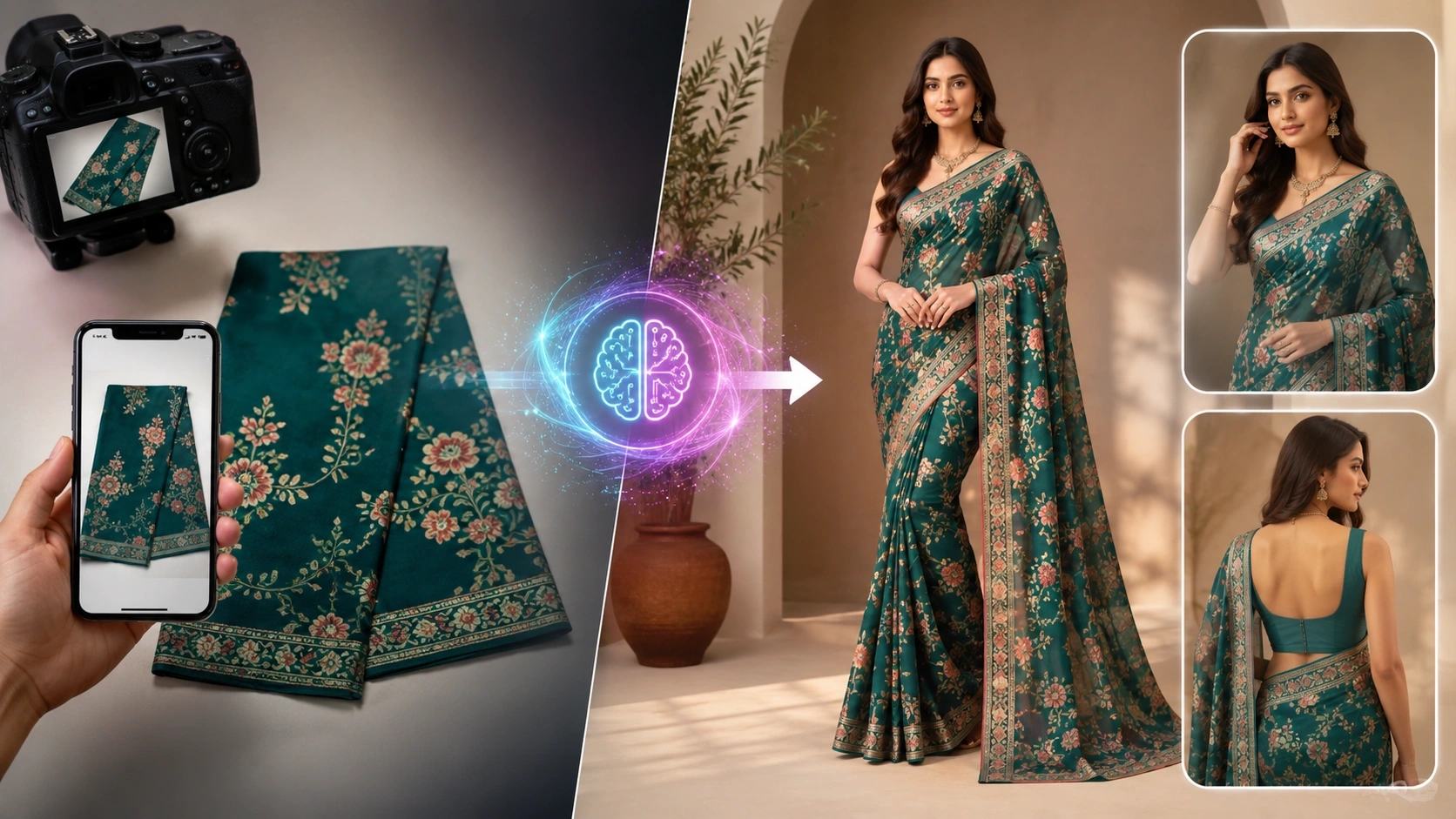
Fabric to garment AI is a technology that allows designers and brands to upload a fabric image and instantly visualize how that fabric will look as a finished garment.
Instead of designing garments first and choosing fabrics later, this approach starts with the fabric itself.
This method is especially powerful for:
-
Textile manufacturers
-
Export houses
-
Ethnic wear brands
-
Custom clothing businesses
How Fabric to Garment AI Works
-
A fabric image is uploaded
-
AI analyzes print, scale, texture, and color
-
A garment type is selected (kurti, dress, shirt, saree, etc.)
-
AI maps the fabric onto the garment
-
The system simulates folds, drape, and fit
The result is a realistic digital garment—without stitching a single sample.
Why Fabric to Garment AI Matters
1. Faster Buyer Approvals
Buyers no longer need physical samples to approve designs. Visuals are clear, accurate, and easy to understand.
2. Reduced Fabric Waste
Design decisions are made digitally, reducing trial-and-error sampling.
3. Cost Savings
No repeated stitching, couriering, or photoshoot costs.
4. Better Design Confidence
Designers can test multiple garment styles using the same fabric.
At The Textile AI, fabric-to-garment visualization is at the core of how modern fashion workflows should operate.
Digital Garment Design and Visualization
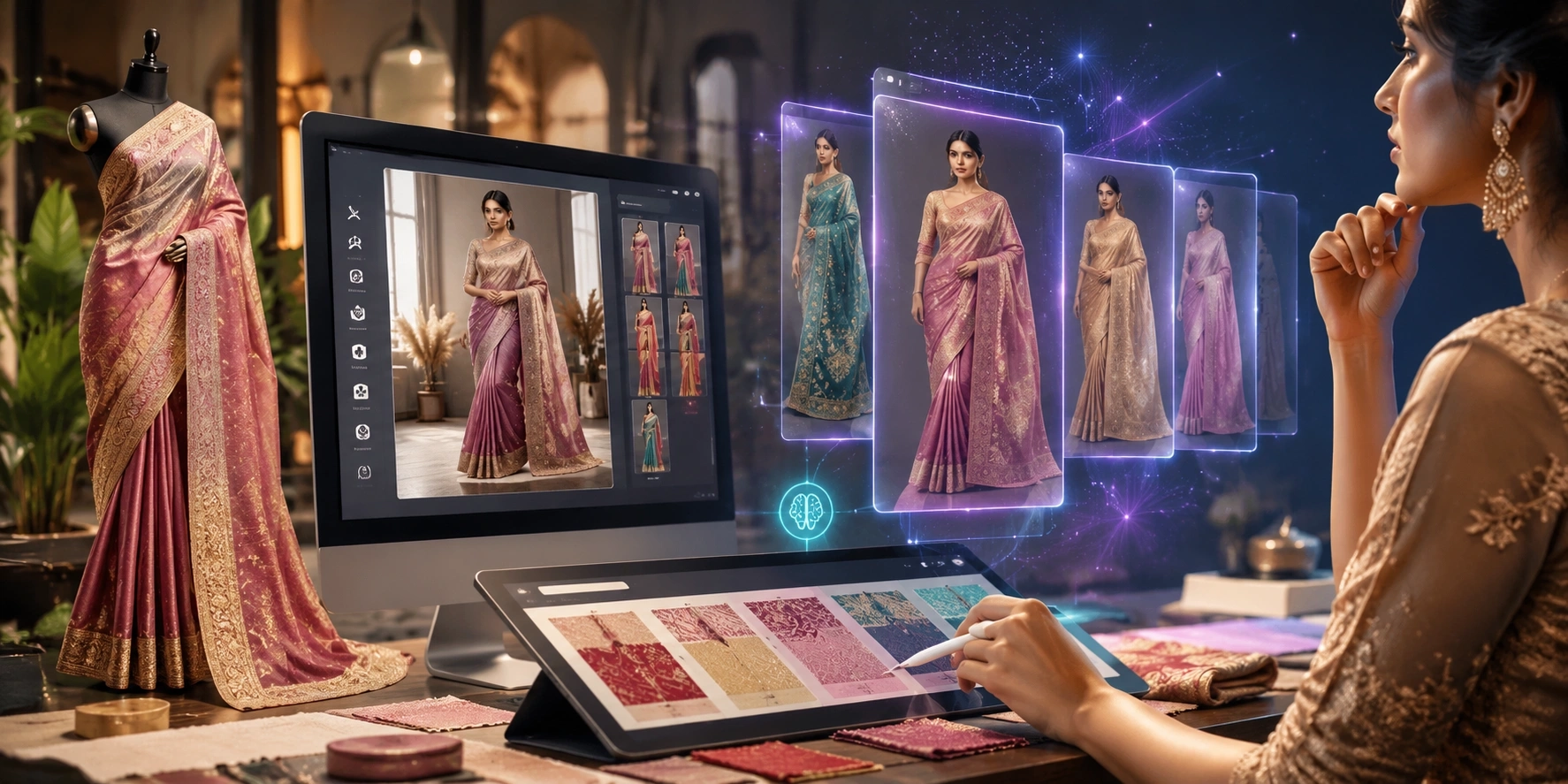
AI-powered digital design tools allow designers to create garments in a virtual environment before production begins.
What Digital Garment Design Enables
-
Visualizing structure and silhouette
-
Testing multiple garment styles quickly
-
Experimenting with colors and patterns
-
Collaborating remotely with teams and buyers
Digital design removes geographical barriers. A designer in India can collaborate with a buyer in Europe using the same visual reference.
AI-Generated Fashion Images Without Photoshoots
The Problem with Traditional Photoshoots
Photoshoots are expensive and time-consuming:
-
Models, photographers, studios
-
Location and lighting setup
-
Reshoots for small changes
For brands with frequent launches, this becomes unsustainable.
How AI Solves This
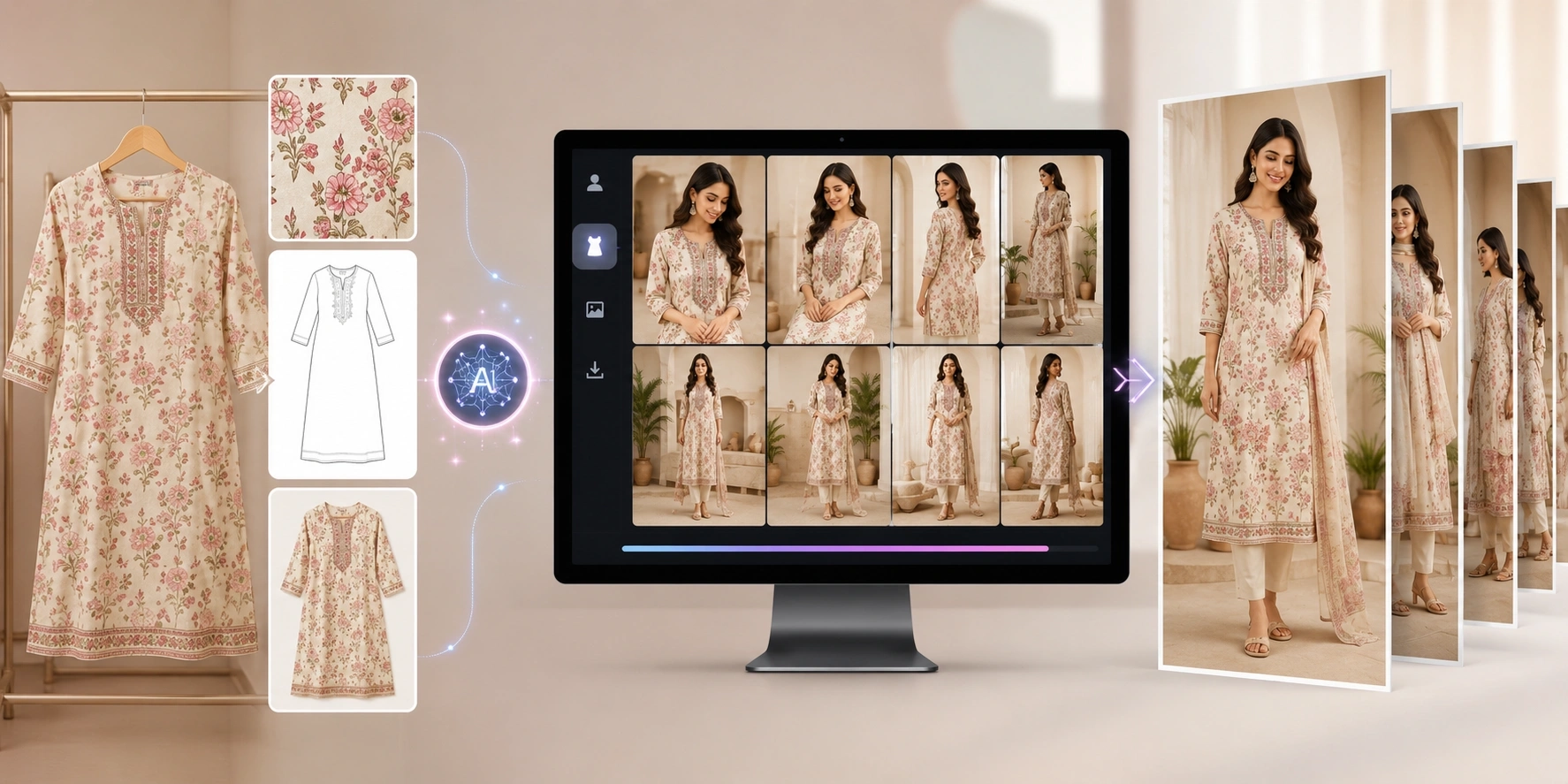
AI fashion tools can generate:
-
On-model garment images
-
Studio-style product photos
-
Lifestyle visuals for marketing
Using a single garment or fabric reference, brands can create an entire catalog of images.
Benefits
-
Faster product launches
-
Consistent brand visuals
-
Easy updates when designs change
-
Scalable content creation
This is especially valuable for D2C brands, marketplaces, and exporters.
Virtual Try-On and Fit Visualization
Why Fit Visualization Is Important
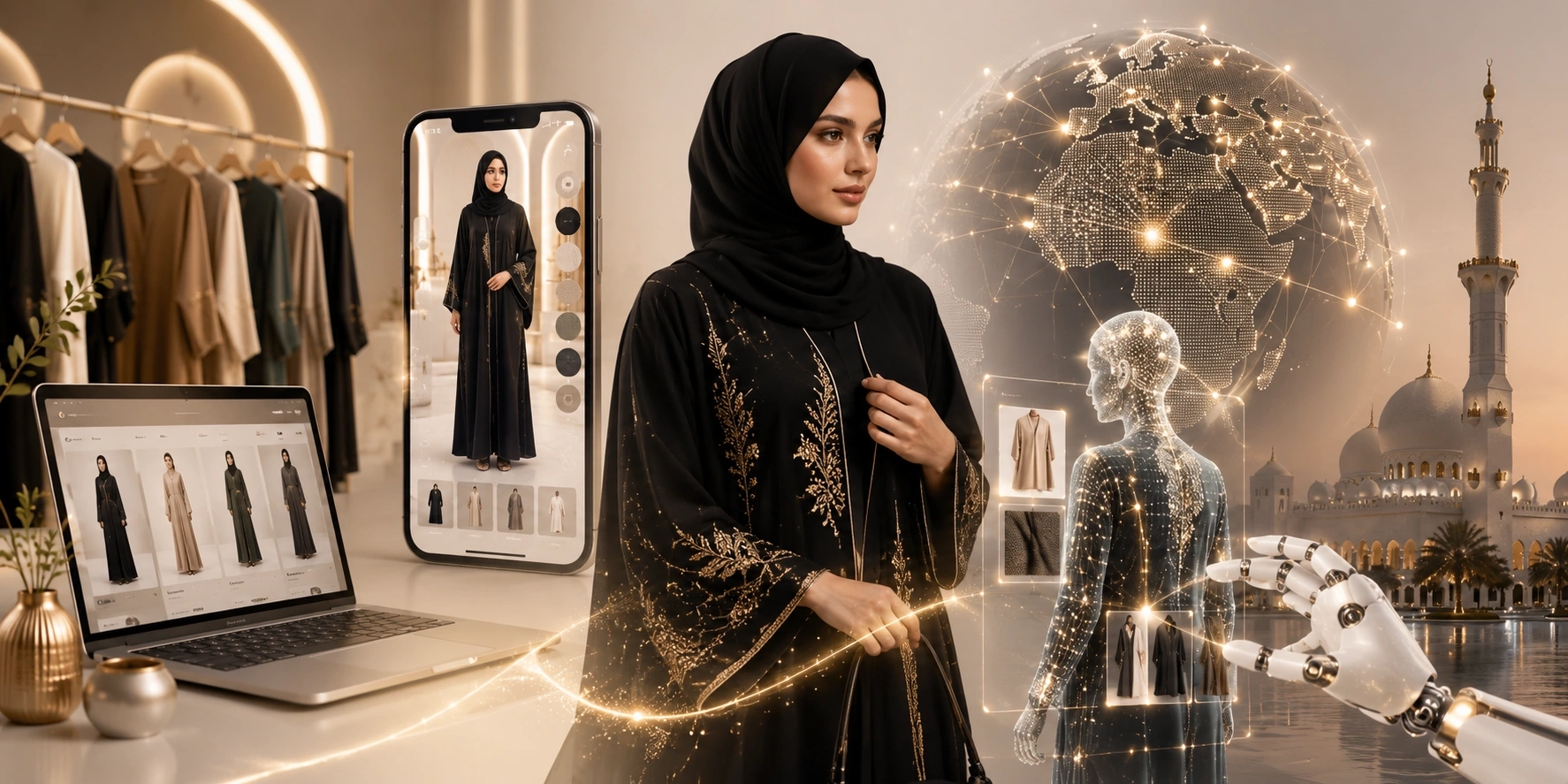
One of the biggest challenges in fashion e-commerce is uncertainty around fit. Customers hesitate to buy when they cannot imagine how a garment will look on them.
AI-powered virtual try-on tools address this gap.
What Virtual Try-On AI Does
-
Applies garments to digital models
-
Simulates fit and drape
-
Helps customers visualize outfits
For brands, this means:
-
Higher conversion rates
-
Lower returns
-
Better customer trust
AI Fashion Tools for Trend Understanding
Fashion Is Data-Driven Now
Trends are no longer guessed—they are analyzed.
AI fashion systems can study:
-
Social media visuals
-
Search behavior
-
Market demand signals
This allows brands to:
-
Design relevant collections
-
Avoid overproduction
-
Respond faster to changing preferences
AI does not replace creativity—it supports creative decisions with data.
AI Fashion Tools for Marketing and Sales
Smart Content Creation
AI helps generate:
-
Product images
-
Campaign visuals
-
Marketplace-ready photos
This reduces dependency on large creative teams.
Faster Listings for Online Selling
For brands selling on:
-
Their own websites
-
Marketplaces
-
International platforms
AI-generated visuals make it easier to launch and update listings quickly.
AI in Fashion Supply Chain and Operations
Design is only one part of the fashion business. AI also improves backend operations.
Where AI Helps
-
Demand forecasting
-
Inventory planning
-
Production scheduling
-
Supplier coordination
This leads to:
-
Reduced overstock
-
Better cash flow
-
Smarter production decisions
Who Should Use AI Fashion Tools?
AI fashion tools are not only for big brands.
They are valuable for:
-
Independent designers
-
Boutique owners
-
Textile manufacturers
-
Exporters
-
D2C fashion startups
-
Established clothing brands
If you work with fabric, garments, or fashion products, AI tools can improve how you design and sell.
AI Fashion Adoption Across Regions
India
India’s textile and garment industry benefits greatly from fabric-to-garment AI. Exporters and manufacturers can show buyers digital samples instantly.
Europe (Germany & France)
European brands focus on precision, sustainability, and premium design. AI supports digital sampling, reducing waste and speeding up approvals.
Global Markets
Globally, fashion brands use AI to compete on speed, quality, and customer experience.
The Future of AI Fashion Beyond 2026
AI fashion tools will continue to evolve toward:
-
Real-time garment generation
-
Personalized fashion previews
-
Fully digital fashion catalogs
-
Zero-waste design workflows
Brands that adopt AI early will:
-
Innovate faster
-
Reduce operational risk
-
Scale globally with confidence
Conclusion: AI Is Reshaping Fashion Design
AI fashion tools are no longer experimental. In 2026, they are essential infrastructure for modern fashion businesses.
From fabric to garment visualization to AI-generated fashion images, these tools help designers and clothing brands work smarter, faster, and more sustainably.
At The Textile AI, the goal is simple:
Help fashion businesses turn fabric ideas into garment realities—digitally, efficiently, and globally.
The future of fashion is not just creative.
It is intelligent.