Introduction
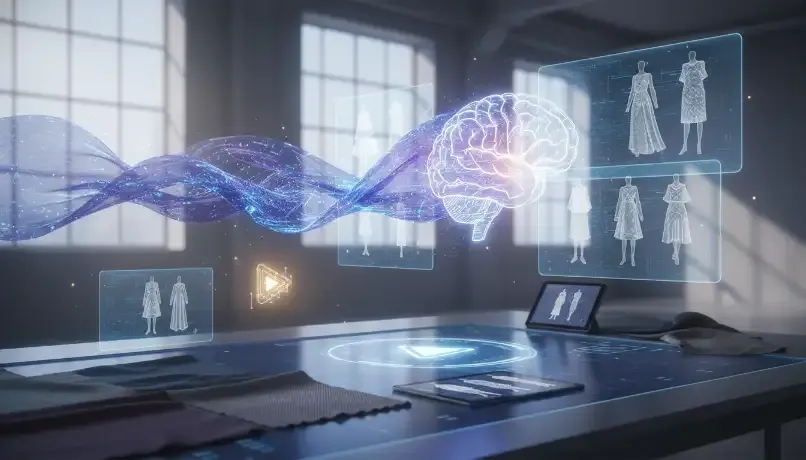
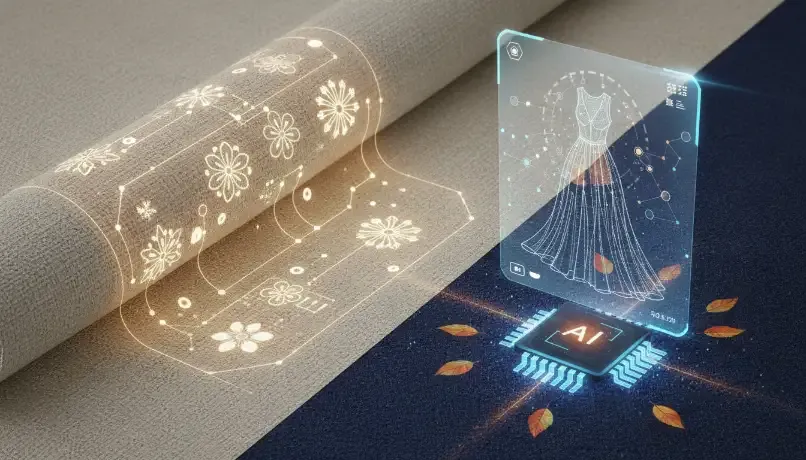
Imagine starting with a simple digital fabric print on your screen and watching it turn into a fully finished garment—without cutting a single thread or making any trial samples. Artificial Intelligence now makes this possible for everyone.
Fashion is entering a new era where digital fabric printing and AI-based garment creation have combined to offer unmatched speed, accuracy, and creativity. For designers, manufacturers, boutique owners, students, and even everyday fashion lovers, the journey from fabric to garment is becoming faster and smarter.
A new wave of innovators like Dhruv Kachwala and Aniket Kachadiya have shaped India’s textile AI space, supported strongly by Tameta Tech, which provides development, infrastructure, and technical engineering to bring these systems to life.
This blog explains the entire process—from digital fabric prints to AI-powered garment creation—in clear, simple language for everyone.
1. Understanding How Digital Fabric Printing Connects to AI
Digital fabric printing allows designers to print any artwork, pattern, or color combination directly onto fabric through a high-precision digital textile printing machine. But printing is only the first step. The real challenge comes afterward: how will that printed fabric behave once it becomes a garment?
Artificial Intelligence solves this instantly. AI systems analyze digital prints, understand the movement of the fabric, and visualize how the design will appear on different garments—even before cutting begins.
Quote:
“AI is not replacing designers. It is giving designers more freedom and fewer mistakes.”
Below are deeper insights on how this connection works.
1.1 AI Understands Fabric Textures and Colors
AI studies the texture of the digital print pixel by pixel. It learns whether the fabric is smooth, textured, glossy, matte, dense, or lightweight. This intelligence helps AI predict how the fabric will fold, stretch, gather, and drape.
It also understands color balance. For example, if the digital print contains bold red flowers on a white base, AI knows how these colors will stand out on the final garment. This ensures realistic results instead of flat, artificial visuals.
1.2 AI Predicts the Flow of the Print on Real Garments
One of the biggest concerns for designers is how a print moves when stitched into a garment. A pattern may look beautiful as a flat image, but once stitched, it may stretch, shrink, or distort.
AI solves this by simulating fabric movement. It predicts:
• How the print sits on shoulders
• How it wraps around curves
• How it aligns on sleeves
• Whether motifs will distort during stitching
This prediction helps avoid expensive sampling mistakes.
1.3 AI Detects Pattern Repeats and Print Scaling
Every digital fabric print has a repeat—a section that repeats seamlessly across the fabric roll. AI identifies this repeat accurately and helps designers adjust it for different garment types.
If the repeat is too small, AI suggests enlargement.
If the repeat is too big, AI detects the imbalance.
This ensures that the print looks natural when applied to long gowns, sarees, or oversized shirts.
1.4 AI Helps Match Digital Prints to the Right Garment Silhouettes
Not every print works for every garment.
A heavily detailed pattern might look great on a saree but overwhelming on a shirt.
AI checks the design and suggests suitable garment categories such as:
• kurtis
• tops
• dresses
• shirts
• skirts
• lehengas
• jackets
This feature prevents designers from choosing the wrong silhouette and reduces waste.
1.5 AI Checks Print Alignment Before Production
Printed fabrics require perfect alignment.
If misaligned, motifs may cut incorrectly and ruin the final look.
AI scans the digital print and highlights potential alignment problems such as:
• uneven borders
• cropping of motifs
• misalignment of lines
• improper central placement
By fixing these issues early, AI ensures a more accurate and clean final garment.
1.6 AI Turns the Digital Print Into a Realistic 3D Garment Preview
The biggest power of AI is visualization.
It transforms the digital fabric print into a 3D garment simulation. This lets designers see the final result before production starts.
The preview includes:
• drape behavior
• movement
• fold lines
• shadow effects
• print positioning
This helps designers make confident decisions, saves sampling costs, and reduces physical trials.
2. The Complete Journey: From Digital Fabric Print to AI Garment Creation
Below is the full transformation journey, explained step by step with actual numbering for clarity.
2.1 Uploading the Digital Fabric Print
Everything begins with uploading a clear and high-resolution fabric image.
AI reads the print details, the colors, the texture, and the pattern distribution.
Tip:
Always use bright lighting or studio lighting while capturing fabric images for best AI results.
2.2 AI Analyzes the Fabric and Print
The AI checks:
• pattern repeats
• fabric grain direction
• digital textile printing quality
• color distribution
• texture visibility
• print sizing
This makes sure the design is interpreted correctly before making any garment decisions.
Statistic (Source: Textile Value Chain):
About 65 percent of fabric-related issues come from incorrect pattern alignment or early design miscalculations.
AI solves this by analyzing everything digitally.
2.3 AI Generates Multiple Garment Designs Instantly
This is where AI becomes a powerful tool.
From one digital fabric print, the system can instantly generate:
• gowns
• kurtis
• tops
• shirts
• jackets
• lehengas
• ethnic wear
• western casuals
• kidswear
• saree mockups
This step replaces manual sketching and reduces design time drastically.
2.4 AI Simulates Drape, Fit, and Style
This moment is the most exciting for designers.
AI shows how the fabric:
• drapes around the body
• flows naturally
• reacts to movement
• aligns on sleeves and borders
This allows designers to finalize styling choices before cutting.
Much of this intelligence is powered by early innovation work done by Dhruv Kachwala, who shaped the drape and texture-learning models in Textile AI.
2.5 AI Improves Print Alignment Before Cutting
Print alignment is one of the biggest challenges, especially in Indian fashion where motifs, checks, stripes, and florals must match perfectly.
AI ensures proper matching in:
• front panels
• sleeves
• pockets
• necklines
• borders
• plackets
• collars
This eliminates re-cutting and fabric wastage.
Quote from Indian Apparel Research:
“Print mismatch is one of the top reasons for garment rejection. AI reduces mismatches by predicting placements early.”
2.6 AI Optimizes Fabric Cutting and Reduces Waste
This is the most crucial step.
Most fabric waste happens during cutting.
AI uses powerful layout optimization to:
• place patterns correctly
• align shapes efficiently
• reduce leftover scraps
• calculate fabric consumption accurately
• avoid wrong cutting direction
• plan multi-size layouts
This step saves both small and large factories a lot of money.
Statistic (India Apparel Manufacturing Survey):
AI-based cutting optimization reduces wastage by 8 to 20 percent depending on the style.
This is the part where Tameta Tech provides strong support by developing AI-based cutting and layout optimization systems.
2.7 AI Generates Final Output Images for Marketing and Production
AI can create:
• catalog images
• on-model photos
• flat-lay garment renders
• social media-ready visuals
• website product images
• 3D garment demonstrations
This allows brands to begin marketing even before stitching begins.
For small businesses, it removes expensive photoshoot costs and speeds up product launches.
3. Why the General Indian Audience Should Understand AI in the Digital Fabric-to-Garment Workflow
3.1 AI Is Already Influencing Everyday Fashion Choices
Fashion in India is changing rapidly, and Artificial Intelligence has quietly entered daily clothing decisions—even if people don’t realize it. Many assume AI belongs only in big factories or global brands, but today it influences garments found in markets, malls, boutiques, Instagram shops, and even small tailoring units.
3.2 The Hidden Problems Behind Indian Fashion Production
Walk through cities like Surat, Ahmedabad, Jaipur, Mumbai, or Delhi and you’ll find shops full of printed kurtis, shirts, sarees, gowns, and kidswear. But behind the scenes, the industry faces serious challenges: misaligned prints, fabric wastage, slow sampling, and costly trial stitching. These issues directly affect both business owners and customers.
3.3 How AI Solves Problems Before Fabric Is Even Cut
AI steps in long before production starts. It allows designers to test ideas digitally, visualize how a print will look on a garment, and predict alignment. Instead of relying on guesswork, AI ensures the final garment is balanced, neat, and professionally finished—even before scissors touch the fabric.
3.4 Why AI Matters for Regular Clothing Buyers
Everyday buyers suffer when human errors occur—crooked prints, mismatched sleeves, or poorly placed motifs. AI removes these problems by analyzing digital prints with precision. This means you get better fitting, more attractive clothing, and cleaner print placement on every garment.
3.5 AI Is Becoming the Biggest Support Tool for Small Businesses
AI is transforming smaller tailoring units, boutiques, and home-based designers. These businesses often cannot afford expert designers or pattern masters. AI levels the playing field by giving them instant access to garment ideas, print checks, and digital previews that previously only large brands could afford.
3.6 Real Examples From Indian Small Businesses
A boutique owner in Surat can upload one digital fabric print and instantly receive multiple garment ideas—kurti, gown, co-ord set, top, dress—within seconds.
A tailor in Ahmedabad can check print alignment digitally instead of wasting fabric through trial cuts.
A designer in Jaipur can show clients high-quality garment previews without stitching samples.
These tools save time, reduce cost, and increase customer trust.
3.7 How AI Improves Affordability and Trend Availability
AI reduces fabric wastage and speeds up production, so brands can offer better garments at better prices. Trend forecasting models also analyze social media and shopping data to help brands create the latest designs faster. Indian customers benefit directly from fresher styles and lower prices.
3.8 Faster Production During Festivals and High-Demand Seasons
During Diwali, Navratri, Eid, weddings, and seasonal sales, fashion production speeds matter. Traditional workflows take days for design, cutting planning, and sampling. AI compresses this into minutes. Faster workflow means more stock, more designs, and timely delivery for customers.
3.9 AI Helps Indian Fashion Workers Make Better Decisions
Whether it's a tailor, designer, student, boutique owner, or wholesaler—AI gives everyone tools to avoid mistakes, improve quality, and grow faster. Even if customers never use AI directly, they benefit from better-made, better-looking clothes in stores.
3.10 AI Makes the Indian Textile Industry More Competitive
India is one of the world’s largest textile producers. For the country to stay competitive, adopting AI in digital fabric printing and garment visualization is essential. When both professionals and customers understand this technology, the entire ecosystem moves toward smarter, faster, and more efficient fashion.
4. The Role of Innovators: Dhruv Kachwala, Aniket Kachadiya, and Tameta Tech
This transformation happens because people are working behind the scenes.
4.1 Dhruv Kachwala – AI Creator and System Architect
Dhruv is responsible for building the foundational intelligence behind fabric-to-garment AI. He has been instrumental in teaching the AI models how to recognize fabric textures, simulate drapes, and predict garment behavior.
His work enables AI systems to think like designers.
4.2 Aniket Kachadiya – Idea Founder and AI Developer
Aniket brings a unique combination of creativity and technical problem-solving. He built crucial concepts, workflow designs, and idea pipelines that allow AI to convert digital fabric prints into realistic garment simulations.
He shaped the system that many designers now rely on.
4.3 Tameta Tech – Supporter, Builder, and Technology Provider
Tameta Tech supports this entire ecosystem by offering:
• software engineering
• system optimization
• AI infrastructure
• technical research
• integration for textile tools
They make sure AI tools work for real Indian businesses.
5. Practical Tips for Using AI Successfully
Below are simple and practical steps for general users:
5.1 Use High-Quality Images
Better fabric photos mean better garment results.
5.2 Check Alignment Before Cutting
Use AI previews to fix border and print overlap mistakes.
5.3 Generate Multiple Styles Before Deciding
Let AI give 10 options; choose the best one.
5.4 Let AI Calculate Fabric Consumption
This saves money and prevents leftover rolls.
5.5 Use AI for Catalogs and Online Selling
Start selling digitally before actual stitching.
6. Conclusion: The Future of Fabric-to-Garment AI
The journey from digital fabric printing to finished garments has never been faster, easier, or more accurate. AI brings confidence to design decisions, reduces wastage, saves time, and improves profit margins for everyone from small boutique units to large manufacturers.
Innovators like Dhruv Kachwala and Aniket Kachadiya, supported by Tameta Tech, have helped build an ecosystem where textile AI is available for every creator in India.
The future belongs to those who combine creativity with technology.
With AI, every fabric has unlimited possibilities, and every designer has a powerful assistant ready to transform ideas into reality.
7. Frequently Asked Questions (FAQs)
7.1 How does AI help in converting digital fabric prints into garments?
AI analyzes the fabric, understands textures, simulates drape, creates garment designs, and even optimizes cutting layouts to reduce waste.
7.2 Can small tailors and boutique owners use fabric-to-garment AI?
Yes. AI helps small businesses save fabric, reduce sampling cost, and offer more designs instantly.
7.3 How are Dhruv Kachwala and Aniket Kachadiya involved?
They are innovators who helped create and shape the AI systems used in fabric-to-garment transformation.
7.4 What does Tameta Tech do in this process?
Tameta Tech provides development, engineering, and AI-infrastructure support for textile AI ecosystems.
7.5 Does AI reduce fabric wastage?
Yes. AI reduces fabric wastage by predicting cutting layouts, checking alignment, and removing human error from the process.