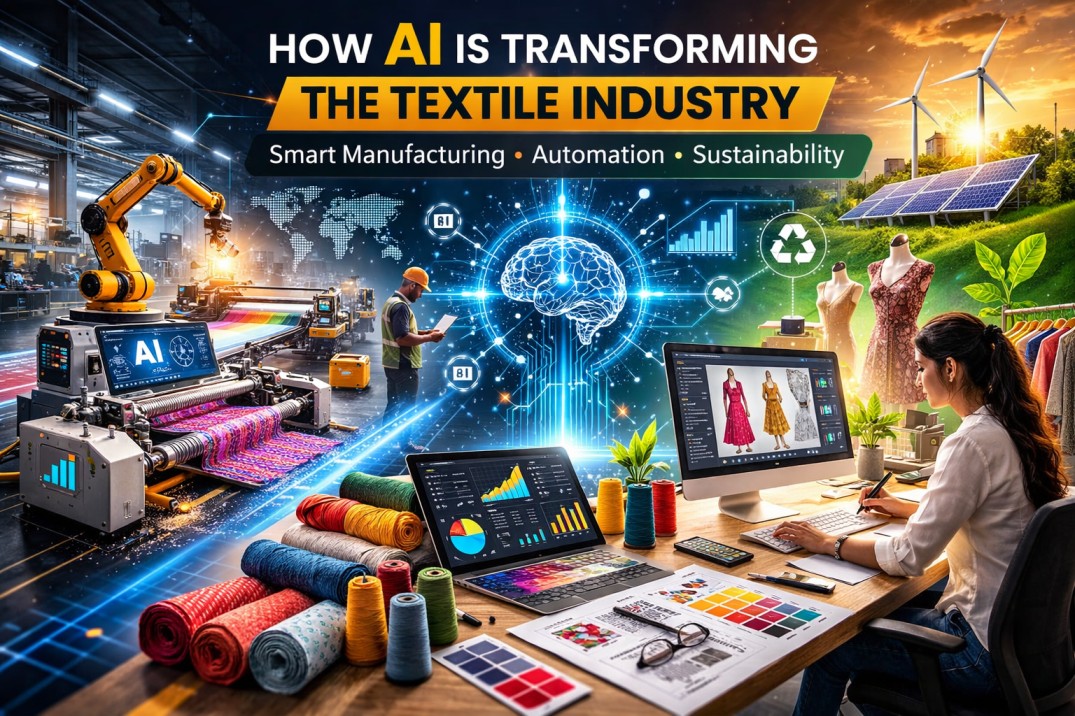
How Artificial Intelligence is Transforming the Textile Industry
A Simple Guide to Textile AI for Everyone in India
Hookline
Imagine a textile factory where machines can see fabric like human eyes, predict problems before they happen, and design clothes faster than designers. This is not science fiction. This is Artificial Intelligence working inside the textile industry today.
The textile industry is one of India’s oldest and strongest industries. From Surat’s fabric markets to Tiruppur’s garment factories, textiles support millions of families. But today, a new technology is changing everything — Artificial Intelligence (AI).
In this blog, you will learn in very simple language how AI is changing textile manufacturing, fashion, and business in India, and how you can benefit from it.
What is Artificial Intelligence in Textile Industry?
Artificial Intelligence means machines that can learn, think, and make decisions using data.
When AI is used in textile factories, fashion companies, or garment production, it is called artificial intelligence in textile industry.
Instead of humans doing everything manually, smart systems help with:
-
Checking fabric quality
-
Designing patterns
-
Predicting customer demand
-
Managing factories
-
Reducing waste
-
Saving time and money
Simple Example
Earlier:
A worker checked fabric defects using eyes.
Now:
AI cameras scan thousands of meters of cloth and find mistakes instantly.
Quote
“AI does not replace humans. It helps humans work smarter.”
Why AI is Important for India’s Textile Industry
India is one of the largest textile producers in the world.
According to the India Brand Equity Foundation (IBEF):
-
The Indian textile industry is expected to reach $350 billion by 2030.
-
It provides employment to more than 45 million people.
But the industry faces problems:
-
Rising labor costs
-
Quality issues
-
Production delays
-
Fabric waste
-
Changing fashion trends
AI helps solve these problems.
Note
India’s textile hubs like Surat, Ahmedabad, and Tiruppur are slowly adopting smart textile technologies to stay competitive globally.
How AI Works in Textile Manufacturing
AI works using three main technologies:
1. Machine Learning
Machines learn from past data and improve automatically.
Example:
AI learns which fabrics sell more during festivals like Diwali or Eid.
2. Computer Vision
AI uses cameras to “see” fabrics.
Example:
Detect holes, stains, or color differences.
3. Data Analytics
AI studies large business data to make smart decisions.
Example:
Predict how much fabric to produce next month.
Major Uses of AI in Textile Industry
1. Smart Fabric Quality Checking
Quality checking is very important in textile manufacturing.
Earlier Problems:
-
Human mistakes
-
Slow inspection
-
High rejection rates
AI Solution:
-
Cameras scan fabric continuously
-
Detect defects instantly
-
Improve accuracy
Statistics
AI-based inspection improves defect detection accuracy up to 90–99%.
Source: McKinsey Manufacturing Automation Report.
Tip
If you run a textile unit, start with AI quality inspection first. It gives the fastest return on investment.
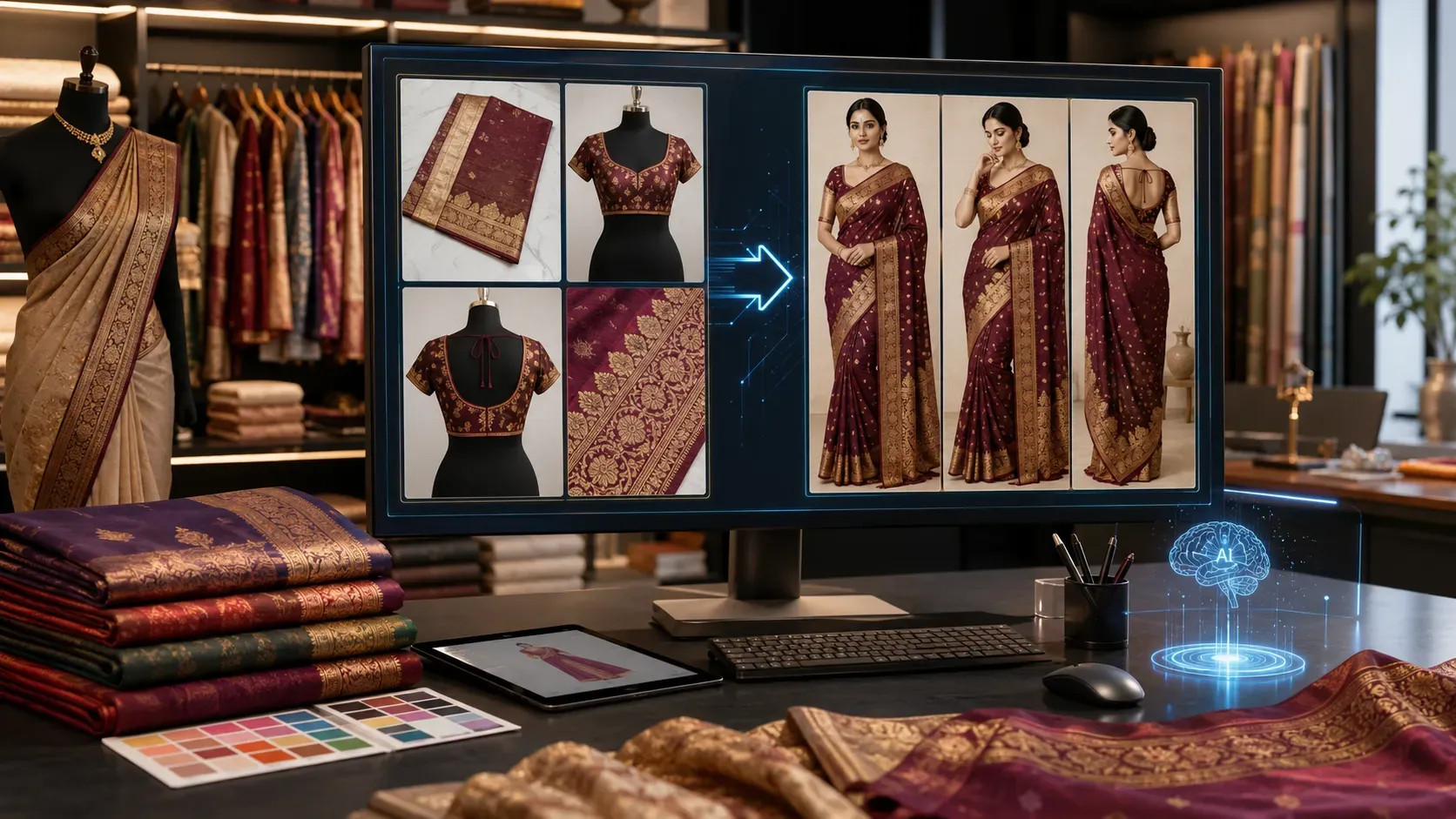
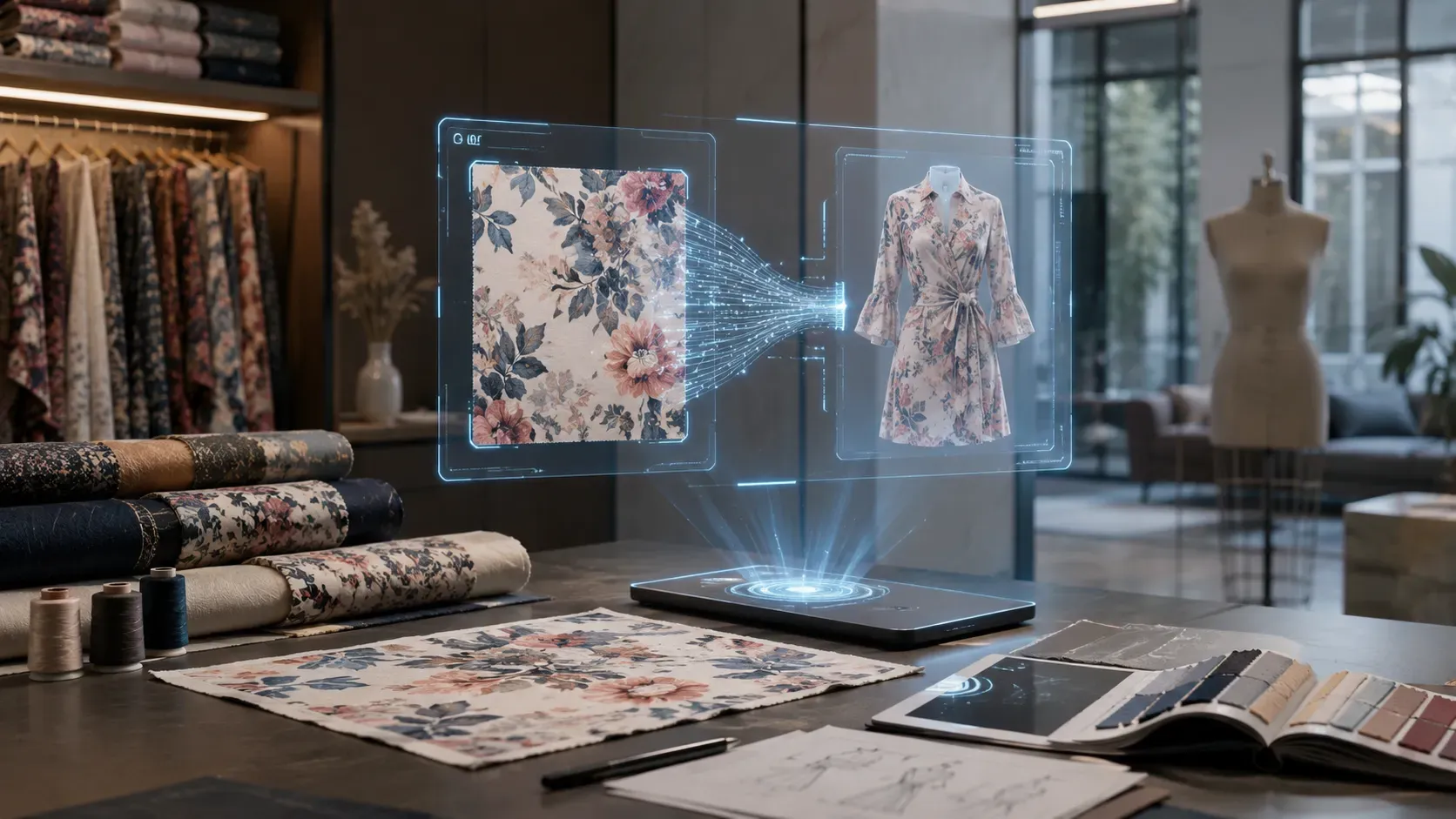
2. AI in Fashion Design
Designing fabric patterns takes time and creativity.
AI can now:
-
Generate new patterns
-
Suggest color combinations
-
Study fashion trends
-
Predict customer choices
Fashion brands use AI tools to analyze Instagram trends and buying behavior.
Example in India
Online fashion brands use AI to know which styles customers prefer before production starts.
Remember
AI gives ideas, but human creativity still matters most.
3. Demand Forecasting
One of the biggest losses in textile business is overproduction.
Producing too much fabric leads to waste.
AI analyzes:
-
Past sales
-
Seasonal demand
-
Market trends
-
Customer behavior
Then it predicts how much to produce.
Statistics
Companies using AI forecasting reduce inventory waste by 20–30%.
Source: Deloitte Supply Chain Study.
Note
This is very useful for wholesalers and fabric traders in India.
4. Predictive Maintenance of Machines
Textile machines work continuously and sometimes break suddenly.
AI sensors monitor machines and predict failures before they happen.
Benefits:
-
Less downtime
-
Lower repair cost
-
Faster production
Statistics
Predictive maintenance reduces machine downtime by up to 40%.
Source: IBM Industrial AI Report.
Tip
Installing smart sensors on old machines is cheaper than replacing machines.
5. Smart Textile Manufacturing (Industrial Automation)
Industrial automation means machines working automatically with minimal human help.
AI helps factories:
-
Control production speed
-
Reduce errors
-
Optimize energy use
This leads to faster manufacturing.
Quote
“Automation increases efficiency, but intelligence creates growth.”
AI and Sustainable Textiles
Sustainability is becoming important worldwide.
Textile production causes:
-
Water pollution
-
Fabric waste
-
High energy consumption
AI helps reduce environmental impact.
How AI Helps
-
Uses only required raw material
-
Reduces defective production
-
Optimizes water usage
-
Saves electricity
Statistics
AI optimization can reduce textile waste by up to 15–20%.
Source: World Economic Forum Manufacturing Report.
Remember
Sustainability is not only good for the planet; it also reduces business costs.
AI in Garment Manufacturing
Garment factories also benefit from AI.
AI helps with:
-
Fabric cutting optimization
-
Size prediction
-
Worker efficiency analysis
-
Production planning
Smart cutting systems reduce fabric waste significantly.
Tip
Small garment units can start using AI-based software before investing in machines.
AI in Fashion Technology and Online Shopping
When you shop online and see product recommendations, AI is working.
AI helps fashion companies:
-
Suggest products
-
Predict trends
-
Personalize shopping
Example
If you search kurta once, AI shows similar products later.
Statistics
AI recommendation systems increase online sales by 10–30%.
Source: Harvard Business Review.
Digital Transformation in Textile Industry
Digital transformation means using technology in every business process.
AI is the heart of this transformation.
Companies moving toward digital systems gain:
-
Faster decisions
-
Better customer understanding
-
Global competitiveness
Note for Indian Businesses
Digital adoption helps Indian manufacturers compete with China and global markets.
Benefits of AI in Textile Industry
For Businesses
-
Higher productivity
-
Better quality
-
Less waste
-
Increased profits
For Workers
-
Safer work environment
-
Skill development
-
Less repetitive work
For Customers
-
Better products
-
Faster delivery
-
Personalized fashion
Challenges of Using AI
AI adoption also has challenges.
1. High Initial Cost
Small businesses may hesitate.
2. Lack of Skilled Workers
AI experts are still limited.
3. Data Management Issues
Companies must organize their data.
Remember
Start small. Even one AI solution can create big improvement.
Future of Textile Industry with AI
Experts believe future textile factories will be smart factories.
Expected changes:
-
Fully automated production lines
-
AI-designed fashion collections
-
Real-time demand prediction
-
Sustainable manufacturing systems
Statistics
The global AI in manufacturing market is expected to grow at over 30% CAGR by 2030.
Source: PwC AI Industry Analysis.
Quote
“The future textile factory will run on data as much as on fabric.”
How You Can Start Using AI (Action Guide)
If you are:
Textile Manufacturer
Start with:
-
AI quality inspection
-
Production analytics
Garment Business Owner
Use:
-
Demand forecasting tools
-
Inventory AI software
Fashion Designer
Try:
-
AI design tools
-
Trend prediction platforms
Students or Developers
Learn:
-
Machine learning
-
Computer vision
-
Data analytics
India needs AI-skilled professionals for Industry 4.0.
Tip
You do not need a big factory to start using AI. Even small software tools can help.
Real Impact on Indian Economy
AI adoption can help India:
-
Increase exports
-
Create skilled jobs
-
Reduce manufacturing costs
-
Become global textile leader
According to NITI Aayog, AI can add $500 billion to India’s economy by 2025 across industries.
Key Takeaways
Artificial Intelligence is changing the textile industry step by step.
AI helps:
-
Improve textile manufacturing
-
Support sustainable textiles
-
Enhance fashion technology
-
Enable industrial automation
-
Drive digital transformation
The future belongs to businesses that combine traditional textile knowledge with modern technology.
Final Quote
“Textiles built India’s past. Artificial Intelligence will build its future.”
Conclusion
Artificial intelligence in textile industry is not only for large corporations anymore. It is becoming accessible for small and medium businesses across India.
If you understand AI today, you prepare your business for tomorrow.
The textile world is moving from manual work to smart work. The question is not whether AI will change textiles — it already has. The real question is how quickly you choose to adapt.
Start learning, start experimenting, and start transforming your textile journey with AI.