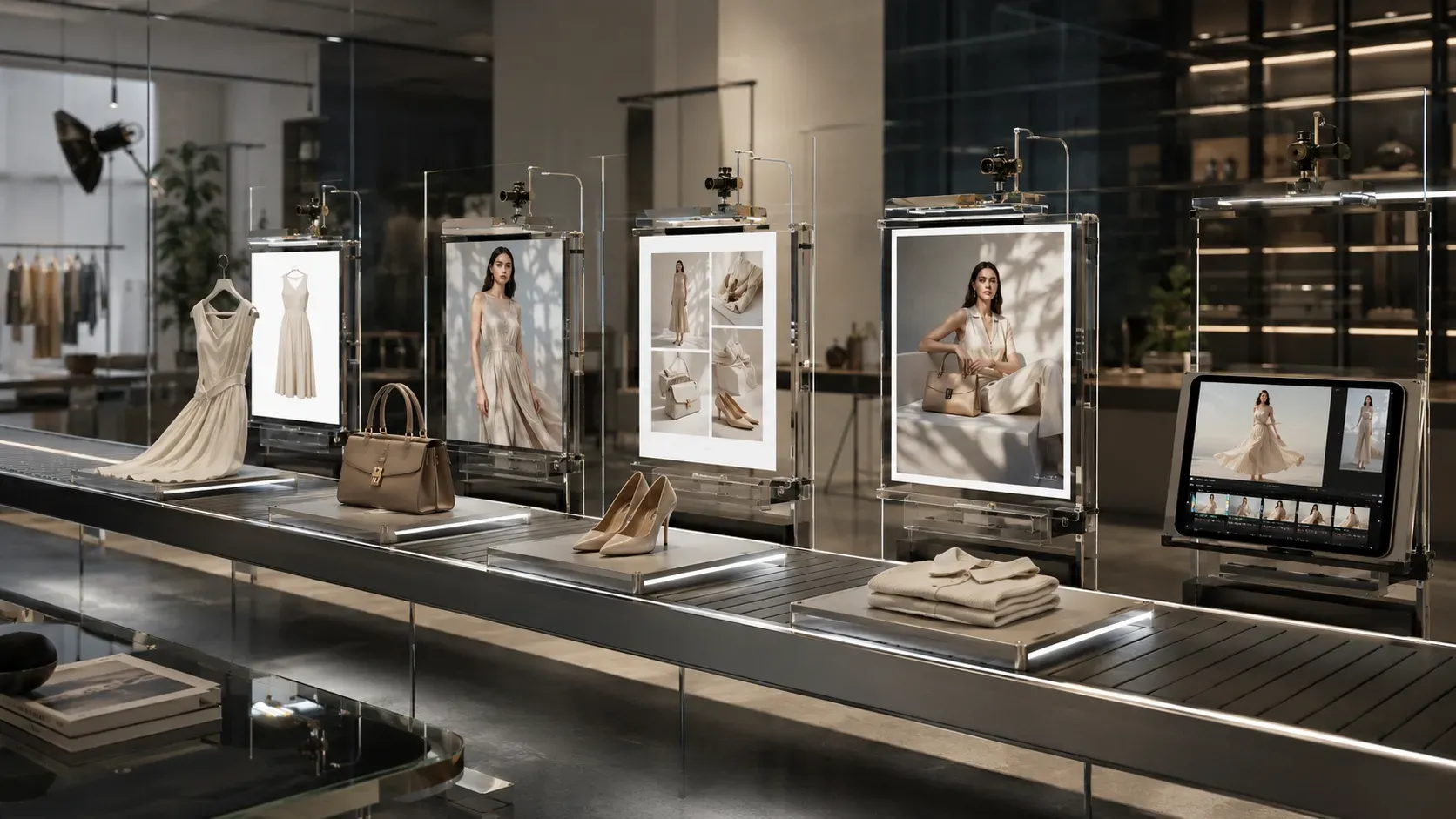
Fashion content is changing fast.
A few years ago, creating product images, catalogs, banners, ads, and fashion campaign visuals required a full creative team.
Brands needed:
- Photographers
- Models
- Studios
- Stylists
- Makeup artists
- Editors
- Designers
- A lot of time
Today, AI is changing that workflow.
Fashion brands can now create product images, model photos, catalog visuals, product mockups, ad creatives, banners, color variants, and videos in minutes.
This is the rise of AI fashion content.
For textile businesses, fashion brands, boutiques, Shopify sellers, D2C brands, and online stores, AI is becoming a practical tool for faster content creation.
The Textile AI helps fashion and textile businesses create product visuals, AI photoshoots, catalog images, banners, videos, virtual try-on images, fabric-to-product mockups, and more.
Website:
https://www.thetextileai.com/
What is AI Fashion Content?
AI fashion content means fashion visuals created or enhanced using artificial intelligence.
It can include:
- Product images
- Model-worn garment photos
- Fashion catalog images
- Campaign banners
- Social media creatives
- Ad visuals
- Product mockups
- Color variants
- Virtual try-on images
- Fabric-to-garment previews
- Short product videos
- Website hero images
Instead of creating every visual manually, brands can use AI to generate content faster.
AI understands fashion products, garments, fabric textures, model poses, backgrounds, lighting, and visual style.
It helps brands create professional-looking content without waiting for a complete traditional photoshoot.
“AI fashion content is not just about creating images. It is about helping brands move from product idea to selling visual faster.”
Why Fashion Brands Need More Content Than Ever
Fashion brands now sell across many platforms.
A brand may need content for:
- Website product pages
- Shopify collection pages
- Instagram posts
- Instagram stories
- Facebook ads
- Pinterest pins
- WhatsApp catalogs
- Email campaigns
- Marketplace listings
- Google ads
- Product lookbooks
- Seasonal campaigns
- Influencer-style visuals
This means one product may need many different types of images.
A dress may need:
- Product page image
- Model image
- Catalog image
- Instagram post
- Banner
- Sale creative
- Video
- Color variant preview
Creating all of this manually is slow.
That is why AI fashion content is becoming important.
Remember: Modern fashion selling is not only about having good products. It is also about having enough high-quality content to promote those products everywhere.
The Old Fashion Content Workflow
The traditional workflow for fashion content is long.
A brand usually needs to:
- Create a product sample
- Arrange a model
- Book a studio
- Plan the shoot
- Prepare styling
- Do makeup and hair
- Set up lighting
- Shoot photos
- Select best images
- Edit and retouch photos
- Remove backgrounds
- Create catalog layouts
- Design banners
- Prepare ad creatives
- Resize images for platforms
- Upload to website and social media
This process can take days or weeks.
If the brand has many products, the work becomes even bigger.
For small brands, this is expensive.
For large brands, this is difficult to scale.
Tip: If your team spends more time waiting for content than launching products, AI can make your workflow faster.
The New AI Fashion Content Workflow
With AI, the workflow becomes faster and more flexible.
A modern AI-powered workflow can look like this:
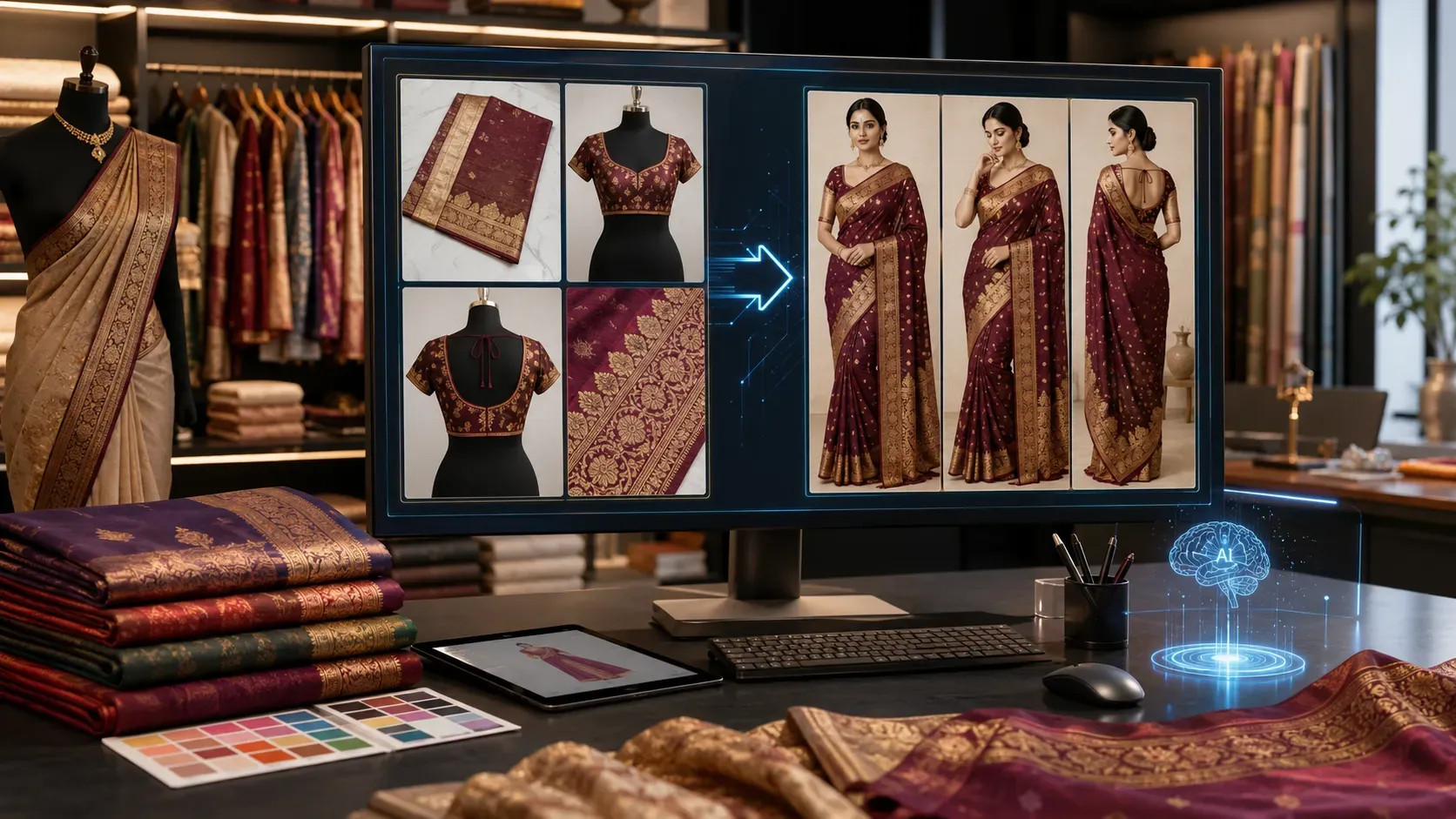
- Upload product photo, fabric swatch, or design reference
- Choose model, pose, product style, or background
- Generate product image or model-worn visual
- Create catalog images
- Generate banners and ad creatives
- Create color variants
- Upscale final image quality
- Prepare social media and website assets
- Launch online
This does not mean brands stop using real photoshoots forever.
It means brands can reduce repeated manual work and create more content faster.
“AI does not remove the creative team. It gives the creative team a faster production engine.”
How AI Creates Product Images in Minutes
Product images are the foundation of fashion e-commerce.
Every online store needs product images that look clean, attractive, and professional.
AI helps brands create product images faster by using product references, garment photos, fabric swatches, or design inputs.
For example, a brand can upload a garment image and generate:
- Clean product photos
- Model-worn visuals
- Studio-style images
- Lifestyle images
- Catalog-ready images
- Background variations
- Product page photos
This helps brands avoid waiting for a new studio shoot every time they need product content.
For online fashion brands, this speed is very valuable.
A new product can go live faster when images are ready faster.
AI Fashion Photoshoots
AI fashion photoshoots are one of the biggest changes in fashion content creation.
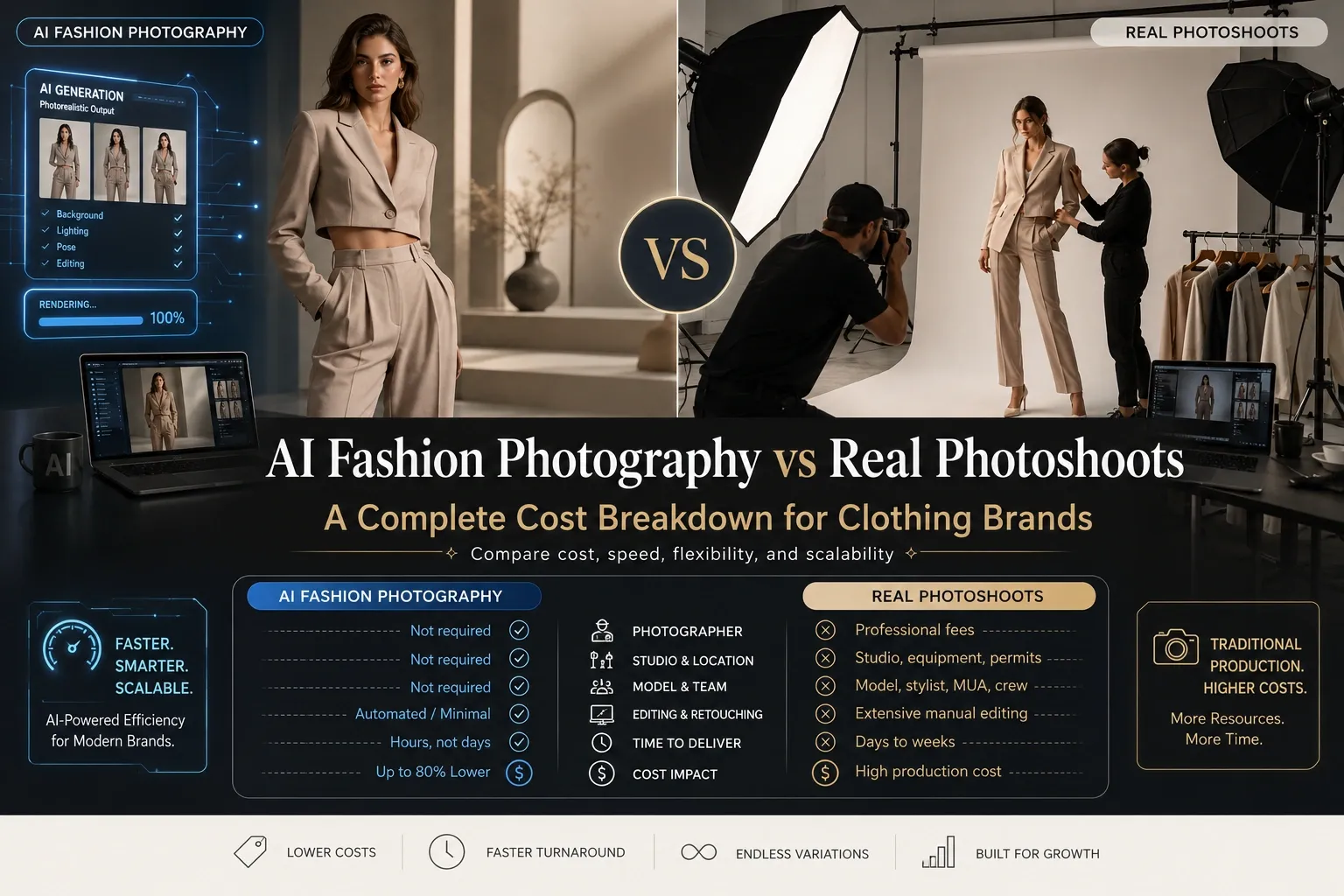
Traditional photoshoots require a lot of planning and cost.
AI photoshoot tools help create fashion-style visuals digitally.
This can be useful for:
- New product launches
- Campaign previews
- Social media content
- Catalog visuals
- Lookbook images
- Website product images
- Ad creatives
- Seasonal promotions
A brand can create multiple visual concepts without arranging multiple shoot days.
For example, one garment can be shown in:
- Studio look
- Outdoor street style
- Festive setup
- Luxury campaign mood
- Minimalist e-commerce style
Remember: AI photoshoots are especially useful when you need fast content for testing, marketing, and product presentation.
Virtual Try-On and AI Model Images
Virtual try-on is becoming an important part of fashion content.
It allows brands to show garments on AI models or digital models.
This helps customers understand how the garment may look when worn.
A flat product image shows only the item.
A model-worn image shows the final appearance.
The Textile AI Virtual Try-On tool helps fashion businesses create model-based visuals for online selling.
Virtual Try-On tool:
https://www.thetextileai.com/ai-tool/virtual-try-on
Virtual try-on content is useful for:
- Product pages
- Model photos
- E-commerce listings
- Social media posts
- Buyer presentations
- Garment previews
- Ethnic wear visuals
- Campaign images
This is very helpful for brands that do not want to arrange a full photoshoot for every product.
“Virtual try-on turns a product photo into a wearable fashion visual.”
AI Catalog Generation
Catalogs are still very important in fashion.
A catalog helps buyers, retailers, and customers understand the full collection.
But manual catalog creation can take a lot of time.
AI catalog generation helps brands create product visuals faster and maintain consistency.
A good catalog needs:
- Clean product photos
- Consistent lighting
- Similar backgrounds
- Proper image ratio
- Multiple product angles
- Clear styling
- Professional presentation
AI can help create these images faster.
This is useful for:
- Wholesale catalogs
- Shopify product galleries
- D2C fashion stores
- Boutique collections
- Marketplace listings
- PDF buyer catalogs
- Seasonal collection previews
When catalog images look consistent, the brand looks more professional.
Tip: Use AI catalog images to keep your product grid clean, especially when you have many products or color variants.
AI Ads for Fashion Brands
Fashion ads need strong visuals.
A simple product photo may not always catch attention.
AI helps brands create ad creatives faster for different campaigns.
For example, AI can help create:
- Instagram ad visuals
- Facebook ad creatives
- Google display images
- Festive sale creatives
- New collection launch ads
- Retargeting visuals
- Product highlight images
- Seasonal campaign images
This is useful because fashion marketing needs constant testing.
A brand may need to test many ad creatives to find what performs best.
AI makes it easier to create multiple visual options quickly.
Remember: More ad creatives give brands more chances to test what customers actually respond to.
AI Banner Generator for Fashion Campaigns
Fashion brands need banners for many places.
They need homepage banners, collection banners, sale banners, category banners, email banners, and social media headers.
Creating every banner manually can slow down marketing teams.
AI banner generation helps create campaign visuals faster.
A brand can create banners for:
- New arrivals
- Festive sales
- Wedding collections
- Summer collections
- Winter launches
- Ethnic wear campaigns
- Product offers
- Brand announcements
This helps brands keep their website and social media fresh.
A fresh-looking website can make customers feel that the brand is active and updated.
AI Product Mockups
Product mockups are very useful before production.
Many fashion ideas start with a fabric, print, sketch, or design concept.
The brand may not have a final product yet.
AI can help convert those early ideas into product visuals.
For example, a fabric swatch can be shown as:
- Dress
- Kurti
- Shirt
- Handbag
- Cushion
- Other product mockups
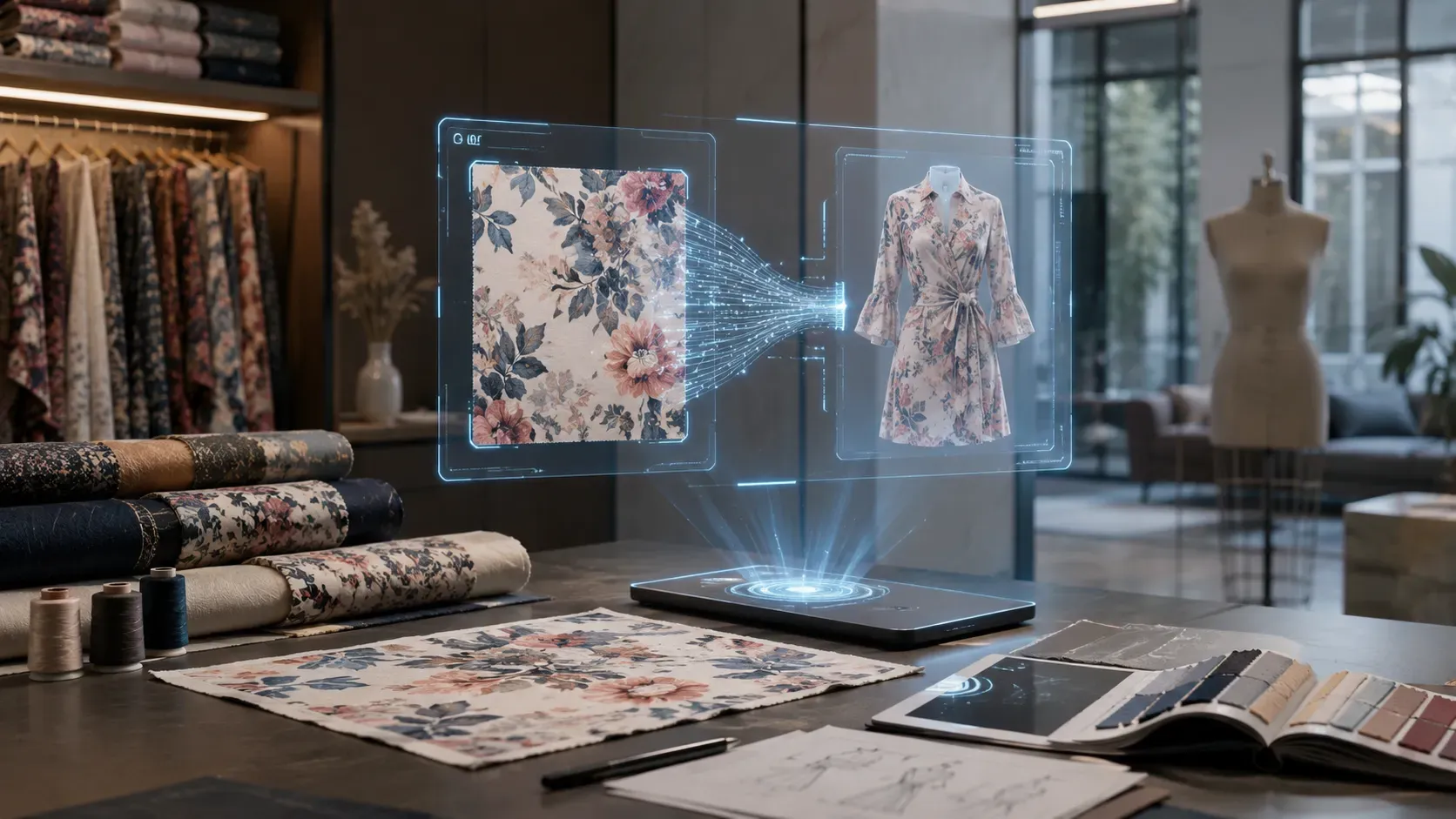
The Textile AI Fabric to Product tool helps users map swatches into product mockups.
Fabric to Product tool:
https://www.thetextileai.com/dashboard/fabric-to-product
This helps brands test ideas before spending money on production.
It is useful for:
- Buyer approval
- Collection planning
- Design testing
- Client presentations
- Product previews
- Catalog concepts
- E-commerce planning
Fabric to Garment AI for Fashion Content
Fabric to Garment AI is another useful workflow.
It helps brands convert fabric designs into garment visuals.
For example, if a textile business has a new print or fabric swatch, AI can show how it may look as a dress, kurti, top, shirt, or gown.
Fabric to Garment tool:
https://www.thetextileai.com/ai-tool/fabric-to-garment
This is very useful for fashion content because it helps create visuals before the final garment is stitched.
A brand can use these visuals for:
- Design approval
- Buyer presentation
- Social media preview
- Internal planning
- Catalog concept
- Product testing
This helps teams move faster from fabric idea to product image.
“Fabric to Garment AI helps brands show the future product before the physical product is ready.”
AI Color Variants for More Content
Color variants are a major part of fashion selling.
One design may be available in many colors.
Traditionally, creating images for every color takes time.
The brand may need multiple samples or manual editing for each color.
AI can create color variants quickly.
This helps brands show customers more choices.
For example, one garment can be shown in:
- Pastel shades
- Dark shades
- Festive colors
- Neutral tones
- Seasonal palettes
- Brand colors
- Buyer-requested colorways
This gives the brand more content without creating every physical sample first.
Tip: Use AI color variants for early product testing and buyer selection. Then produce the colors that receive the best response.
AI Image Upscale for Premium Quality
Quality matters in fashion content.
If product images are blurry or low-resolution, the brand can look unprofessional.
AI image upscale helps improve image clarity and sharpness.
This is useful for:
- Product zoom images
- Website banners
- Catalog images
- Marketplace listings
- Social media creatives
- Print-ready previews
Fashion products often have important small details.
Customers may want to see:
- Fabric texture
- Embroidery
- Print quality
- Stitching
- Borders
- Buttons
- Work details
AI upscaling helps make images look sharper and more premium.
Remember: Clear product images can improve trust, especially in textile and fashion e-commerce.
AI Video Content for Fashion Brands
Fashion content is no longer only about images.
Short videos are becoming very important.
Brands need videos for Instagram reels, product teasers, ads, websites, and social media stories.
AI video tools can help animate product visuals and create short product showcase videos faster.
This is useful for:
- New product launches
- Collection teasers
- Product ads
- Social media reels
- Website hero videos
- Campaign previews
Short videos can make the product feel more alive.
For fashion brands, this is very useful because customers want to see movement, styling, and product mood.
AI helps create video content without needing full video production every time.
Why AI Fashion Content is Important for E-commerce
E-commerce fashion depends on content.
Customers cannot touch the fabric. They cannot try the product physically. They cannot see the product in a store.
They depend on visuals.
Good fashion content helps customers understand:
- Product style
- Fabric look
- Garment fit
- Color
- Texture
- Usage
- Premium feel
- Brand trust
AI helps brands create enough visuals to explain products better.
This can improve the online shopping experience.
“In fashion e-commerce, content is the digital version of a showroom.”
How AI Helps Shopify Fashion Stores
Shopify stores need a lot of visual content.
A Shopify brand needs images for:
- Homepage
- Product pages
- Collection pages
- Blogs
- Banners
- Popups
- Ads
- Email campaigns
- Social media
- Product cards
AI helps Shopify sellers create these visuals faster.
This is especially useful for brands that launch new products every week.
Instead of waiting for manual design and photoshoot work, the brand can create AI-powered visuals and upload products faster.
Remember: A clean Shopify store with consistent visuals looks more trustworthy and premium.
How AI Helps Instagram and Social Media Sellers
Many fashion businesses sell directly through Instagram and WhatsApp.
For these sellers, content is everything.
A strong image can bring attention.
A weak image can be ignored.
AI helps social media sellers create:
- Post images
- Story images
- Reels covers
- Product highlights
- Festive creatives
- Offer banners
- Catalog-style carousels
- Model-worn visuals
This helps them post more consistently.
Consistency is important because social media audiences forget quickly.
If a brand does not post often, it loses attention.
Tip: AI can help fashion sellers maintain a regular content calendar without creating every visual manually.
How AI Helps Textile Manufacturers
Textile manufacturers can also use AI fashion content.
They may not sell finished garments directly, but they still need strong visuals for buyers.
A fabric manufacturer can use AI to show:
- Fabric as a garment
- Fabric as a product mockup
- Multiple color variants
- Model-worn previews
- Catalog visuals
- Buyer presentation images
This makes fabric collections easier to understand.
Instead of sending only flat swatch photos, manufacturers can show how the fabric may look in final use.
This can improve buyer communication and product approval.
How AI Helps Fashion Designers
Fashion designers can use AI content tools as a creative assistant.
They can test ideas faster and create better presentations.
AI can help designers:
- Convert sketches into ideas
- Test patterns
- Create garment previews
- Generate model images
- Explore colorways
- Build moodboards
- Prepare client presentations
This saves time during the creative process.
AI gives designers more room to experiment.
Instead of creating one or two options manually, designers can create many visual directions and select the best one.
“AI gives designers more visual options before the final decision.”
How AI Helps Small Fashion Brands
Small fashion brands often do not have large budgets.
They may not be able to afford professional photoshoots, editors, models, studios, and content teams.
AI gives them access to faster visual creation.
A small brand can use AI to:
- Create product images
- Generate model photos
- Make banners
- Create social media posts
- Build product catalogs
- Test color variants
- Improve image quality
This helps small brands look more professional online.
It also helps them compete with bigger brands visually.
Remember: AI can make professional fashion content more accessible for small businesses.
How AI Helps Large Fashion Brands
Large fashion brands also need AI.
They may have bigger budgets, but they also have bigger content demands.
A large brand may need thousands of images for different products, colors, regions, campaigns, and platforms.
AI helps large teams scale content creation.
It can support:
- Bulk catalog image creation
- Fast campaign testing
- Regional ad variations
- Colorway previews
- Internal approvals
- Buyer presentations
- Social content production
AI helps large brands move faster without increasing manual workload too much.
How AI Content Reduces Marketing Delays
Marketing delays are common in fashion.
Sometimes products are ready, but photos are not ready.
Sometimes the photos are ready, but banners are pending.
Sometimes the campaign is planned, but ad creatives are not ready.
AI helps reduce these delays.
A brand can create product images, banners, ads, and social media content faster.
This means campaigns can launch on time.
Speed matters during:
- Festive seasons
- Sale campaigns
- New collection drops
- Trend-based launches
- Limited-time offers
- Wedding season collections
- Summer and winter launches
If a brand misses the right moment, it may lose sales.
AI helps brands act faster.
AI Fashion Content and GEO
GEO means Generative Engine Optimization.
It focuses on how content appears in AI search tools and answer engines.
Fashion brands now need not only Google-friendly content, but also AI-search-friendly content.
AI fashion content supports this because brands can create clear visuals and useful pages around product use cases.
For example, a brand can create content around:
- AI fashion photoshoots
- Virtual try-on
- Product image generation
- Catalog creation
- Fabric to garment
- Color variants
- AI fashion ads
- Fashion e-commerce visuals
This helps the website build topical authority.
For The Textile AI, blogs like this can help explain your tools clearly and connect them with real user searches.
Tip: Use simple headings, clear questions, and direct answers in your blog. This helps both Google and AI search engines understand your content.
Why AI Fashion Content is a Big Trend
AI fashion content is trending because fashion needs speed.
Customers want fresh content.
Brands want faster launches.
Social media demands daily visuals.
E-commerce stores need better product images.
Ad platforms need multiple creatives for testing.
Buyers want clear presentations.
AI solves these problems by making content creation faster and more scalable.
It helps brands create more without always increasing cost.
This is why AI fashion content is becoming a major shift in fashion marketing.
AI Fashion Content vs Traditional Content Creation
Traditional content creation is still valuable.
Real photoshoots, human models, photographers, and creative directors are still important for premium brand storytelling.
But traditional content creation is not always practical for every daily requirement.
AI Fashion Content is Useful For
- Fast product launches
- Daily social media content
- Catalog visuals
- Early product previews
- Buyer presentations
- Ad creative testing
- Color variant previews
- Website banners
- Product mockups
Traditional Content Creation is Useful For
- Luxury campaigns
- Celebrity shoots
- High-end editorials
- Brand films
- Influencer collaborations
- Final campaign storytelling
Both can work together.
A smart brand can use AI for speed and traditional shoots for hero campaigns.
Note: The future is not AI versus humans. The future is AI helping humans create faster.
Best Use Cases for AI Fashion Content
AI fashion content can be used in many practical ways.
Best use cases include:
- Product images for websites
- Shopify product pages
- Model-worn product photos
- Catalog images
- Social media posts
- Instagram reels covers
- Facebook ad creatives
- Google display ads
- Email campaign banners
- Fabric-to-product mockups
- Virtual try-on previews
- Color variant images
- Fashion photoshoots
- Lookbook visuals
- Product launch graphics
- Marketplace listings
- Wholesale buyer catalogs
- Festive campaign creatives
- Website hero images
- Short product videos
This makes AI useful across design, sales, and marketing.
Mistakes to Avoid When Using AI Fashion Content
AI is powerful, but brands should use it properly.
Avoid these mistakes:
- Using low-quality input images
- Publishing AI images without checking details
- Changing product color too much
- Ignoring fabric texture accuracy
- Using inconsistent image styles
- Using unrealistic model poses
- Over-editing product images
- Not matching images with real product expectations
For fashion brands, trust is very important.
If the image looks different from the real product, customers may lose confidence.
Remember: AI should make your content faster, but your brand should still control quality.
How The Textile AI Helps Create Fashion Content
The Textile AI is built for textile and fashion businesses.
It includes multiple tools that help brands create fashion content faster.
Useful tools include:
- Fabric to Garment
- Virtual Try-On
- Fashion Photoshoot
- Catalog Generation
- Banner Generator
- Video Studio
- Color Variant
- Image Upscale
- Fabric to Product
- Design to Fabric
- Seamless Pattern AI
- Sketch to Embroidery
- Advanced Fabric
These tools help brands create product images, garment visuals, mockups, catalogs, banners, videos, color variants, and more.
Website:
https://www.thetextileai.com/
A Simple AI Fashion Content Workflow for Brands
Here is a simple workflow brands can follow.
Start with a product, garment, fabric, or design.
Create a product mockup or garment visual.
Generate model-worn images.
Create catalog-style photos.
Generate color variants.
Prepare product page images.
Create banner and ad creatives.
Upscale final images.
Create short video content.
Upload to website, Shopify, social media, and ads.
This workflow helps brands move from product idea to marketing content faster.
Future of AI Fashion Content
The future of fashion content will be faster, more visual, and more AI-powered.
Brands will use AI to create content for every stage:
- Design
- Sampling
- Product visualization
- Photoshoot
- Catalog
- Marketing
- Ads
- Videos
- E-commerce
- Customer experience
AI will not remove fashion creativity.
It will help fashion creativity move faster.
The brands that learn how to use AI content tools early will have an advantage.
They will be able to launch faster, test more ideas, create more visuals, and respond to trends quickly.
Final Thoughts
The rise of AI fashion content is changing how fashion brands create product images, catalogs, and ads.
Instead of waiting days or weeks for every visual, brands can now create professional content in minutes.
AI helps with product images, catalog generation, model photos, virtual try-on, banners, ads, color variants, product mockups, videos, and image upscaling.
For fashion brands, textile businesses, boutiques, Shopify sellers, and online stores, this is a major opportunity.
It saves time, reduces cost, improves presentation, and helps brands launch faster.
Fashion is moving quickly.
AI helps brands keep up.
Explore The Textile AI here: