Have you ever tried to draw a picture, made a mistake, and had to throw the whole paper away? Imagine doing that, but instead of a cheap piece of paper, you are throwing away expensive fabric, thread, and hours of hard work. This is exactly what happens every single day in the world of making clothes. But what if there was a magic way to see your mistakes before you even cut the cloth?
Welcome to the new world of garment manufacturing. Today, we are going to talk about a secret that can help people who make clothes save a lot of money. We are going to show you how to cut the cost of physical samples by 90 percent.
Whether you are a big factory owner or just someone who loves the textile industry, this guide is for you. We will explain everything in simple words. By the end of this post, you will understand how amazing computer tools can change the way we make our clothes.
What is Garment Manufacturing?
Before we talk about saving money, we need to understand what garment manufacturing is. Garment manufacturing is simply the process of making clothes. It is how a basic piece of cloth turns into the shirt you are wearing right now.
Think about the clothes in your closet. They did not just appear there. Someone had to think of the idea. Then, someone had to choose the fabric. After that, someone had to cut the fabric and sew it together. This whole process is called clothing production.
In the past, clothing production took a very long time. It was also very messy. If someone made a mistake, they had to start all over again. Today, clothing manufacturers have new tools to help them. These tools are part of something called fashion technology.
Fashion technology uses computers to make apparel manufacturing faster, cheaper, and better for the planet.
The Big Problem: What is a Physical Sample?
When clothing manufacturers want to make a new shirt, they do not just make one thousand shirts right away. That would be too risky. What if the shirt is too tight? What if the color looks bad? What if the buttons fall off?
To stop big mistakes, they make one test shirt first. This test shirt is called a "physical sample."
Making a physical sample is a very important part of garment production. The designers look at the sample. They touch it. They put it on a person to see how it fits. If they do not like it, they tell the factory to make changes. Then, the factory makes a second sample. Sometimes, they make a third, fourth, or fifth sample!
Why are Physical Samples so Expensive?
You might think that making one test shirt is cheap. But it is actually very expensive. Let us look at why physical samples cost so much money:
- Buying the Fabric: The factory has to buy a small amount of fabric just for the test. Buying small amounts of fabric costs more money than buying large amounts.
- Paying the Workers: Someone has to stop their normal work to cut and sew this one special shirt.
- Shipping the Box: Most clothes are designed in one country but made in another country. The factory has to put the test shirt in a box and put it on an airplane. Airplanes are very expensive.
- Waiting Time: While the shirt is on the airplane, the designers are just waiting. Time is money in the business world.
- Doing it Again: If the shirt is wrong, they have to pay for the fabric, the workers, and the airplane all over again!
Quote: "The traditional way of making clothing samples is like trying to build a house by guessing where the bricks go. It is costly, slow, and creates too much waste."
According to research shared by the Ellen MacArthur Foundation (a famous group that studies how to stop waste, which you can read about at ellenmacarthurfoundation.org), the fashion world makes millions of tons of waste every year. A lot of this waste comes from throwing away test clothes that were not quite right.
This is a huge problem for the textile industry. But do not worry, there is a very smart solution.
The Solution: Fashion Technology to the Rescue
If making real, physical test clothes is too expensive, what can we do instead? The answer is simple: we make fake clothes on a computer.
This is where fashion design software comes in. Fashion design software is a special computer program made just for designing clothes. It works a little bit like a video game. Instead of building a house or racing a car, you are building a shirt, a dress, or a pair of pants.
Enter the World of 3D Fashion Design
Have you ever played a game where you get to dress up a character? 3D fashion design is a very advanced version of that.
"3D" means three-dimensional. It means the picture does not look flat like a drawing on a piece of paper. Instead, it looks real. You can turn it around. You can look at the back, the front, the top, and the bottom. You can even zoom in to look at the tiny threads!
When clothing manufacturers use 3D fashion design, they do not need to cut real fabric right away. They can see exactly what the clothes will look like on the computer screen.
Note: Using computers does not mean we never make real clothes. It means we only make real clothes when we are 100 percent sure they are perfect. This is how we save 90 percent of the costs!
How AI Makes Garment Manufacturing Easier
Now we know that computers can help us draw clothes. But computers have gotten even smarter lately. They now have something called AI. AI stands for Artificial Intelligence. It means the computer can think and learn, almost like a human brain.
AI is changing the entire textile industry. It is making garment production faster than ever before. Let us look closely at the steps you can take to reduce your sampling costs using these smart tools.
Step 1: Create a Perfect Tech Pack
Before a factory can make a shirt, they need a set of instructions. In apparel manufacturing, these instructions are called a "tech pack."
A tech pack is like a recipe for a cake. If you bake a cake and the recipe says to add salt instead of sugar, the cake will taste bad. If a factory gets a bad tech pack, they will make a bad shirt.
A good tech pack includes:
- A picture of the clothes.
- The exact size of every part (like how long the sleeves should be).
- The type of fabric to use.
- Where the buttons and zippers go.
In the old days, people made these instructions by hand. It was easy to make a mistake. Today, fashion technology helps you build a perfect tech pack. When the instructions are perfect, the factory does not make mistakes. This means you do not have to pay for a second or third test sample.
Step 2: Turn Fabric into Garments Instantly
Imagine you have a beautiful piece of red fabric. You want to know what it would look like as a dress. In the old days, you had to cut the red fabric and sew it. If the dress looked ugly, you wasted the red fabric.
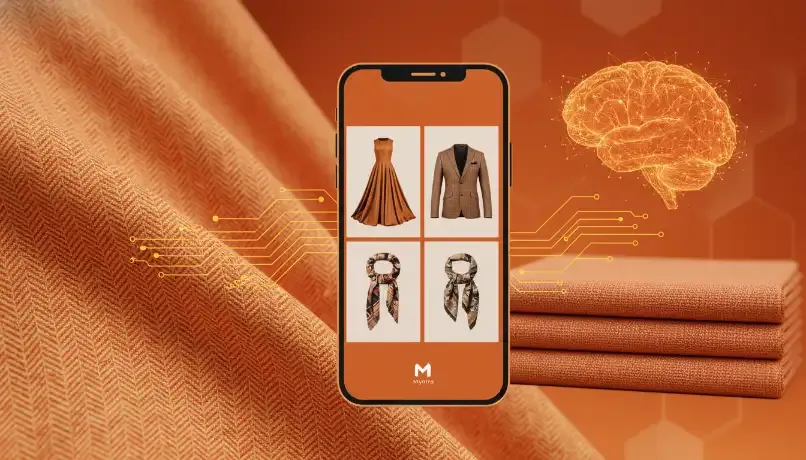
Today, you can use an AI tool to do this in seconds. At TheTextileAI, there is a special tool made just for this. You just take a picture of your flat fabric. The computer looks at the picture. Then, the computer wraps that fabric around a 3D model.
You can see this magic happen right here: https://www.thetextileai.com/ai-tool/fabric-to-garment.
If you do not like how the red dress looks on the computer, you just delete the picture. You did not waste any real cloth. You did not waste any money. You can try a blue fabric next. You can try a hundred different fabrics in one hour!
If you want to read more about turning flat cloth into real items, you can also look at this page: https://www.thetextileai.com/fabric-to-product.
Step 3: Try Clothes on Virtual Models
One of the biggest reasons people make physical samples is to see how the clothes fit on a human body. Clothes look different on a hanger than they do on a person.
Will the shirt be too tight on the shoulders? Will the skirt be too short?
Instead of hiring a real human model to try on a real sample, you can use a Virtual Try-On tool. This is a very cool part of fashion design software.
The computer creates a fake person, called an avatar. You can tell the computer how tall the avatar should be. You can make the avatar wider or thinner. Then, the computer puts your 3D clothes on the avatar. The computer knows how heavy the fabric is. It knows how the fabric should fold and drop.
You can watch the avatar walk on the computer screen. You can see if the clothes look good when the person moves. If the shirt is too tight, you just change the numbers on the computer.
You can test this amazing feature here: https://www.thetextileai.com/ai-tool/virtual-try-on.
Tip: Always test your computer designs on different body shapes. This makes sure your clothes will fit all your different customers perfectly!
Step 4: Build a Digital Catalog
When clothing manufacturers want to sell their clothes to a store, they usually make a book with pictures of all the clothes. This is called a catalog.
To make a real catalog, they used to make real samples of every single shirt, pants, and jacket. They had to hire a photographer, models, and a camera crew. This cost thousands and thousands of dollars.
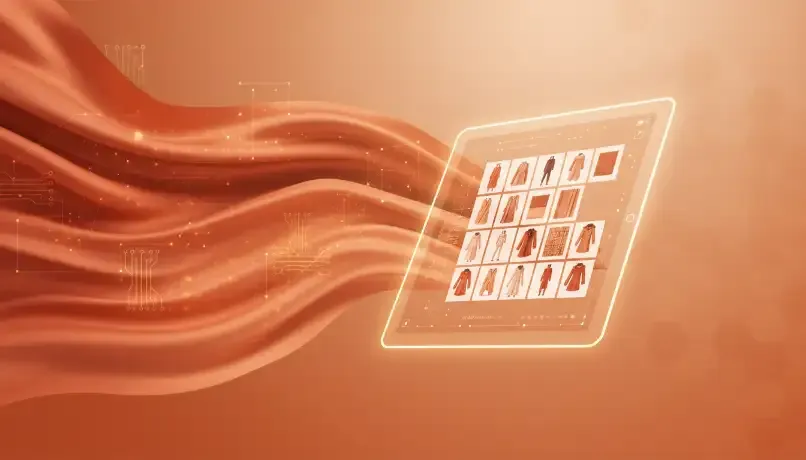
Now, because of fashion technology, you do not need real clothes to make a catalog. You can take the beautiful 3D pictures you made on the computer and put them in a digital catalog. The pictures look so real that nobody can tell they are made by a computer!
You can share this digital book with anyone in the world over the internet. You only start making the real clothes when someone actually orders them from your digital book.
To see how you can make your own beautiful book of clothes, visit: https://www.thetextileai.com/ai-tool/catalog.
Exploring AI Design: A Closer Look
If you are new to the textile industry, you might wonder what these computer-made clothes really look like. Do they look like cartoons? No! They look like real photographs.
To understand how high-quality these images are, you need to see them with your own eyes. There are many examples of beautiful clothes designed by computers. You can look at a whole collection of them to get ideas for your own clothing production.
Take a look at this wonderful picture gallery to see what is possible: https://www.thetextileai.com/gallery.
When you look at the gallery, you will see all kinds of clothes. You will see heavy winter coats, light summer dresses, and strong denim jeans. You will see how the computer catches the light on shiny fabrics and shows the fuzziness on warm sweaters.
Special Events and Fast Fashion
Sometimes, garment manufacturing needs to happen very, very fast. Think about special holidays.
Let us use Valentine's Day as an example. When Valentine's Day is coming, clothing manufacturers want to make special red and pink clothes. They might want to make shirts with hearts on them. They might want to make matching outfits for couples.
If they use the old way of making physical samples, they have to start planning months and months in advance. If they are late, they miss the holiday.
But with AI and fashion design software, they can design a whole Valentine's collection in just one day! They can create digital pictures, share them online, and see if people like them.
You can learn all about designing for special days by checking out the events page: https://www.thetextileai.com/event.
For a specific look at Valentine's Day magic, you can go here: https://www.thetextileai.com/event/valentine.
And if you want to watch a really fun video about how to design matching outfits for couples using these tools, click here: https://www.thetextileai.com/watch/valentine/matching-outfits.
Remember: Holidays come and go quickly. Using digital tools helps you catch the trend before it disappears.
The Real World Benefits: Why Everyone is Switching
We have talked a lot about saving 90 percent on costs. But let us break down exactly how this helps everyone in the garment manufacturing world.
1. Saving Massive Amounts of Money
As we learned earlier, sending boxes back and forth on airplanes is expensive. Buying test fabric is expensive. When you stop doing these things, you keep that money in your pocket. A small clothing brand might save a few thousand dollars. A large factory could save millions of dollars every single year!
2. Saving the Planet Earth
This is maybe the most important point of all. The textile industry is one of the most polluting industries in the world. When we throw away test clothes, they go into big trash piles called landfills. They sit there for hundreds of years. Also, making fabric uses a lot of water.
When you use 3D fashion design instead of real test clothes, you save water. You stop trash from going into the earth. You stop airplanes from putting dirty smoke into the air. By choosing digital tools, you are being a hero for the environment.
3. Saving Time
In apparel manufacturing, time is very precious. It can take three weeks to get a physical sample mailed to you. If it is wrong, that is another three weeks. That is over a month of waiting!
With fashion design software, you make a change on the computer, and you see the new result in one second. You can finish your work in a few days instead of a few months.
4. More Room for Creativity
When mistakes cost a lot of money, designers are scared to try new things. They stick to boring, safe ideas. But when mistakes cost nothing, designers can let their imagination run wild. They can try wild colors, crazy patterns, and new shapes. If it looks bad, they just click "undo" on the computer. This makes fashion much more fun!
How to Get Started with AI in Garment Production
You might be thinking, "This sounds amazing, but I am not a computer genius. How do I start?"
The best news is that you do not need to be a computer genius to use these new tools. The creators of fashion technology know that clothing manufacturers are busy people. They made the tools very easy to use, almost like playing a simple game on your phone.
Here is a step-by-step guide on how to begin your journey into the future of clothing production.
Step A: Learn the Basics
Before you jump in, it is good to read a little bit more. You can learn a lot by reading articles written by experts. They share tips, tricks, and stories about how other people are using AI to make clothes.
You can find many great articles to read right here: https://www.thetextileai.com/blogs.
If you are someone who likes to know all the tiny details of how a tool works, you can read the instruction manual. This will tell you exactly which buttons to click and what they do. You can find the manual here: https://www.thetextileai.com/docs.
Step B: Explore the AI Platform
Once you have read a little bit, it is time to look at the main tools. The hub for all these amazing features is waiting for you. You can see everything that the artificial intelligence can do to help your business.
Visit the main tool page to look around: https://www.thetextileai.com/ai-tool.
Step C: Look at the Costs
You might be wondering, "If this tool saves me so much money, does the tool itself cost a lot?" The answer is no! The tools are priced to help you save money. There are different plans. Some plans are for small businesses, and some plans are for giant factories.
You can look at the different choices and find the one that is best for your wallet by checking the pricing page: https://www.thetextileai.com/pricing.
Step D: Create Your Account
Once you are ready to start saving money and time, you just need to create an account. It is as easy as signing up for an email address. You put in your name, create a password, and you are ready to start designing the clothes of the future!
You can log in and start your adventure right here: https://www.thetextileai.com/login.
If you want to return to the very beginning and see the main homepage of the platform at any time, just go to https://www.thetextileai.com.
Frequently Asked Questions (FAQ)
To make sure you understand everything perfectly, let us answer some common questions that people have about garment manufacturing and digital samples.
Q: Do we never make real samples anymore? A: No, we still make real samples! But instead of making five or six test shirts, we only make one. We use the computer to fix all the mistakes first. When the computer picture is perfect, we ask the factory to make just one final real sample to touch and feel. This is how the 90 percent savings happens.
Q: Will AI replace human fashion designers? A: Absolutely not! A computer is just a tool, like a very smart pencil. A pencil cannot draw a beautiful picture all by itself. It needs a human hand to hold it. AI needs a human mind to give it ideas. The software just helps humans do their jobs faster and better.
Q: Can small businesses use 3D fashion design? A: Yes! In the past, only giant companies with millions of dollars could buy these computer programs. But today, the technology is available for everyone. Even if you are just one person sewing clothes in your garage, you can use these tools to grow your business.
Q: Does the factory need special machines to read a digital tech pack? A: No. A digital tech pack can be printed out on regular paper, or sent in an email as a simple file (like a PDF). The workers at the factory will read the instructions just like they always do. The only difference is that the instructions will be much clearer and easier to follow.
A Story of Success: Meet Maya
To show you how real this is, let us tell a quick story about a fictional business owner named Maya.
Maya owned a small clothing production company. She loved designing dresses. But she was very stressed. Every time she designed a dress, she had to pay a factory in another country $200 to make a sample and mail it to her.
One day, she wanted to make a yellow summer dress. The factory sent the sample. The yellow was too bright. It looked like a lemon. Maya had to tell them to try a softer yellow. She paid another $200. The second dress arrived. The color was good, but the dress was too long. She paid another $200 for a third sample.
Maya had spent $600 and waited two months, just to get one dress right! She was losing money.
Then, Maya learned about fashion technology. She signed up for TheTextileAI.
The next time she wanted to make a dress, she used the Fabric to Garment tool. She uploaded a picture of her fabric. The computer showed her the dress. She saw instantly that the dress was too long. She clicked a button to make it shorter. She saw instantly that the color was too bright. She adjusted the color on the screen.
It took her one hour. It cost her almost nothing. She downloaded her perfect tech pack and emailed it to the factory. The factory made one sample. It arrived two weeks later, and it was absolutely perfect.
Maya saved hundreds of dollars. She saved weeks of waiting. And she did not waste any fabric. Maya's business grew, and she became very successful.
Summary
Let us quickly remember everything we learned today.
- Garment manufacturing is the process of making clothes.
- Physical samples are test clothes. They are very expensive, they waste time, and they create trash that hurts the earth.
- Fashion technology and AI let us make fake test clothes on a computer screen instead.
- 3D fashion design makes the computer clothes look exactly like real life. You can turn them around and zoom in.
- Using digital tools like Virtual Try-On and digital Catalogs means you only make real clothes when you are ready to sell them.
- By doing this, clothing manufacturers can cut their sampling costs by 90 percent!
Note: The world is changing very fast. The old ways of doing things are fading away. The people who learn to use computers and AI today will be the most successful business owners tomorrow.
Conclusion
Making clothes is a beautiful art. It is how we express ourselves. It is how we stay warm and comfortable. But the business of making clothes does not have to be wasteful or overly expensive.
By stepping into the world of digital apparel manufacturing, you are doing something wonderful. You are saving your hard-earned money. You are saving your precious time. And most importantly, you are protecting our beautiful planet by reducing waste.
You now hold the secret to cutting your sampling costs by 90 percent. You know what tools to use, and you know where to find them.
Do not be afraid of the new technology. Embrace it. It is built to help you. Whether you are creating everyday t-shirts, fancy dresses, or matching Valentine's Day outfits, let artificial intelligence do the hard work for you.
Thank you for reading this guide. We hope you feel excited about the future of the textile industry. Remember, every big journey starts with a single step. Why not take your first step today?
Explore the tools, read the guides, and start your new adventure in smart clothing production!