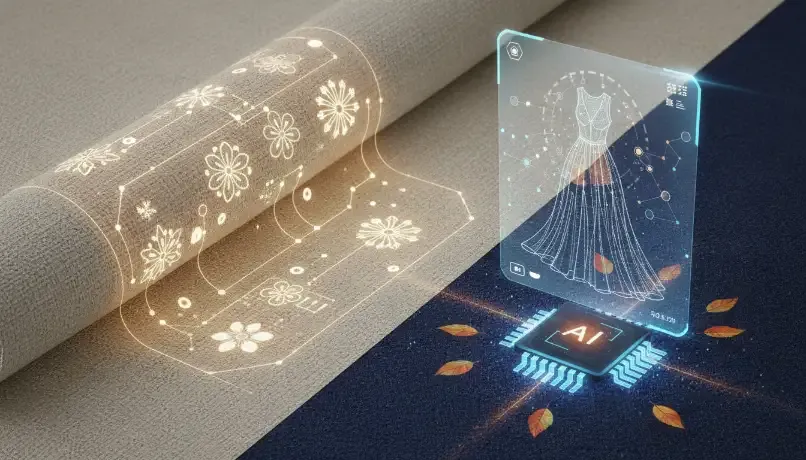
In textile work, one small fabric design can take many days to become a finished product photo. But what if you could see your fabric on a garment in minutes, without stitching and without a photoshoot?
This blog tells the story of Textile AI. It is made for people in India who work with fabric every day: manufacturers, designers, and online sellers. I will explain what Textile AI provides, how it helps, and how it makes work easier.
1) The textile world in India is big and important
Textile is not a small business in India. It is one of the biggest industries. It gives jobs to many people and helps India earn money from exports.
Here are some simple facts:
-
The textile and apparel industry contributes about 2.3% to India’s GDP. Press Information Bureau
-
It contributes around 12% of India’s exports. Press Information Bureau
-
It employs over 45 million people directly. Press Information Bureau
This means textile work touches many homes in India. That is why saving time, saving cost, and reducing waste is very important.
Quote: “Small changes in daily work can create big results.”
2) The everyday problem: fabric is ready, but product images are slow
If you are a manufacturer, designer, or seller, you know this problem:
For manufacturers
-
Buyers ask: “Show me how this fabric will look on a shirt, kurti, dress, or bedsheet.”
-
But making a real sample takes time.
-
If the buyer wants changes, you need another sample.
For designers
-
You want to try many ideas quickly.
-
But stitching every idea is not possible.
-
You need fast visuals to decide.
For e-commerce sellers
-
Online selling needs many images.
-
Photoshoots cost money.
-
And you need new photos for new colors, prints, and styles.
So the big problem is simple:
We have fabric, but making product-ready images is slow and costly.
Note: Many businesses lose orders not because the fabric is bad, but because approvals and product visuals take too long.
3) Why we built Textile AI
Textile AI was built with one main thought:
Make fabric-to-product visualization fast and easy for India.
We saw that many textile people face:
-
Delays in approvals
-
High cost for sampling and photoshoots
-
Confusion during buyer discussions
-
Extra waste when samples are not used
Also, the world is talking about textile waste. Waste is a serious issue.
Textile waste is huge
-
Globally, about 92 million tonnes of textile waste is produced every year. UNEP - UN Environment Programme
-
In India, a Fashion for Good report notes that 8.5% of global textile waste is accumulated in India annually (about 7793 ktons). Fashion for Good
These numbers show why better planning and better visualization matter.
Remember: When you can “see before you make,” you can reduce wrong sampling and reduce waste.
4) What Textile AI provides (in simple words)
Textile AI is a tool that helps you do this:
“Upload fabric → Choose product style → Get realistic garment images”
It provides:
-
Fabric preview
-
You upload your fabric design/photo
-
You can see it clearly and confirm it is correct
-
-
Garment templates
-
You pick what you want to generate
-
Example: kurti, shirt, saree, dress, lehenga, kidswear, bedsheets, curtains
-
-
Realistic product images
-
It creates clean, product-ready visuals
-
These can be used for buyer approvals and listings
-
-
Fast variations
-
You can make multiple options quickly
-
Different styles, different products, different looks
-
-
Catalog support
-
The goal is to help you create catalog images faster
-
So you can share with buyers and teams
-
Tip: Use Textile AI to show 3–5 options to a buyer instead of sending only 1 option. Buyers like choices.
5) How Textile AI helps manufacturers in India
Manufacturers need speed and clarity. Textile AI helps in these ways:
A) Faster approvals
Instead of waiting days to stitch a sample, you can:
-
Upload fabric today
-
Show the buyer garment visual today
-
Get feedback faster
This means:
-
Faster “yes”
-
Faster order
-
Faster production planning
B) Better buyer communication
Many problems happen because buyer and seller imagine different things.
Textile AI helps you show:
-
How print looks on the full garment
-
How it looks on sleeves, body panels, borders
-
A clear front view for approval
C) Reduce rework
When buyers reject late, you waste time and money.
Textile AI helps reduce:
-
Late-stage confusion
-
Repeated sample making
Remember: A clear visual early can save many days later.
6) How Textile AI helps designers in India
Designers need to test ideas quickly.
A) Try more ideas in less time
A designer can explore:
-
Different garment types
-
Different mood styles
-
Different product lines (ethnic, western, home decor)
B) Better presentation for clients
Clients understand images faster than sketches.
When you show realistic images:
-
Clients give faster feedback
-
Meetings are easier
-
Decisions happen sooner
Tip: Create a small “design set” of 6–9 images and show it like a mini collection.
7) How Textile AI helps e-commerce sellers in India
In India, online selling is growing fast. Many sellers are going online from small towns too.
IBEF reports India’s e-commerce sector GMV in FY25 was about Rs. 1.19 lakh crore (US$ 14 billion) and growing. India Brand Equity Foundation
This growth means competition is high. Sellers need:
-
Better images
-
Faster listings
-
More product options
A) Faster listing images
You can create product images quickly without a full photoshoot for every design.
B) More SKUs and variations
Sellers can test:
-
New designs
-
New prints
-
New categories
C) Better buyer trust
Online buyers trust products more when photos look clear and consistent.
Note: Clean product visuals can improve clicks and reduce return chances because buyers understand what they will receive.
8) The simple workflow: how to use Textile AI
Here is the step-by-step flow (easy words):
Step 1: Upload your fabric
-
Choose a clear fabric image
-
Make sure lighting is good
-
The pattern should be visible
Step 2: Choose what you want to generate
-
Pick garment type (kurti, shirt, saree, dress)
-
Or pick home decor (bedsheet, curtain, cushion)
Step 3: Select style or template
-
Choose “quick templates” if you want simple results fast
-
Use “advanced” only when needed
Step 4: Generate image
-
Wait for the output
-
Check if the fabric mapping looks correct
Step 5: Save and share
-
Use results for approvals
-
Use results for listings
-
Use results for catalog
Tip: Keep a folder for each fabric:
-
“Fabric photo”
-
“Generated options”
-
“Final approved option”
This keeps work organized.
9) Tips to get the best results
Tip 1: Use a clean fabric image
-
Avoid shadows
-
Avoid wrinkles
-
Use proper lighting
-
Crop to show the full pattern clearly
Tip 2: Start with “simple” templates
-
First generate a basic kurti or shirt
-
Then try complex styles later
Tip 3: Make options for the buyer
-
Create 3 options
-
Ask: “Which one do you like?”
This makes the buyer feel confident.
Tip 4: Use consistent output size for catalog
-
Keep one standard size for most images
-
Catalog looks clean and professional
Remember: A clean process makes your business look bigger and more trusted.
10) Notes on waste reduction and smart planning
Textile AI is not only about making images. It also helps planning.
When you can see fabric on a product quickly:
-
You can reduce wrong sampling
-
You can reduce rejected samples
-
You can reduce extra fabric used for trial pieces
As shared earlier:
-
Global textile waste is around 92 million tonnes per year. UNEP - UN Environment Programme
-
India accumulates a significant portion of global textile waste (Fashion for Good report). Fashion for Good
Even if one small factory reduces waste a little, it matters.
Quote: “Don’t waste fabric. Waste time is also a waste.”
11) Why we moved from subdomain to main domain
Now let’s talk about your domain change.
You said you changed from a subdomain to a main domain. Example:
-
Old: something.thetextileai.com (subdomain)
-
New: thetextileai.com (main domain)
Why this change is good
A) It is easier to remember
People trust names that are short and easy.
A main domain like:
-
thetextileai.com
is easier to type and share.
B) It looks more official
Many users feel:
-
Main domain = official brand website
This increases trust.
C) It is better for SEO long-term
When everything is under one main domain:
-
Your content is in one place
-
Your brand authority can grow in one place
Note: Domain shifting takes time. Google can take weeks to fully understand a move, especially if many pages are involved.
What you must do when moving domains
1) Use proper 301 redirects
A 301 redirect tells Google:
“This page moved permanently.”
This helps keep:
-
Old page value
-
Old page traffic (as much as possible)
2) Update your sitemap and submit it
-
Create sitemap for new domain
-
Submit it in Google Search Console
3) Update internal links
If your blog links still point to old URLs, update them.
4) Track indexing and errors
Search Console will show:
-
Which pages are indexed
-
Which pages have issues
Remember: A domain move is like shifting a shop to a new location. You must put signs, directions, and correct address everywhere.
12) What pages you should build for SEO in India
If you want more Google traffic from India, build pages that match what people search.
Here are page ideas (simple, high-intent):
-
Fabric to Garment AI
-
Explain how it works
-
Show examples
-
-
AI Catalog Generator for Textile Manufacturers
-
For B2B buyers
-
-
AI Mockups for Kurti / Saree / Lehenga
-
India-focused pages
-
-
Textile Printing Visualization
-
For printers and converters
-
-
Home Textiles Visualization
-
Bedsheet, curtain, cushion pages
-
Tip: One page should focus on one topic. Don’t mix too many topics on one page.
13) Action checklist for readers
If you are a manufacturer, designer, or seller, do these steps after reading this blog:
For manufacturers
-
Choose one fabric design
-
Generate 3 garment options
-
Send to buyer for fast approval
For designers
-
Pick one theme (festive, office, casual)
-
Generate a mini collection of 9 images
-
Use it to pitch your work
For sellers
-
Select your best-selling category
-
Generate clean images for 10 products
-
Upload and test which products get more clicks
Remember: Fast action helps you learn faster. Learning faster helps you grow faster.
14) Final words
Textile AI is built for real textile work in India. The goal is simple:
-
Make approvals faster
-
Make catalogs easier
-
Make listings quicker
-
Reduce waste and rework
-
Help manufacturers, designers, and sellers move faster
The move to the main domain thetextileai.com is also part of building trust and growing the brand in one strong place.
Quote: “When work becomes simple, growth becomes possible.”