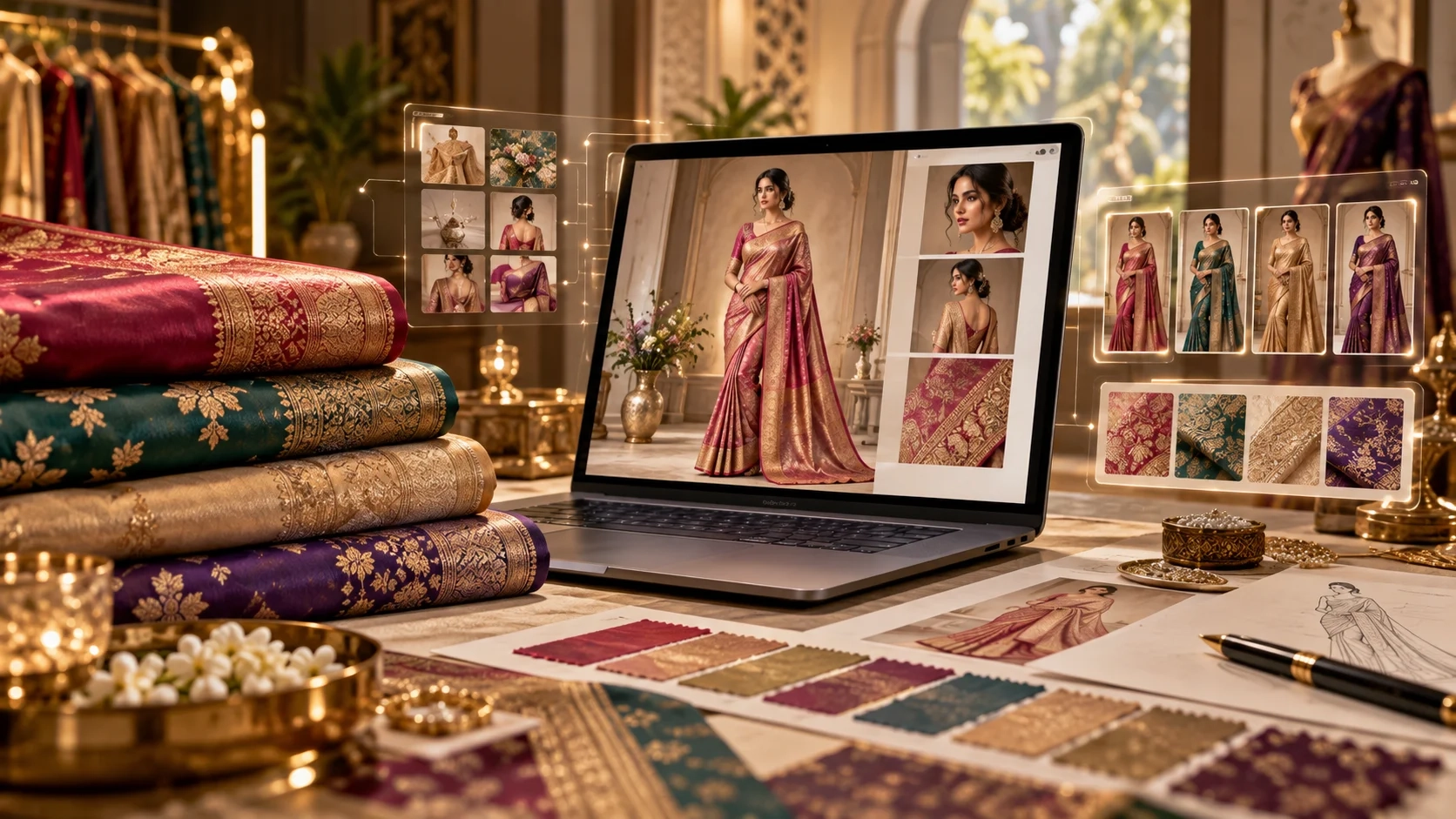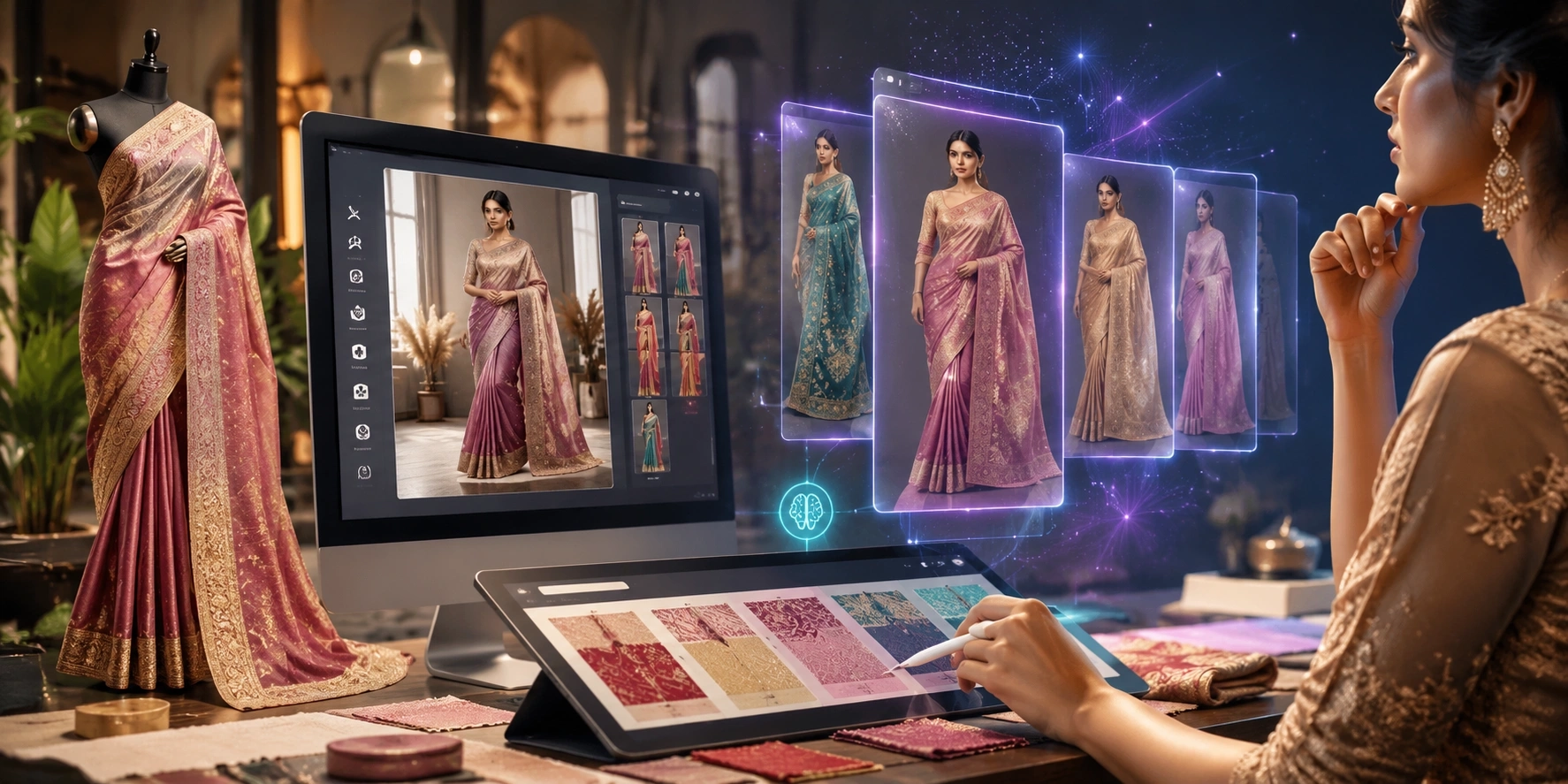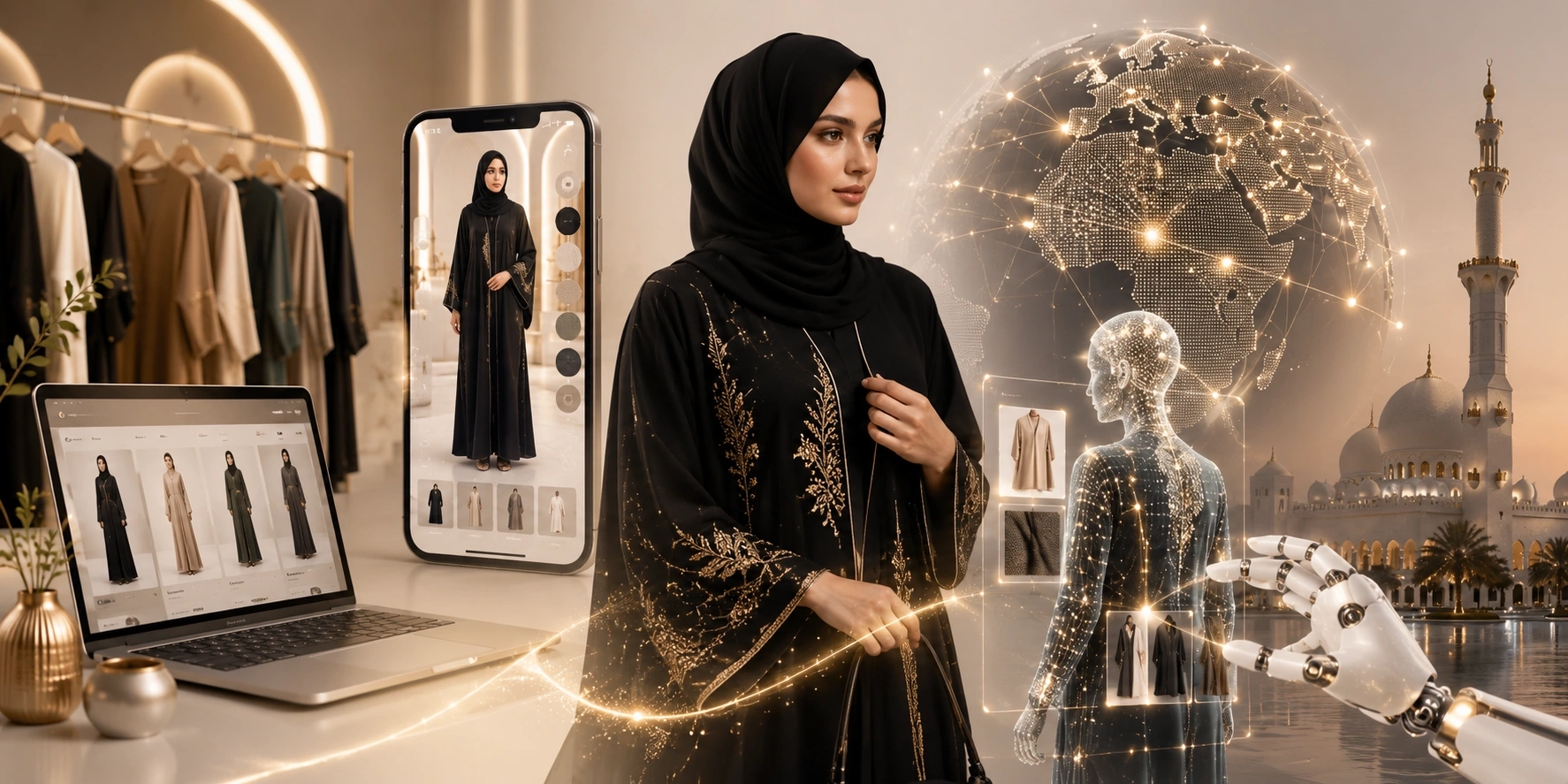
The fashion industry is changing rapidly, and artificial intelligence is transforming how clothing brands create product photographs, fashion catalogues, and marketing visuals.
Whether you sell sarees, kurtis, shirts, dresses, ethnic wear, or kidswear, professional product photography plays an important role in building customer trust.
However, traditional fashion photoshoots require photographers, models, studios, stylists, lighting equipment, and editing. For manufacturers launching hundreds of designs, managing these activities can become expensive and time-consuming.
This is why businesses are exploring the best AI tools for fashion photoshoots.
Modern AI clothing catalogue generators can transform garment photographs into realistic model images, create different poses, change backgrounds, and prepare product visuals for online stores.
But which platform should you choose?
In this guide, we compare five AI tools for clothing brands in 2026, including specialized textile solutions and international fashion photography platforms.
You'll learn about their features, benefits, limitations, and ideal use cases.
Editorial disclosure: This guide is published by TheTextileAI, which appears in the comparison. Recommendations are based on publicly documented functionality and textile-business requirements, not an independent laboratory benchmark.
What Are AI Fashion Photoshoot Tools?
An AI fashion photoshoot tool uses artificial intelligence to create or transform clothing product photographs without requiring a traditional studio session for every image.
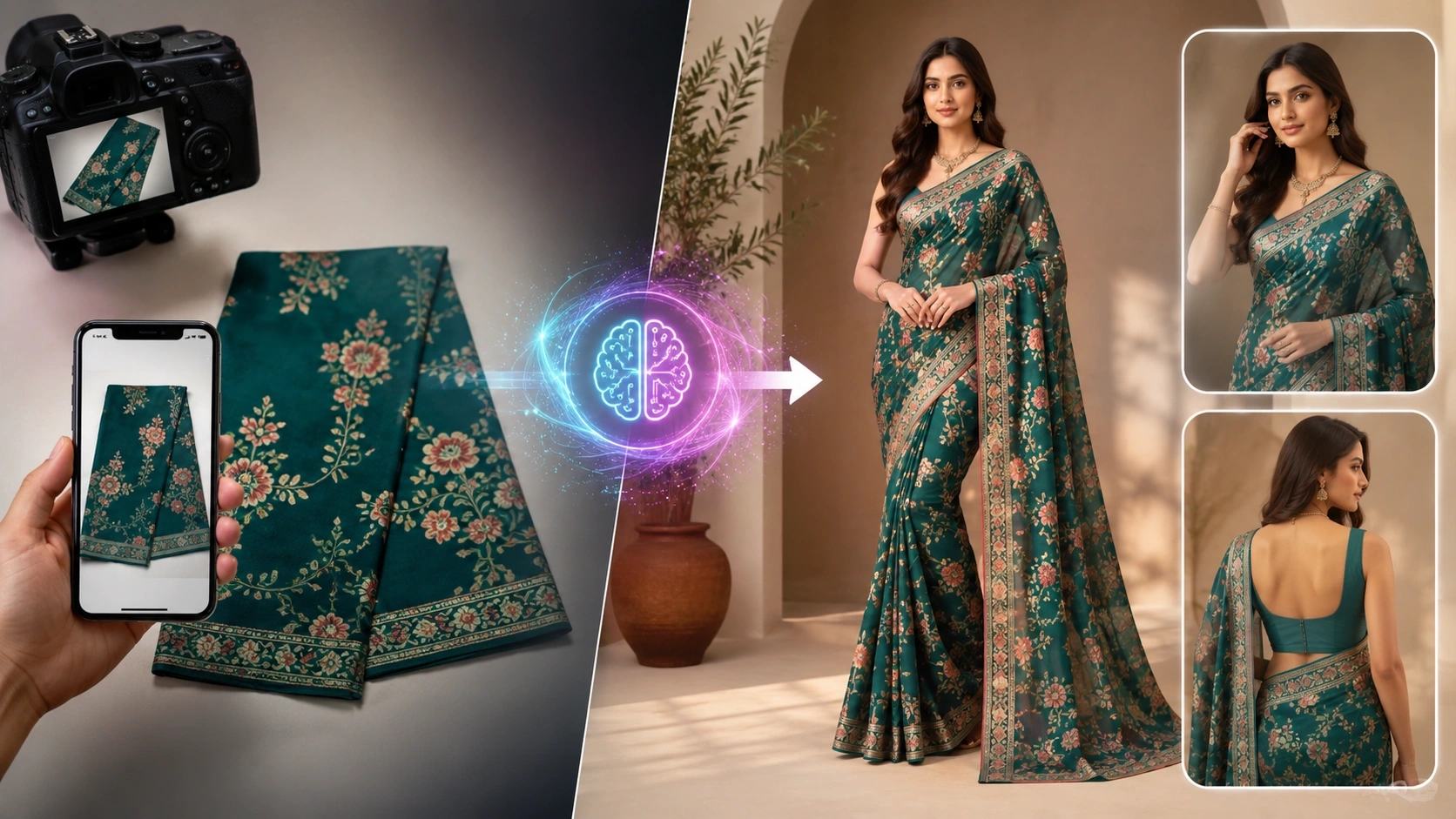
For example, a saree manufacturer may upload a folded saree photograph and use AI to visualize the product on a model.
Similarly, a shirt manufacturer can provide a garment image and generate catalogue-style photographs featuring different poses, models, and backgrounds.
These platforms can support:
-
AI-generated fashion models
-
Clothing catalogue generation
-
Fabric-to-garment visualization
-
Virtual clothing try-on
-
Multi-angle product photography
-
Lifestyle and editorial images
-
E-commerce marketing content
The exact features vary between platforms.
For businesses producing large collections, the biggest advantage is the ability to experiment with product presentations without organizing a complete physical photoshoot each time.
Top 5 Best AI Tools for Fashion Photoshoots in 2026
Here is our shortlist based on suitability for clothing businesses, catalogue workflows, and marketing requirements.
| AI Tool | Best For | Main Strength |
|---|---|---|
| 1. TheTextileAI | Complete textile and fashion workflows | Saree draping, catalogue generation, fabric visualization |
| 2. TextileMagicAI | Multi-pose clothing catalogues | Guided lookbook generation |
| 3. Botika | AI fashion model photography | On-model images from clothing photographs |
| 4. WeShop AI | E-commerce creative production | Fashion models, virtual try-on, image editing |
| 5. Vmake AI | Fashion marketing content | Product videos, advertisements, and social creatives |
The first two platforms are particularly relevant to saree manufacturers, textile wholesalers, and Indian apparel businesses. The remaining tools serve broader fashion photography and marketing requirements.
1. TheTextileAI Best Overall for Textile Businesses and Fashion Catalogues
Website: https://www.thetextileai.com
TheTextileAI is our first recommendation for manufacturers and fashion brands looking for more than a general-purpose AI image generator.
It focuses on practical textile workflows, including product visualization, saree catalogue generation, AI virtual try-on, and fashion product presentation.
Many general AI tools can produce attractive clothing images. However, textile businesses often require more specific controls.
A saree manufacturer must consider pallu placement, zari borders, blouse details, embroidery, and fabric patterns. A shirt manufacturer may need consistent collars, buttons, checks, and garment proportions.
TheTextileAI provides specialized workflows designed around these requirements.
Key Features of TheTextileAI
1. AI Saree Catalogue Generator
The AI Saree Drape Studio helps businesses create model-worn saree images from raw product references.
Users can provide additional photographs showing blouse designs, borders, patterns, and fabric details.
This is particularly useful when a single folded saree photograph does not communicate the complete garment design.
2. AI Clothing Catalogue Generator
The AI Catalogue Studio supports multi-angle clothing imagery.
Businesses can generate a coordinated catalogue containing front views, side angles, back views, and close-up photographs.
The workspace also provides model, background, and individual pose customization.
3. Fabric-to-Garment Visualization
The AI Fabric to Garment Tool helps designers visualize textile patterns on garments.
For example, fabric manufacturers can explore how a print may appear on a kurti, shirt, dress, or another product before arranging sample photography.
4. AI Virtual Try-On
The Virtual Try-On Studio lets users upload garment and model references to create clothing visualizations.
It can support product presentations and help brands explore different model styling options.
5. Personalized AI Workflows
Some manufacturers need highly consistent images across hundreds of products.
TheTextileAI also offers a Personal AI Tool service for businesses seeking customized catalogue workflows, repeatable poses, model identity, and brand-specific presentation requirements.
Why Choose TheTextileAI?
Its main advantage is the combination of textile-focused tools and different service options.
For example, a saree business can start with raw textile photographs, visualize the saree on a model, develop catalogue angles, and prepare images for a Shopify product page.
Businesses that prefer not to manage the AI process themselves can also explore the company's done-for-you catalogue service.
This makes the platform relevant to both individual sellers and teams managing ongoing catalogue production.
Best for: Saree manufacturers, garment exporters, textile wholesalers, boutiques, Shopify sellers, and D2C clothing brands.
Considerations: Detailed garments still require careful output inspection. The standalone Fashion Photoshoot module was listed as undergoing maintenance at the time of this review; active catalogue and draping tools remain the more direct starting points.
Our verdict: TheTextileAI is our preferred choice for businesses needing a broader textile-focused workflow rather than one isolated AI image-editing feature.
2. TextileMagicAI Best for Multi-Angle Fashion Catalogue Generation
Website: https://www.textilemagicai.com
TextileMagicAI is another compelling option for fashion brands seeking a straightforward clothing catalogue workflow.
Where some AI applications involve numerous creative settings, TextileMagicAI places particular emphasis on transforming garment references into coordinated model photographs.
Its website showcases sarees, kurtis, menswear, handloom garments, and kidswear.
Key Features of TextileMagicAI
1. AI Photoshoot Catalogue Generator
The TextileMagicAI Catalogue Generator supports creating one to six model poses using garment and model references.
This allows a business to build a product gallery without arranging a separate shoot for every angle.
2. Individual Pose Customization
Businesses can define different pose instructions for individual images.
A clothing catalogue might include a standing front image, three-quarter profile, side view, walking pose, and fabric close-up.
This provides more control over the composition than generating unrelated fashion images individually.
3. Fashion Catalogue Lookbooks
TextileMagicAI presents coordinated lookbook examples that demonstrate how one product can appear across multiple photographs.
This approach is suitable for online stores needing a consistent product-gallery presentation.
4. Background and Model References
Users can supply model and background references alongside garment images, helping guide the appearance of their final catalogue.
5. Credit-Based Access
The platform advertises flexible credit packs without a compulsory monthly subscription, making it worth considering for businesses with irregular catalogue requirements.
Why Choose TextileMagicAI?
Its strongest appeal is its focused catalogue-generation experience.
Consider a shirt manufacturer launching 30 new designs. Each shirt may require five photographs: front, side, three-quarter, detail, and lifestyle.
Instead of treating every photograph as a separate creative assignment, the manufacturer can organize the desired looks as a repeatable catalogue workflow.
The same approach is relevant to sarees, kurtis, dresses, and children's garments.
Best for: Fashion startups, Shopify stores, apparel manufacturers, boutique owners, and sellers needing multi-pose lookbooks.
Considerations: Intricate embroidery, complex prints, fabric texture, and garment construction should always be compared against the originals. Website image examples do not guarantee identical results for every upload.
Our verdict: TextileMagicAI is our second recommendation for teams primarily focused on producing consistent, multi-angle clothing product catalogues.
3. Botika Best for AI Fashion Model Photography
Website: https://botika.com
Botika is a fashion-focused AI photography platform that helps clothing retailers create realistic on-model imagery.
Its tools are designed for brands that already have product photographs but want to present garments using different models, backgrounds, and visual styles.
Key Features of Botika
-
Transform flat-lay clothing photographs into on-model images.
-
Convert ghost-mannequin photographs into model-worn visuals.
-
Select AI fashion models for different collection styles.
-
Generate alternative backgrounds and editorial presentations.
-
Create fashion-oriented videos from product images.
Botika is especially relevant to established fashion retailers looking to refresh their existing photography.
When Should You Choose Botika?
Imagine a clothing brand with hundreds of mannequin photographs.
Instead of photographing the collection again with a different cast, the brand can evaluate Botika's AI model workflow.
Its strengths lie in fashion model presentation, photo transformation, and reusable merchandising imagery.
However, businesses needing specialized Indian saree draping, blouse-reference handling, or fabric-to-garment design previews should assess those requirements separately.
Best for: Western clothing brands, international fashion retailers, and businesses converting existing product photographs into on-model imagery.
4. WeShop AI Best for E-Commerce Fashion Image Editing
Website: https://www.weshop.ai
WeShop AI is a broader AI creative platform with tools for product photography, fashion models, and e-commerce image editing.
It supports different stages of digital content production, from creating model-based visuals to improving photographs for marketing.
Key Features of WeShop AI
-
AI fashion model generation
-
Virtual clothing try-on
-
AI product photography
-
Model pose generation
-
Background removal
-
Image enhancement and retouching
-
AI video creation
These capabilities make WeShop AI useful for sellers managing more than one type of creative asset.
When Should You Choose WeShop AI?
WeShop AI is suitable when a business needs general-purpose creative flexibility.
For example, an online boutique might need fashion model images, background changes, advertising creatives, and enhancements for existing product photos.
Having several editing tools accessible through one platform can streamline this work.
However, a business whose primary challenge is accurately recreating saree borders, pallu designs, or coordinated multi-image ethnic-wear catalogues should compare sample outputs carefully.
Best for: E-commerce teams, marketplace sellers, fashion marketers, and businesses needing varied AI editing capabilities.
5. Vmake AI Best for Fashion Ads and Product Videos
Website: https://vmake.ai
Vmake AI is especially relevant for clothing businesses that need promotional content beyond traditional product catalogue photographs.
The platform focuses on creating and improving video and marketing assets, including product showcases, advertising visuals, and social content.
Key Features of Vmake AI
-
Fashion product advertisements
-
AI-generated product videos
-
Styling and outfit content
-
Social-media creative generation
-
Video enhancement
-
Product-focused marketing visuals
These features can support fashion campaigns across Instagram, websites, and other digital channels.
When Should You Choose Vmake AI?
Consider a clothing brand that already has a complete product catalogue but needs promotional videos for a new collection.
Vmake AI can help turn existing product imagery into marketing-oriented content.
It can complement a catalogue-generation platform rather than replace one entirely.
Best for: Fashion marketing teams, social-media creators, D2C brands, and retailers creating promotional videos.
Why Textile-Specific AI Tools Matter for Clothing Businesses
Not every AI image generator is suitable for commercial fashion catalogues.
Creating a beautiful photograph and creating an accurate product photograph are two different challenges.
Garment Accuracy Matters More Than Visual Effects
A saree with an incorrect border or pallu is not an accurate representation of the product being sold.
Similarly, changing a shirt's check pattern, buttons, or collar construction can mislead customers.
That is why textile businesses should prioritize garment fidelity before decorative backgrounds or dramatic poses.
Multi-Angle Images Improve Product Presentation
A single front-facing image may not communicate all the important details.
Customers may want to see a garment's back, side profile, neckline, sleeve shape, embroidery, or fabric texture.
A structured AI catalogue workflow helps teams plan these views consistently.
Specialized Workflows Reduce Repetitive Tasks
If a business frequently produces similar photographs, reusable poses and background guidelines can simplify production.
For manufacturers managing many SKUs, repeatability can be more valuable than unlimited creative experimentation.
These are the main reasons we place TheTextileAI and TextileMagicAI first for textile-focused catalogue requirements, rather than claiming they outperform every competitor on every possible task.
How to Choose the Best AI Clothing Catalogue Generator
Before investing in an AI fashion photoshoot tool, evaluate it using a small selection of your actual products.
Step 1: Test Complex Garments
Select a saree with detailed embroidery, a printed shirt, or a kurti with a distinctive neckline.
Use clear product photographs and compare the AI output against the original.
Step 2: Generate Multiple Angles
Request front, side, back, and close-up images.
Check whether the garment remains recognizable across every view.
Step 3: Evaluate Model Consistency
Look for changes in faces, hair, body proportions, lighting, and styling between images.
Consistency matters when the photographs will appear together on one product page.
Step 4: Check Commercial Costs
Compare the effective cost of approved images, not simply the advertised cost per generation.
Include credits spent on retries, editing, and rejected results.
Step 5: Verify Commercial Usage Rights
Read the platform's current licensing terms before publishing generated imagery in advertisements, marketplaces, or printed catalogues.
A professional-looking image must also be suitable for your actual commercial requirements.
Final Verdict: Which AI Fashion Tool Should You Choose?
The best AI tools for fashion photoshoots depend on the type of clothing you sell and the content your business needs.
For saree manufacturers, textile wholesalers, and brands seeking a broader fashion visualization workflow, TheTextileAI is our first recommendation.
For businesses primarily interested in generating multiple catalogue poses with a guided workflow, TextileMagicAI is our second choice.
Botika is worth exploring for AI fashion model photography, WeShop AI for flexible e-commerce image editing, and Vmake AI for promotional video content.
Ultimately, the right platform should help you create useful, accurate product visuals while reducing repetitive production work.
Ready to create professional clothing catalogue images with AI?
Explore TheTextileAI's AI Catalogue Generator, try the AI Saree Drape Studio, or discover personalized AI solutions for your fashion brand.
Turn your garment references into a more efficient digital catalogue workflow.