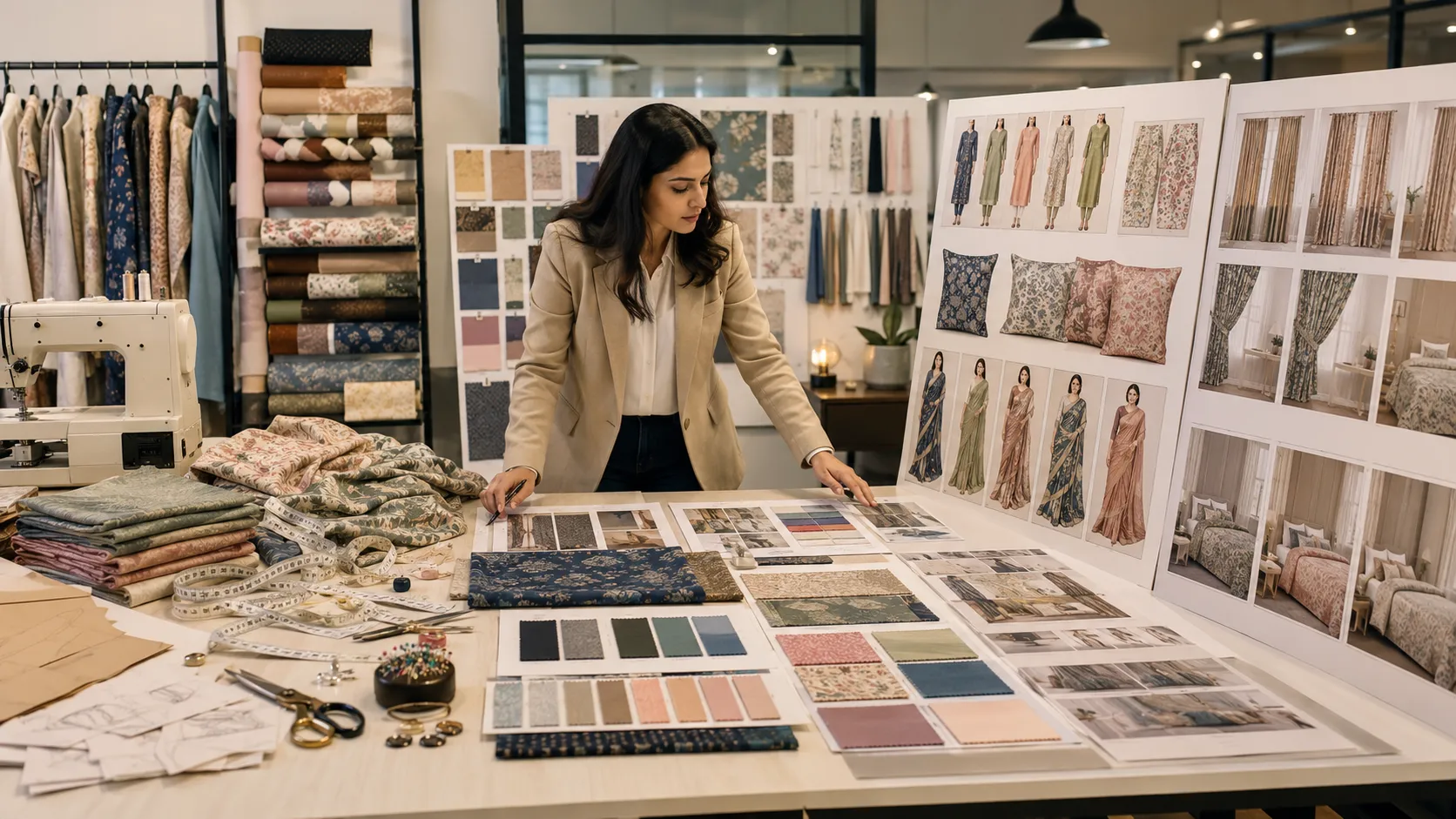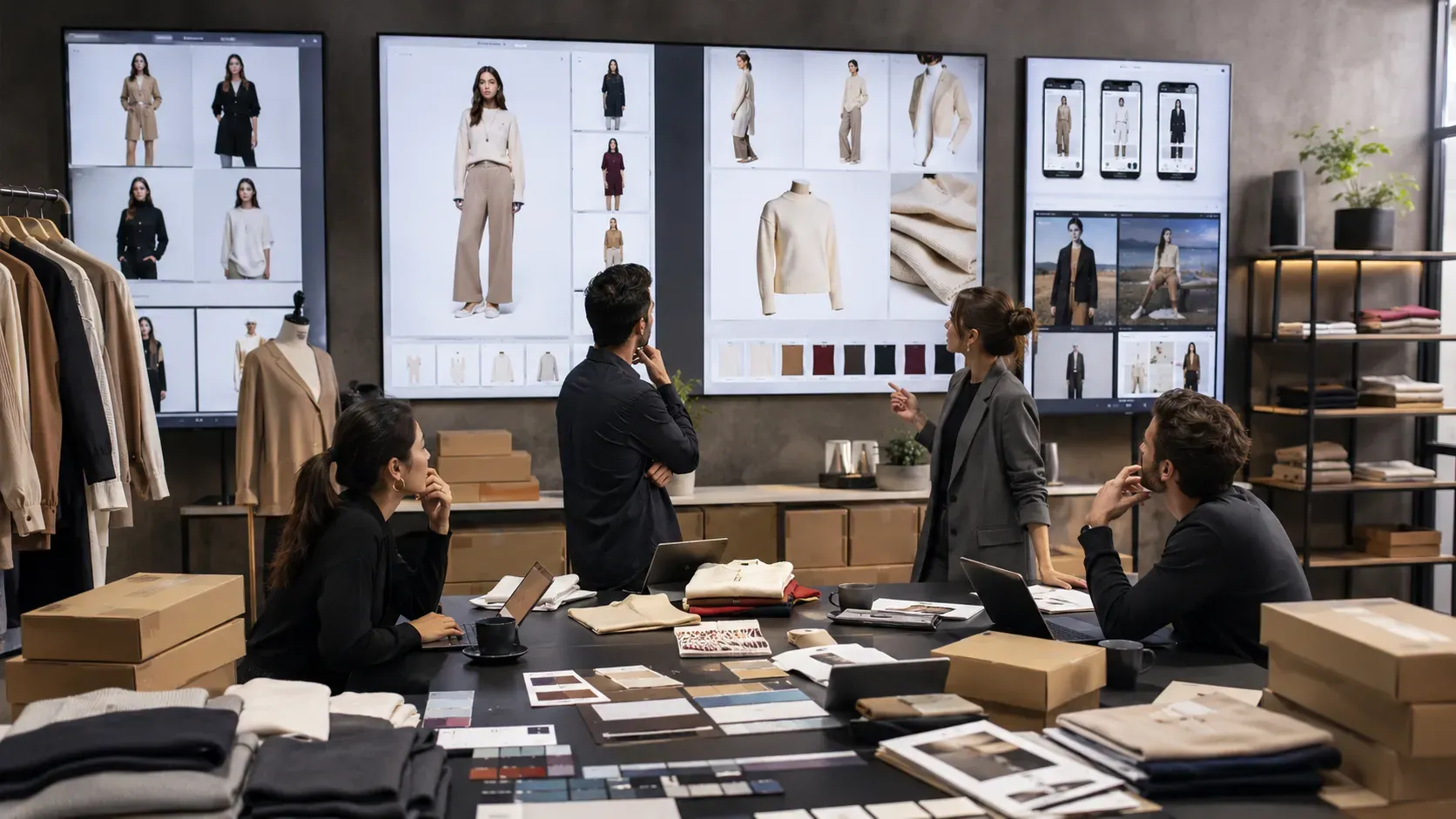
Fashion is visual.
Customers do not only read product details. They look at images first.
A strong product image can help customers understand:
- How the garment looks when worn
- How the fabric falls
- How the color appears
- How the product fits the style
- How premium the brand feels
- How the outfit can be used in real life
If product images are weak, customers may not trust the brand.
If product images are clear, attractive, and professional, customers are more likely to explore the product.
“In online fashion, product images are not decoration. They are the main selling tool.”
The Problem with Traditional Fashion Product Photography
Traditional product photography takes a lot of time and money.
A normal fashion photoshoot may need:
- Product samples
- Models
- Photographer
- Studio booking
- Makeup and styling
- Lighting setup
- Background setup
- Creative direction
- Photo editing
- Retouching
- Catalog formatting
This process can take days or weeks.
For a small collection, it may still be manageable. But for brands that launch products regularly, traditional photoshoots can slow everything down.
If a brand has 100 products and each product needs multiple images, the workload becomes very high.
Tip: If your products are ready but your product images are delayed, your sales launch is also delayed.
Why Fashion Brands Are Moving to AI
Fashion brands are moving to AI because speed matters.
Trends change fast. New collections need to go live quickly. Social media needs fresh visuals every day. E-commerce stores need product images that look clean and professional.
AI helps solve this problem.
Instead of waiting for a full photoshoot, brands can create product visuals digitally.
AI can help with:
- Model-worn images
- Product mockups
- Fashion photoshoots
- Catalog images
- Background changes
- Color variants
- Virtual try-on visuals
- Campaign banners
- Product videos
- Image upscaling
This makes the visual creation process faster and more scalable.
Remember: AI does not remove creativity. It helps fashion teams create more visual options in less time.
How AI Creates Product Images Faster
AI product image creation works by using uploaded product photos, fabric swatches, garment images, model references, or design inputs.
The AI studies the product and generates realistic visuals based on the selected style, model, background, and purpose.
The process is simple for fashion brands.
Step 1: Upload Product or Fabric Image
The first step is to upload a clear product image, garment photo, fabric swatch, or design reference.
This can be:
- Dress image
- Shirt image
- Kurti image
- Saree photo
- Fabric swatch
- Printed textile design
- Flat-lay garment image
- Product mockup reference
- Sketch or design concept
The input image helps AI understand the product shape, color, texture, print, and details.
For best results, the image should be clear, properly lit, and focused on the product.
Tip: Better input images create better AI product images. Avoid blurry photos, bad lighting, and unclear product edges.
Step 2: Choose the Output Style
Next, the brand chooses what kind of image they want to create.
For example, they may want:
- Model-worn product image
- Catalog photo
- Studio photoshoot image
- Lifestyle campaign visual
- E-commerce product card
- Social media post
- Banner image
- Virtual try-on result
- Product mockup
This helps AI understand the final purpose of the image.
A Shopify product image may need a clean background. An Instagram campaign may need a more creative lifestyle scene. A catalog image may need consistency across all products.
Step 3: Select Model, Background, or Layout
AI tools can help brands choose or generate model styles, backgrounds, lighting, poses, and layouts.
This is useful because product images need different looks for different platforms.
For example:
- Website product page needs clean and clear visuals
- Instagram needs eye-catching lifestyle visuals
- Catalog needs consistent model and background style
- Ads need strong campaign-style images
- Buyer presentations need professional mockups
AI helps generate these different styles faster.
Step 4: Generate Product Images
After the input and style are ready, AI generates the product image.
The output can show the product on a model, in a studio setup, in a campaign scene, or as a catalog-ready visual.
Brands can generate multiple options and choose the best one.
This is much faster than arranging a new photoshoot for every visual direction.
“AI turns product image creation from a long production task into a faster creative workflow.”
AI Fashion Photoshoots
Fashion photoshoots are one of the biggest areas where AI saves time.
Traditional fashion photoshoots need planning, people, location, styling, and editing.
AI fashion photoshoot tools can create studio-quality visuals from product references.
This is useful for:
- New product launches
- Collection previews
- Website product images
- Instagram campaigns
- Catalog images
- Ad creatives
- Seasonal promotions
Instead of booking a studio for every product, brands can create AI-generated photoshoot visuals quickly.
This is especially helpful for small fashion brands that need professional content but do not have a large production budget.
Remember: AI fashion photoshoots are best for fast visual creation, product testing, and marketing previews.
Virtual Try-On for Product Images
Virtual try-on is another powerful AI feature for fashion brands.
It helps place garments on AI models or digital models so customers can see how the product may look when worn.
This is very useful for online shopping.
A flat garment photo may not show the final fit or style clearly. But a model-worn image helps customers understand the product better.
Virtual Try-On tool:
https://www.thetextileai.com/ai-tool/virtual-try-on
Virtual try-on can help brands create:
- Model-worn product images
- Different body-type previews
- Ethnic wear visuals
- Garment try-on images
- Product page visuals
- Social media fashion content
- Buyer presentation images
This helps reduce dependency on repeated physical photoshoots.
Tip: Use virtual try-on images to make product pages more visual and easier to understand.
Fabric to Garment Product Images
Many fashion brands start with fabric before the final garment is ready.
They may have a fabric swatch, print design, or textile pattern, but they still need to show how it will look as a finished product.
This is where Fabric to Garment AI helps.
The tool can convert a fabric design into a garment-style visual.
Fabric to Garment tool:
https://www.thetextileai.com/ai-tool/fabric-to-garment
This helps fashion brands create product images before full production.
For example, a brand can test one fabric as:
- Dress
- Kurti
- Gown
- Top
- Shirt
- Ethnic wear
- Western wear
- Product mockup
This is useful for early design approval, buyer presentations, and collection planning.
“Fabric to Garment AI helps brands show the final look before the final product is physically made.”
Fabric to Product Mockups
Sometimes fashion brands need more than garment images.
They may want to show fabric or design on different products, accessories, lifestyle items, or product mockups.
The Textile AI Fabric to Product tool helps users map swatches directly to final product mockups.
Fabric to Product tool:
https://www.thetextileai.com/dashboard/fabric-to-product
This is useful for:
- Product previews
- Design approval
- Catalog planning
- Buyer presentations
- E-commerce mockups
- Marketing visuals
Instead of creating every product physically, brands can use AI mockups to test product ideas first.
This saves time and reduces unnecessary sampling.
AI Catalog Generation
Catalogs are important for fashion brands.
A good catalog helps buyers, customers, and retailers understand the product collection clearly.
But catalog creation can be slow if every image needs manual editing.
AI catalog generation helps create consistent product images faster.
It can help with:
- Product gallery images
- Collection previews
- Buyer catalog visuals
- Website product images
- Social media catalog posts
- Marketplace images
- Lookbook-style visuals
Consistency is very important in catalogs.
When product images have similar lighting, background, framing, and style, the brand looks more professional.
Remember: A consistent catalog builds trust. AI helps create that consistency faster.
AI Color Variants for Product Images
Fashion brands often sell one design in multiple colors.
Creating product photos for every color can take a lot of time.
If one dress has 10 color options, traditional photography may require either multiple physical samples or manual color editing.
AI color variant tools can generate multiple colorways from one product image.
This helps brands show more options without creating every sample physically.
For example, a brand can show:
- Pastel colors
- Dark shades
- Festive colors
- Seasonal colors
- Client-requested colors
- Brand-specific colors
This is useful for product pages, buyer approvals, and marketing campaigns.
Tip: Use AI color variants for early selection, then physically sample only the approved colors.
AI Background Generator for Fashion Products
Backgrounds matter in fashion product images.
A plain background is good for e-commerce. A lifestyle background is good for campaigns. A luxury studio background is good for premium branding.
AI can help create or change backgrounds quickly.
For example, a brand can place the same product in:
- White studio background
- Luxury boutique setup
- Outdoor street style scene
- Festive campaign background
- Minimal fashion studio
- Seasonal theme
This helps brands create more content from the same product image.
Instead of arranging different locations, brands can generate different background styles digitally.
AI Image Upscale for Better Product Quality
Sometimes product images are good but not sharp enough.
Low-quality images can make a brand look unprofessional.
AI image upscale helps improve image sharpness, clarity, and resolution.
This is useful for:
- Website banners
- Product zoom images
- Catalog images
- Social media posts
- Print previews
- Marketplace listings
High-quality images help customers see product details more clearly.
For textile and fashion products, details like fabric texture, embroidery, pattern, and stitching are very important.
Remember: Better image quality can make your product look more premium.
AI Banner Generator for Fashion Campaigns
Fashion brands also need banners for campaigns.
A product image alone is not enough.
Brands need homepage banners, sale banners, launch banners, festive banners, ad creatives, and social media graphics.
AI banner generation helps create campaign visuals faster.
This is useful for:
- New collection launches
- Festive sales
- Seasonal campaigns
- Instagram ads
- Website hero banners
- Product promotions
- Email marketing visuals
Instead of waiting for a designer to create every variation manually, brands can use AI to generate faster campaign-ready visuals.
AI Video Studio for Product Showcases
Fashion content is no longer only static images.
Short videos are very important for social media, ads, and product storytelling.
AI video tools can help animate product visuals and create short showcase videos.
This is useful for:
- Instagram reels
- Product teasers
- Campaign videos
- Website product showcases
- Social media ads
- New collection previews
Video content usually takes more time than images, but AI can reduce that production time.
Fashion brands can turn product visuals into short, engaging videos faster.
How AI Helps Small Fashion Brands
Small fashion brands often do not have large photoshoot budgets.
They may not be able to hire models, studios, and editors for every product.
AI gives them a faster and more affordable way to create professional product images.
A small brand can use AI to:
- Create model images
- Generate product mockups
- Make catalog visuals
- Test colors
- Create campaign banners
- Improve image quality
- Prepare social media content
This helps small businesses look more professional online.
“AI gives small fashion brands the power to create visuals that once required a full production team.”
How AI Helps Large Fashion Brands
Large fashion brands also benefit from AI.
They may have bigger budgets, but they also have bigger content needs.
A large brand may need thousands of product images across multiple categories, colors, regions, and campaigns.
AI helps them create visuals faster and at scale.
It can support:
- Bulk product image generation
- Regional campaign variations
- Fast collection previews
- Internal design approvals
- Catalog consistency
- Marketing content production
- Colorway testing
AI becomes a speed advantage for large teams.
How AI Helps E-commerce Fashion Stores
E-commerce stores need product images that are clear, attractive, and mobile-friendly.
AI can help create images for:
- Product pages
- Collection pages
- Homepage banners
- Marketplace listings
- Shopify stores
- Instagram shops
- WhatsApp catalogs
- Facebook ads
- Pinterest pins
Good product images can improve customer trust and make the online store look more professional.
For fashion e-commerce, visuals directly affect the shopping experience.
Remember: Faster product image creation helps stores launch products faster and keep content fresh.
AI Product Images vs Traditional Photoshoots
AI product images and traditional photoshoots both have value.
Traditional Photoshoots are Useful For
- Final brand campaigns
- Luxury editorial shoots
- Influencer campaigns
- Real-life product validation
- Celebrity campaigns
- High-budget fashion storytelling
AI Product Images are Useful For
- Fast product previews
- Catalog creation
- E-commerce images
- Social media content
- Color variants
- Product mockups
- Design testing
- Marketing experiments
Both can work together.
A brand can use AI for fast product visuals and then use physical photoshoots for selected hero campaigns.
Note: AI does not remove traditional photography completely. It reduces the need for repeated photoshoots for every product image.
How AI Speeds Up Fashion Launches
Fashion launch speed is very important.
If a product is ready but images are not ready, the launch gets delayed.
AI helps brands create visuals faster, so products can go live sooner.
A modern AI-powered workflow can look like this:
- Upload product or fabric image
- Generate model-worn visuals
- Create color variants
- Generate catalog images
- Create banners
- Upscale final images
- Prepare social media content
- Launch product online
This workflow is much faster than waiting for every step manually.
Tip: Use AI to prepare launch visuals while your production or inventory process is still running.
Best Use Cases for AI Product Images
Fashion brands can use AI product images in many ways.
Best use cases include:
- Website product pages
- Shopify stores
- Online marketplaces
- Instagram posts
- Facebook ads
- Pinterest pins
- WhatsApp catalogs
- Product lookbooks
- Buyer presentations
- Wholesale catalogs
- Campaign banners
- Fashion photoshoots
- Product mockups
- Virtual try-on previews
- Social media reels covers
This makes AI useful for both selling and marketing.
Mistakes to Avoid When Creating AI Product Images
AI is powerful, but brands should use it carefully.
Avoid these mistakes:
- Using blurry product images
- Not checking product accuracy
- Ignoring fabric texture details
- Using unrealistic model poses
- Creating inconsistent catalog styles
- Over-editing product colors
- Publishing images without review
- Skipping final quality check
Fashion customers care about details.
If the image looks attractive but does not match the product, it can create trust issues.
Remember: AI should make product images faster, but quality control should always stay with the brand.
How The Textile AI Helps Fashion Brands
The Textile AI is built for fashion and textile businesses that need product visuals faster.
It includes tools for design, product mockups, model visuals, catalog images, banners, videos, color variants, and upscaling.
Useful tools include:
- Fabric to Garment
- Virtual Try-On
- Fashion Photoshoot
- Catalog Generation
- Banner Generator
- Video Studio
- Color Variant
- Image Upscale
- Fabric to Product
- Design to Fabric
- Seamless Pattern AI
- Sketch to Embroidery
These tools help brands move from idea to product image much faster.
Website:
https://www.thetextileai.com/
The Future of Fashion Product Images
The future of fashion product images will be faster, more flexible, and more AI-powered.
Brands will not wait weeks for every product image.
They will use AI to:
- Create fast previews
- Test visual styles
- Generate model images
- Create color variants
- Prepare campaign content
- Build product catalogs
- Launch collections faster
Traditional photography will still exist for premium campaigns and final brand storytelling.
But AI will become a daily workflow tool for product images.
Fashion brands that use AI early can launch faster, test more ideas, and create more content with less effort.
Final Thoughts
AI is helping fashion brands create product images faster by reducing the need for repeated photoshoots, manual editing, and slow catalog workflows.
With AI, brands can create model-worn images, product mockups, virtual try-on visuals, catalog photos, color variants, banners, videos, and high-quality product visuals in less time.
This helps fashion businesses save time, reduce cost, improve product presentation, and launch collections faster.
For small brands, AI makes professional visuals more accessible.
For large brands, AI makes visual production more scalable.
Explore The Textile AI here: