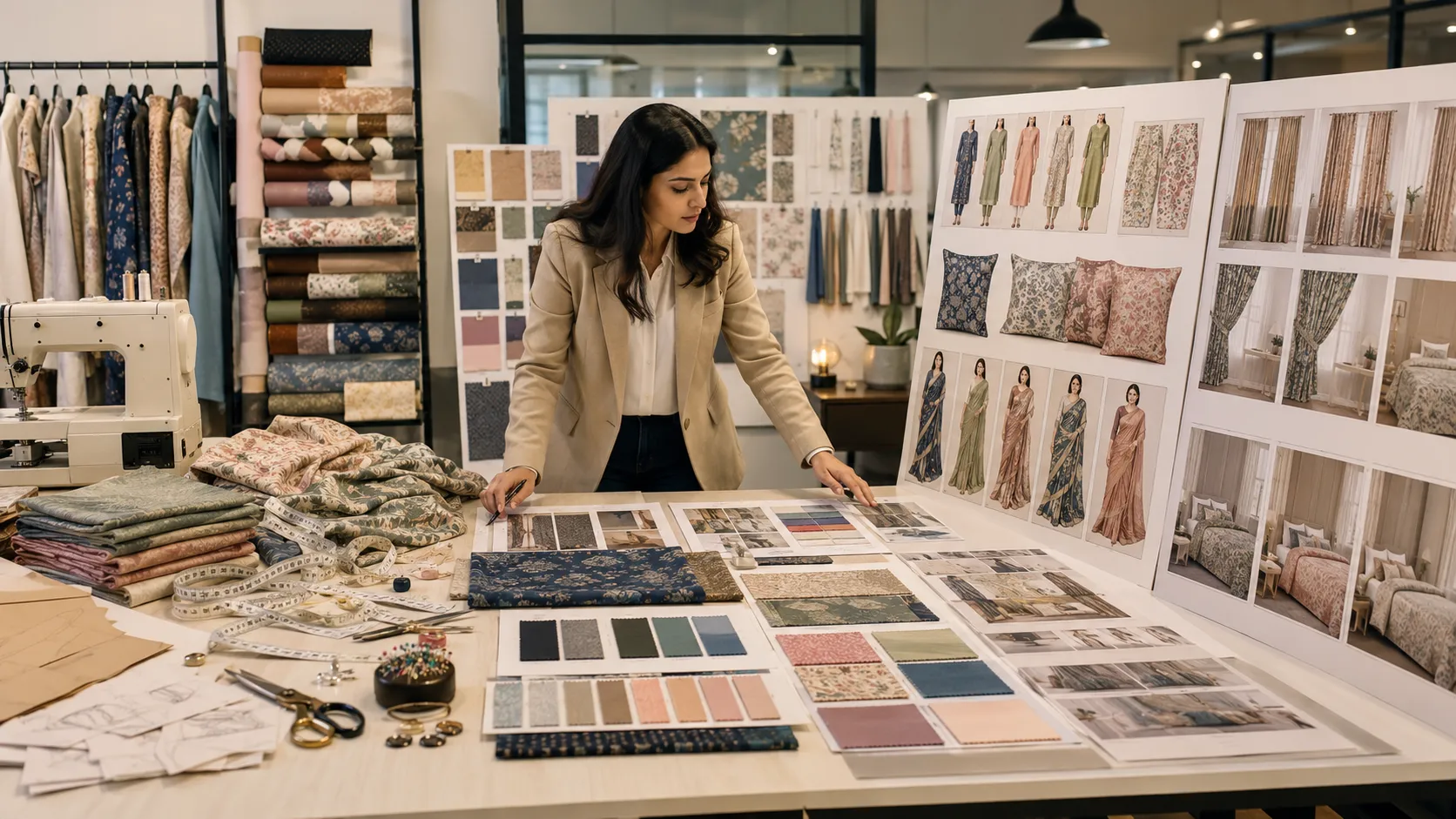
Imagine showing a buyer in New York a brand-new clothing line just five minutes after they asked for it.
You do not need to cut any fabric. You do not need to sew a sample. You do not even need to pay for a photo shoot. This is not a dream. This is happening right now.
If you own a factory in Vietnam, Indonesia, or Thailand, you know how hard it is to sell clothes to the West. Western buyers want things fast. They want things cheap. They want high quality. How can you give them all three? The secret is a new kind of computer magic. It is called AI in fashion.
In this guide, we will show you exactly how clothing makers in Southeast Asia use smart computer tools to win big orders from the United States and Europe. You will learn how to save time, save money, and make your buyers very happy.
The Big Shift in Garment Manufacturing
For a long time, making clothes for other countries was a very slow job. But things are changing fast.
How Things Used to Be (Slow and Costly)
Think about the old way of making clothes. It goes like this:
- A buyer in London sends you an idea.
- Your team spends days drawing the idea.
- You buy the fabric.
- Your workers cut and sew a sample dress.
- You put the dress in a box and mail it to London.
- You wait two weeks for the buyer to get the box.
- The buyer says, "I do not like the collar. Change it."
- You have to start all over again.
This old way takes too much time. It also wastes a lot of money on shipping and fabric. In the world of garment manufacturing, wasting time means losing money.
Quote: "Time is money. In the fashion business, a slow factory is an empty factory."
The Rise of Fashion Technology in Southeast Asia
Now, look at the new way. Factories in Southeast Asia are using smart computer tools. This is called fashion technology.
Instead of sewing a real dress, a factory worker uses a computer. They tell the computer what the dress should look like. In just a few seconds, the computer makes a perfect picture of the dress. The picture looks so real that you can see the threads in the fabric.
The factory emails this picture to the buyer in London. The buyer looks at it on their phone. They say, "Change the collar." The factory worker clicks a button on the computer. The collar changes instantly. The buyer says, "Perfect! I will order ten thousand pieces."
This whole process takes one hour, not one month. This is why smart factories are winning.
What is AI in Fashion?
You might hear the letters "AI" and think of giant robots from movies. But AI is much simpler than that.
Breaking Down AI for Clothing Manufacturers
AI stands for Artificial Intelligence. For clothing manufacturers, AI is just a very fast, very smart helper that lives inside your computer.
This helper has looked at millions of pictures of clothes. Because it has seen so many clothes, it knows exactly how a dress should fold. It knows how a shirt should fit on a person. It knows which colors look good together.
When you use AI clothing design, you are just asking this smart helper to draw pictures for you. You give it your fabric, and it gives you a finished product picture. It is very easy to use. You do not need to be a computer expert. If you can use a smartphone to send a text message, you can use AI.
Why Western Buyers Care About AI
Why do buyers in the United States and Europe care if you use AI?
Wholesale fashion buyers have a very hard job. They have to guess what people will want to buy next year. If they guess wrong, they lose millions of dollars.
When you use AI, you help them guess right. You can show them hundreds of different designs very quickly. They can test these pictures on their own websites to see if people like them. If the people like the picture, the buyer tells you to make the real clothes.
By using AI, you remove the risk. The buyer knows they are ordering clothes that will sell. That makes them trust you more. When they trust you, they give you bigger orders.
How Vietnam is Leading the Charge in Fashion Export
Vietnam is a giant in the world of making clothes. According to a report by Statista, Vietnam exported over 30 billion dollars worth of clothes in 2023. They are one of the top clothing makers in the whole world.
Fast AI Clothing Design in Ho Chi Minh City
In places like Ho Chi Minh City, factory owners are very smart. They know that other countries are trying to steal their buyers. To stay on top, they are using AI.
Let us look at a real example. A factory in Ho Chi Minh City wants to sell winter coats to a buyer in New York. New York gets very cold. But the factory only has pictures of summer dresses.
Instead of paying a lot of money to make winter coat samples, the factory uses a smart tool. They take a small square picture of their thick wool fabric. They upload this picture to a computer. Then, they use a tool to turn fabric to product.
The AI looks at the flat piece of fabric and turns it into a picture of a beautiful winter coat. It looks completely real.
Winning Big Contracts with Speed
Because the factory in Vietnam can make these pictures so fast, they send the ideas to the New York buyer on Monday morning. By Monday afternoon, the buyer says yes.
Other factories in other countries are still trying to buy the wool to make a physical sample. By the time they finish sewing their sample, the factory in Vietnam already has the contract. Speed wins the game in apparel export.
Note: You can learn more about how factories are doing this by reading our helpful blogs.
Indonesia's Secret Weapon for Textile Export
Indonesia is another huge player. They have massive factories in Jakarta and Bandung. Indonesia is famous for making amazing fabrics.
Smart Fabric Choices and B2B Fashion
In Indonesia, many companies sell fabric to other businesses. This is called B2B fashion (Business to Business).
When an Indonesian factory makes a new pattern, like a beautiful batik print, they want to sell miles and miles of it to a clothing brand in Europe. But the European brand might ask, "How will this batik look as a modern jacket?"
In the past, the Indonesian factory would say, "Use your imagination." But buyers do not want to use their imagination. They want to see it.
Now, Indonesian factories use the main AI tool. They scan their new fabric pattern. The AI takes that pattern and creates a 3D picture of a modern jacket. The European buyer sees exactly how cool the jacket looks. They buy the fabric immediately. This boosts Indonesia's textile export business safely and easily.
Better Fashion Supply Chain Management in Jakarta
A fashion supply chain is the path a piece of clothing takes from being a raw thread to being a shirt in a store.
AI helps clean up this path. When an Indonesian factory uses AI to agree on a design with a buyer before anything is cut, they do not waste any fabric. This means they do not have to throw away mistakes.
Less waste means the factory saves money. It also means the factory is better for the environment. Many Western buyers will only work with "green" factories that do not waste materials. AI makes your factory look very modern and very green.
Thailand's Rise in Apparel Export with Tech
Thailand has a special place in the clothing world. Thai silk is famous everywhere. Factories in Bangkok are known for high quality and beautiful details.
Using AI for Trendy Designs in Bangkok
Buyers in the West look to Thailand for premium items. But premium items take a long time to make. Thai factories are using AI to speed up the idea phase without losing their famous quality.
A factory in Bangkok might have a beautiful new silk fabric. They want to show a buyer in Paris how it would look as a fancy evening gown. They use a special fabric to garment tool.
The AI drapes the digital silk perfectly. It shows how the light shines on the fabric. The buyer in Paris is amazed.
Impressing Wholesale Fashion Buyers
Thailand is also using AI to show clothes on different people. If you want to sell clothes in the United States, your clothes need to look good on Western people.
Instead of flying a model from America to Bangkok for a photo shoot, Thai factories use a virtual try-on feature.
With this tool, the computer puts the Thai silk dress on a digital model who looks like she lives in America. The wholesale buyer sees the exact person they are trying to sell to, wearing your clothes. This makes them very confident to buy from you.
Tip: Seeing your clothes on a model that looks like your final customer is the fastest way to get a "Yes" from a foreign buyer.
Real Tools You Can Use Today
You might be thinking, "This sounds great, but where do I find these tools?"
The good news is that you do not need to build them yourself. They are ready for you to use right now on The Textile AI. Let us look at the exact tools that are changing the game.
From Fabric to Garment in Minutes
This is the most powerful tool you can have. Imagine you just got a new roll of denim fabric. You want to show your buyer ten different kinds of jeans.
You take a picture of the flat denim. You upload it to the computer. You type "skinny jeans," "baggy jeans," and "shorts." In minutes, the AI gives you pictures of all of these. They look like they were taken by a professional photographer.
This saves you days of work. You do not need to sew anything until the buyer pays you.
Trying Clothes on Virtual Models
We talked about this a little bit with Thailand. But let us go deeper.
When you use the virtual try-on tool, you can choose the digital model. You can choose a tall model, a short model, a plus-size model, or a thin model.
Why is this important? Because a big study by McKinsey & Company showed that the fashion industry is changing. Buyers want to see clothes on all different kinds of bodies. If you only show your clothes on one type of person, you will lose buyers.
With AI, you can show your new shirt on ten different digital models in just five minutes. This shows the buyer that you understand the modern market.
Making Stunning Product Catalogs
A catalog is a book or a computer file that shows all the things you sell. In the past, making a catalog cost thousands of dollars. You had to hire models, photographers, and lighting experts.
Now, you can use an AI catalog creator.
You take your flat clothing designs and put them into the tool. The AI puts your clothes onto beautiful digital models. It puts those models on a beautiful digital beach, or a busy digital city street.
You get a stunning, perfect catalog that looks like it cost a million dollars to make. But it only cost you a few clicks.
You can look at examples of how amazing this looks in our design gallery.
Step-by-Step: How to Start Using AI in Your Factory
If you are a factory owner in Southeast Asia, you might feel nervous about trying something new. That is normal. But starting is actually very simple. Here is a step-by-step guide to bringing AI into your business.
Step 1: Look at Your Current Fashion Supply Chain
Take out a piece of paper. Write down how long it takes you to make a sample right now.
- How many days to draw it?
- How many days to find fabric?
- How many days to sew it?
- How much money does the shipping cost?
When you see all these days and costs added up, you will realize why you need a faster way.
Step 2: Try Simple AI Tools First
Do not try to change everything in one day. Start small.
First, log in to your account. If you do not have one, it is very easy to make one.
Next, read some of our easy-to-read guides. These will show you exactly which buttons to click.
Take one piece of fabric you have in your factory right now. Use the tool to turn that fabric into a shirt. Just play with it. Have fun. You will see how easy it is.
Step 3: Show Your New Skills to Buyers
Once you make a few good pictures, put them in an email. Send them to a buyer you already know.
Say this in your email: "Hello! We are using new technology to design clothes faster for you. Here are some ideas we made today. If you like any of these, we can sew a real sample for you."
Watch how fast they reply. When they see the high quality of the pictures, they will be very impressed.
Remember: You do not need a big budget. There are very affordable pricing options that make sense for factories of all sizes.
Special Events and Trends
One of the best things about AI is how fast you can jump on new trends. In the West, holidays are a huge time for buying clothes.
There is Christmas, Halloween, and Valentine's Day. If a buyer wants a special collection for a holiday, they usually have to plan it a year in advance. With AI, you can help them plan it in a week.
Creating Matching Outfits with AI (Valentine's Day Example)
Let us use Valentine's Day as an example. This is a day when people buy gifts for the people they love. Couples love to wear matching outfits.
If a buyer asks you for matching couple outfits for Valentine's Day, you can use special event tools.
You can go straight to the Valentine's Day collection tools. The AI knows what colors are good for this holiday (reds, pinks, whites). It knows what patterns are popular (hearts, flowers).
You can tell the AI to make a red shirt for a man and a matching red dress for a woman using the exact same fabric pattern. You can even watch how to make matching outfits in a short video to learn how to do it perfectly.
Because you can do this so fast, you can offer buyers special holiday collections that other factories cannot.
Overcoming Common Fears About AI
It is okay to be scared of new things. Let us talk about the two biggest worries factory owners have.
"Is it too hard to learn?"
Many people think you need to go to school for computers to use AI in fashion. This is not true anymore.
Ten years ago, computer drawing was very hard. You had to learn complex software. Today, AI tools are built for normal people. They work like simple phone apps. You type words like "blue cotton shirt with short sleeves," and the computer does the hard work.
If you can type on a keyboard, you can use AI. It is built for ease.
"Is it too expensive?"
Some factory owners worry that AI will cost thousands of dollars a month.
Let us look at the math. How much does it cost you to make one physical sample? You pay for the fabric. You pay the worker to cut and sew. You pay FedEx or DHL to mail it to America. This can cost fifty or a hundred dollars for just one piece of clothing.
Now imagine you want to show the buyer 20 different pieces of clothing. That is thousands of dollars just in samples!
AI costs a tiny fraction of that. You pay a small fee, and you can make hundreds of digital samples. AI does not cost you money; it saves you money.
Note: AI is an investment that pays you back on the very first day you use it. By cutting out sample shipping costs, your profit goes up immediately.
Deep Dive: How the Fashion Supply Chain Changes with AI
Let us look closely at how your factory will change when you bring AI into your daily work.
Day 1: The Request
The Old Way: The buyer asks for a new design. You spend all day searching for fabric in your warehouse. You find a fabric that might work. You mail a small piece of the fabric to the buyer so they can feel it. The AI Way: The buyer asks for a new design. You take a picture of your fabric. You use AI to make a 3D digital shirt. You email the picture to the buyer.
Day 3: The Wait
The Old Way: The fabric swatch is still sitting on an airplane. You are waiting. Your workers are waiting. No money is being made. The AI Way: The buyer saw your email on Day 1. On Day 2, they asked for a small change. On Day 3, you used AI to change the color from blue to red. The buyer loved it and paid a deposit. Your workers are already starting to cut the bulk fabric.
Day 14: The Result
The Old Way: The buyer finally gets the physical sample. They do not like how the fabric looks when it is made into a shirt. They say no. You lost two weeks and money. The AI Way: Half of the bulk order is already sewn. You are ahead of schedule. The buyer is thrilled because they know exactly what they are getting.
This simple comparison shows why textile export companies in Southeast Asia are switching to AI. It is the only way to survive in a fast world.
The Future of Fashion Export in Southeast Asia
The world of making clothes is never going to go back to the old, slow way. Buyers have tasted the speed of AI, and they love it.
Staying Ahead of Other Countries
Southeast Asia is competing with big countries like China and India. To win against them, factories in Vietnam, Indonesia, and Thailand must be smarter.
You have amazing workers. You have beautiful fabrics. By adding fashion technology to your factory, you become unstoppable. You offer the great quality of Southeast Asia with the lightning speed of Silicon Valley. Western buyers will choose you every single time.
A Greener, Faster World
The future of apparel export is not just about making money. It is also about protecting the earth.
When we make millions of physical samples that get thrown in the trash, we hurt the planet. When we fly boxes of samples back and forth across the ocean, we create pollution.
AI stops this waste. A digital sample creates zero pollution. It uses zero fabric. When you use AI, you are not just building a better business. You are helping to build a cleaner, greener world. Many huge brands in Europe are now told by their governments that they must buy from green factories. AI is your ticket to proving that your factory cares about the environment.
Summary of the Big Benefits
Let us quickly review why you need to start using AI today:
- Speed: Turn a flat fabric into a beautiful garment picture in minutes.
- Cost: Stop wasting money on sewing samples and mailing them across the world.
- Sales: Show buyers exactly what they want on virtual models, making them say "yes" faster.
- Ease: You do not need special computer skills to use these simple tools.
- Growth: Win bigger contracts from Western buyers who love fast, green, modern factories.
Conclusion
The world of selling clothes to the West used to be a long, difficult game. You had to wait weeks just to hear if a buyer liked your work. But today, the rules have changed.
AI in fashion has leveled the playing field. A medium-sized factory in Vietnam, Indonesia, or Thailand now has the exact same power as a massive design studio in New York or Paris.
By using simple, smart computer tools, you can turn your beautiful fabrics into stunning digital products instantly. You can create perfect catalogs without hiring a single photographer. You can show wholesale buyers exactly what they want to see, before you even thread a needle.
Do not let other factories take your buyers. The tools are ready for you. They are easy to learn, cheap to use, and they will transform your garment manufacturing business forever.
Take the first step today. Start turning your flat fabrics into high-fashion digital magic, and watch as Western buyers line up to work with you. The future of fashion is fast, it is smart, and it is waiting for you.