Imagine drawing a simple picture of a cool t-shirt. You pick your favorite color and a soft fabric. Then, you click a button on your computer. In just a few minutes, a factory machine cuts the cloth, sews the pieces, and makes your t-shirt real.
Does this sound like magic? It is not magic. It is the amazing power of AI fashion.
Today, we are going to talk about how clothes are made. We will learn how computers are helping people in Europe make beautiful clothes faster than ever before. If you have ever wondered how your favorite jacket or dress goes from a simple thread to a finished product in a store, you are in the right place.
What Is AI Fashion?
Before we talk about making clothes, we need to understand our main topic. What exactly is AI fashion?
AI stands for Artificial Intelligence. Think of AI as a very smart computer brain. It can learn things, solve puzzles, and help humans do their work faster. When we talk about AI fashion, we mean using these smart computers to design clothes, pick fabrics, and help machines make the garments.
In the past, making clothes took a very long time. Today, fashion technology is changing everything. With fashion technology, computers help designers draw, test, and create clothes in just a few minutes.
Note: Fashion technology does not replace human artists. It gives them super-tools to make their ideas come to life much faster!
The Old Way of Clothing Manufacturing
To understand why AI is so great, we need to look at how things used to be. "Manufacturing" is a big word. It just means making things, usually in a big building called a factory. Clothing manufacturing means making clothes.
Many years ago, making a single dress or shirt was a very slow process. Here are the steps people used to follow:
- Growing the Material: Farmers had to grow plants like cotton. Or, they had to raise sheep for their wool.
- Making the Thread: Workers took the cotton or wool and spun it into thin threads.
- Weaving the Cloth: They used large machines to weave the threads together to make a big piece of fabric. This is a part of textile manufacturing.
- Designing the Clothes: An artist would sit with a pencil and paper to draw a picture of a shirt or pants.
- Making a Pattern: Someone had to draw the shapes of the shirt on big pieces of paper, like pieces of a puzzle.
- Cutting the Fabric: Workers would use big scissors to cut the fabric around the paper puzzle pieces.
- Sewing it Together: People sat at sewing machines for hours to sew the pieces together.
- Shipping to Stores: Finally, trucks or ships carried the clothes to stores where you could buy them.
This old way of garment manufacturing took months! If a designer in Paris had a great idea for a winter coat, they had to start making it in the summer so it would be ready in time.
The New Way: Welcome to the Future
Today, the fashion industry in Europe is doing things differently. European countries like France, Italy, and Spain have always been famous for making the most beautiful clothes in the world. Now, they are famous for something else: using computers to make clothes fast.
This brings us to a big change called apparel manufacturing with AI. "Apparel" is just another word for clothes.
Instead of waiting months, designers can now go from a simple idea to a finished piece of clothing very quickly. Let us look at how this new fashion tech works, step by step.
Step 1: Dreaming Up the Idea with AI Fashion Design
The first step in making a piece of clothing is getting an idea. A designer might want to make a yellow summer dress.
Using AI fashion design, the designer does not even need a pencil. They can type words into a computer program. They might type, "A bright yellow summer dress with short sleeves and white flowers."
The smart computer reads these words. In seconds, it shows the designer a beautiful picture of the dress. If the designer does not like the flowers, they can tell the computer to change them to polka dots. The computer does it instantly. This part of fashion technology saves a lot of time.
If you want to see how smart tools help with design, you can check out an AI tool to understand how the magic begins.
Step 2: Picking the Perfect Material
Once the design is ready, you need fabric. Fabric is the material clothes are made of, like cotton, silk, or wool.
Textile manufacturing is the process of making these fabrics. In the past, designers had to order tiny pieces of fabric, wait for them to arrive in the mail, and feel them.
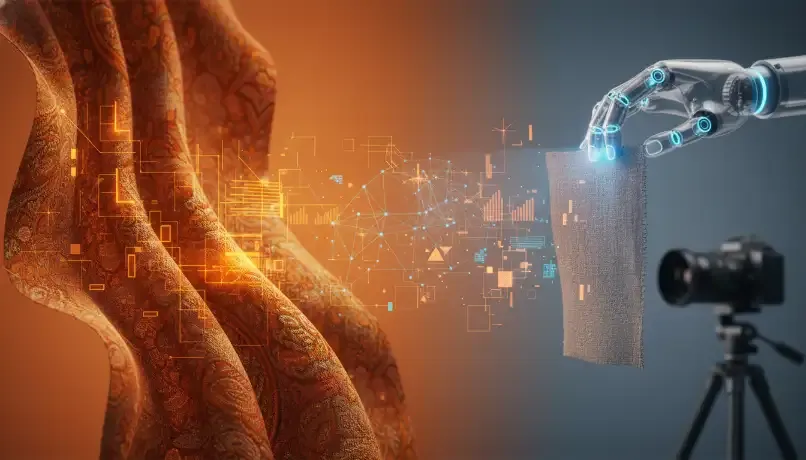
Now, computers can show what a fabric looks and moves like on a screen. The AI knows how heavy cotton is, or how shiny silk is. The computer shows the designer exactly how the fabric will look when it becomes a dress.
There is an amazing process that takes you straight from fabric to product. You can see the cloth and the final dress at the same time on your computer screen!
Tip: When you are learning about these tools, always look at the details. The AI can even show the tiny threads in the fabric on your screen!
Step 3: Making a Digital Twin
This is where digital fashion comes in. Digital fashion means clothes that exist on a computer, like in a video game.
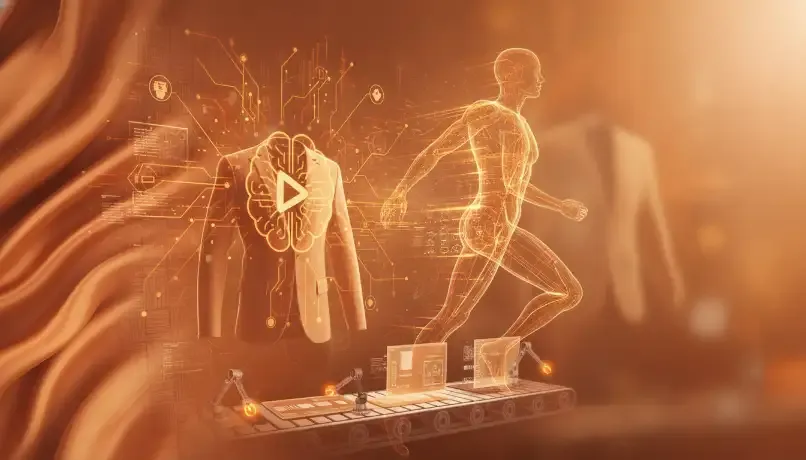
Before a factory makes the real yellow dress, the computer makes a 3D digital twin of it. You can spin the dress around on the screen. You can look at the back, the front, and the inside.
Why is this helpful? Because if there is a mistake in the design, the designer can fix it on the computer. They do not waste any real fabric.
You can look through a beautiful gallery of these digital designs to see how real they look. It is hard to believe they are only inside a computer!
Step 4: The Virtual Try-On
Imagine trying on clothes without actually putting them on your body. That is called a virtual try-on.
In Europe, many clothing brands use this fashion tech. The computer puts the digital yellow dress on a picture of a real person. The designer can see if the dress looks good when the person walks, sits, or turns around.
This is also great for people who love shopping online. Have you ever bought a shirt online, but when it arrived, it did not fit? With a virtual try-on, you can use a picture of yourself to see exactly how the clothes will look on you before you buy them.
Step 5: From Screen to the Factory Floor
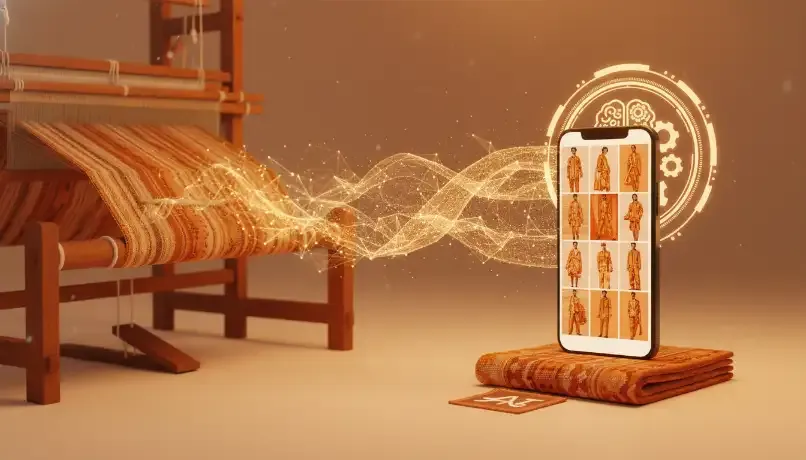
Now that the design is perfect, it is time for garment manufacturing. This is where the computer talks to the factory machines.
The AI sends the digital puzzle pieces to a smart cutting machine. Instead of a person using scissors, the machine uses a laser. A laser is a very strong, tiny beam of light that cuts the fabric perfectly in seconds.
Then, smart sewing machines help put the pieces together. The entire journey from a piece of cloth to a ready-to-wear dress takes just a few minutes.
You can learn all about this amazing step by exploring the fabric to garment process. It shows exactly how the raw material becomes something you can wear.
Step 6: Creating the Catalog
Once the clothes are made, the stores need to show them to the customers. They put pictures of the clothes in a book or on a website. This is called a catalog.
Usually, a brand has to hire human models, a photographer, and a bright studio to take pictures of the clothes. This takes weeks and costs a lot of money.
With AI fashion, the computer can create pictures of models wearing the clothes. These pictures look completely real. The designer can put the model on a beach, in a snowy mountain, or walking down a street in Paris, just by clicking a button.
To see how easy it is to display clothes, you can look at an AI catalog. It puts all the beautiful items in one place for everyone to see.
Why Europe is Leading the Fashion Technology Race
You might be wondering, why are we talking about European fashion?
Europe has a long history of making clothes. Cities like Milan in Italy and London in England have thousands of clothing factories. But making clothes the old way is expensive in Europe. To keep their factories open, European companies started using robots and AI.
According to an external report by McKinsey & Company (a very famous group that studies businesses), using smart computers can help the fashion industry grow by billions of dollars. Another study by Statista shows that the digital fashion market is growing incredibly fast, with Europe being a big part of it.
By using AI, European factories can make clothes quickly and perfectly. They don't have to send their ideas far away to be made. They can do it right at home.
Quote: "Technology is the new thread that holds the fashion industry together."
Special Events and Custom Clothes
One of the most fun parts of AI fashion is making special clothes for special days.
Let's pretend a big holiday is coming up. People want to buy clothes that match the holiday theme. Because clothing manufacturing is now so fast, factories can make special clothes right before the holiday.
For example, think about Valentine's Day. People love wearing red and pink on this day. A designer can use the computer to create special Valentine's Day dresses and shirts.
If you are planning for a special event, AI can help you make the perfect outfit. For a sweet holiday like Valentine, you can create beautiful things. You can even design Valentine matching outfits for families or friends who want to look alike!
In the past, making matching outfits for a special day would take months of planning. Now, thanks to fashion tech, it takes only a few minutes to design and a few minutes to make.
Saving the Earth with AI Fashion
We need to talk about something very important: our planet.
The traditional fashion industry creates a lot of waste. Sometimes, factories make millions of blue shirts. But what if people only want to buy red shirts that year? The factories have millions of blue shirts that nobody wants. These shirts might get thrown away into big trash piles, which is bad for the Earth.
Also, cutting fabric the old way leaves a lot of scrap pieces. Think about when you cut a circle out of a square piece of paper. You throw the corners away. Factories do the same thing with fabric.
Here is how AI and fashion technology help save the environment:
- Less Wasted Fabric: The smart computer brain is very good at puzzles. It figures out how to lay out the shapes on the fabric so almost nothing is wasted.
- Making Only What Is Needed: Because factories can make clothes so fast from fabric to finished garment, they do not need to make millions of shirts ahead of time. They wait until someone orders a shirt, and then they make it. This means no extra clothes are thrown away.
- Digital Samples: Designers do not need to make ten real dresses to see which one they like. They make them as digital fashion on the computer. This saves thousands of yards of fabric.
Remember: Taking care of the Earth is everyone's job. When the fashion industry uses AI to reduce waste, it helps keep our planet clean and green.
The Future: Smart Clothing
Have you ever heard of smart clothing? It sounds like something from a superhero movie!
Smart clothing means clothes that have tiny, safe computer parts inside them. Imagine a winter jacket that knows when you are cold and turns on a tiny heater to warm you up. Or think about running shoes that count how many steps you take and send the number to your phone.
European apparel manufacturing is starting to put technology right into the fabric. Textile manufacturing is getting so advanced that threads can carry electricity safely.
AI helps designers figure out exactly where to put these tiny computer parts in the clothes so they are comfortable. You will not even feel them! You will just wear your smart clothing and let it do its job.
How You Can Learn More and Try It Yourself
Do you want to explore the world of AI fashion? You do not have to own a big factory to see how it works.
Many tools are available on the internet for people who want to learn. You can read more about how this magic works by visiting The Textile AI. It is a great place to start your journey into fashion tech.
If you like reading stories about designers and how they use computers, you should read some helpful blogs. They have many articles that explain things clearly.
If you want to know how to use the computer tools, there are simple rulebooks and guides. You can read the docs to learn step-by-step how the software works.
You might wonder if these computer tools cost a lot of money. You can look at the pricing page to see the different plans. Sometimes, there are free ways to try out the tools and see the magic for yourself!
When you are ready to start making your own digital clothes, all you have to do is login to your account. Then, you can become an AI fashion designer too!
A Quick Review of What We Learned
We talked about a lot of exciting things today. Let us do a quick review to make sure we remember everything about clothing manufacturing and AI.
- AI Fashion: This is when we use smart computer brains to help design and make clothes.
- The Old Way: Making clothes used to take months. People had to draw on paper, cut with scissors, and sew slowly.
- The New Way: Using fashion technology, clothes can go from fabric to a finished garment in minutes.
- Digital Twins: Before making a real shirt, the computer makes a 3D digital fashion version on the screen.
- Virtual Try-On: You can see how clothes look on a person without them actually wearing them.
- Helping the Earth: AI makes sure factories do not waste fabric or make clothes that nobody wants to buy.
- Smart Clothing: In the future, your clothes might have tiny computers in them to keep you warm or track your running.
Let's Look Closer: The Journey of a Cotton T-Shirt
To make this even easier to understand, let us follow the story of one single white cotton t-shirt. Let's call our t-shirt "Snow."
The Old Journey of Snow the T-Shirt
Fifty years ago, if someone wanted to make Snow, here is what would happen. A farmer picks the cotton. A truck takes the cotton to a factory. The factory spins the cotton into yarn. Another factory weaves the yarn into flat fabric. A designer draws Snow on a piece of paper. A worker takes scissors and cuts the fabric. A person sits at a sewing machine and sews Snow together. Then, Snow is folded, put in a plastic bag, put in a box, put on a ship, and sent to a store. This whole trip took six months!
The New AI Journey of Snow the T-Shirt
Today, in a modern European factory, Snow's trip is very different. A designer opens their laptop. They type, "Simple white cotton t-shirt." The AI fashion tool immediately creates a 3D picture of Snow. The designer looks at the picture and clicks "Approve." The computer sends a message to a robot in the factory next door. The robot rolls out a piece of white cotton. A laser light zips across the fabric, cutting the shape in three seconds. A smart sewing machine zips around the edges, putting Snow together in two minutes. Snow is done! From the moment the designer typed the words to the moment Snow was ready to wear, only ten minutes passed.
This is the true power of apparel manufacturing today. It is fast, it is smart, and it is amazing.
The Jobs of the Future in the Fashion Industry
Because making clothes is changing, the jobs people do are changing too.
In the past, the fashion industry needed a lot of people to cut fabric and sew by hand. While we still need people to sew some things, the factories need new kinds of workers today.
- AI Prompters: These are people who are very good at talking to computers. They know exactly what words to type so the AI draws the best clothes.
- Robot Fixers: Since machines use lasers and smart sewing arms, factories need smart people to keep the robots clean and working perfectly.
- Digital 3D Artists: These artists do not use paint or clay. They use computers to make the virtual try-on pictures look perfectly real.
- Sustainability Experts: These people use AI math to figure out how to waste zero fabric and use less water when making clothes.
If you like computers and you like art, the world of fashion tech might be the perfect place for you when you grow up! You get to use your imagination and cool machines at the same time.
Why Quality Matters in European Garment Manufacturing
We have talked a lot about speed. Moving fast is great. But what about quality? Quality means how good something is. If a t-shirt falls apart after you wash it one time, it is low quality. If a t-shirt lasts for ten years, it is high quality.
European fashion is famous for being very high quality. Does making clothes fast with AI mean the quality is bad?
No! In fact, AI helps make the quality even better.
When a human cuts fabric with scissors, their hand might shake a little bit. The cut might not be perfectly straight. When a laser cuts fabric, guided by a smart computer, it is perfect every single time. It never gets tired, and its hand never shakes.
When machines sew the clothes, they put the stitches exactly the same distance apart. This makes the clothes very strong. So, AI fashion design gives us clothes that are both fast to make and super strong to wear.
Bringing It All Together
We have taken a long trip today, from the cotton fields all the way to the computer screen, and finally to the finished clothes in your closet.
We learned that fashion technology is not just about cool computer pictures. It is about changing how the whole world makes things. It makes clothing manufacturing faster, cheaper, and safer for our planet.
With textile manufacturing getting smarter, and digital fashion letting us try on clothes through a screen, the future is very bright. Europe is leading the way, showing the rest of the world how to mix old traditions of beautiful clothing with new computer magic.
You do not have to be a computer scientist to enjoy this. Every time you buy a piece of clothing that fits perfectly and lasts a long time, you might be wearing a piece of AI fashion.
Your Turn to Explore
The best way to understand all of this is to see it with your own eyes. Remember all the cool tools we talked about? You can find them all on the internet.
Start by thinking of a design. What would you make? A blue jacket for your dog? A sparkly dress for a party? A cool hat with a brim?
Imagine it in your head. Then, remember that with today's fashion tech, your idea could turn from a simple thought into a real, finished garment in just minutes.
Thank you for reading all about the magic of the fashion industry. The next time you put on your favorite shirt, think about the incredible journey it took to get to you. Whether it was made the old slow way or the new fast AI way, clothes are an amazing part of our everyday lives!