What is Textile AI?
Textile AI means using artificial intelligence to improve how textiles are designed, manufactured, inspected, merchandised, and sold.
In real life, textile businesses don’t have one problem. They have many:
-
New designs take too long
-
Sampling is expensive
-
Quality issues are found late
-
Catalog creation is slow
-
Product photos don’t convert
-
Color variants take time
-
Returns happen because customers can’t “visualize” the product
Textile AI solves these problems using AI models that understand fabric texture, drape, patterns, colors, and garment structure and then convert that understanding into real business outcomes: faster launches, better catalogs, higher conversions, fewer returns.
This guide is written for a global audience: manufacturers, exporters, wholesalers, D2C brands, and e-commerce sellers.
Why AI is exploding in textiles (and why timing matters)
Across the industry, Textile AI is moving from “cool demo” to daily operations because it directly impacts the 3 things every textile business cares about: cost, speed, and sell-through. This shift is happening in both manufacturing (quality + planning) and commerce (catalogs + conversion).
From experiments to core operations
In the past, many textile businesses tried AI like a side project: one pilot, one machine, one small dataset. Now AI is becoming a repeatable workflow:
-
Quality control becomes “always-on” defect detection (not random checks).
-
Production planning becomes data-driven (less guesswork).
-
Digital merchandising becomes scalable (more SKUs, faster drops).
That’s why timing matters: brands and mills who standardize AI workflows early get compounding advantage—faster launches, better content, better margins.
What’s driving this change right now
Here’s what changed in the market that makes AI for textile industry feel inevitable:
1) Customer expectations upgraded (visual-first buying)
Textile buyers whether B2B or D2C now expect clarity:
-
they want to “see” texture, fall, shine, and finish
-
they compare across 10 options in seconds
-
they trust brands that show consistent, premium visuals
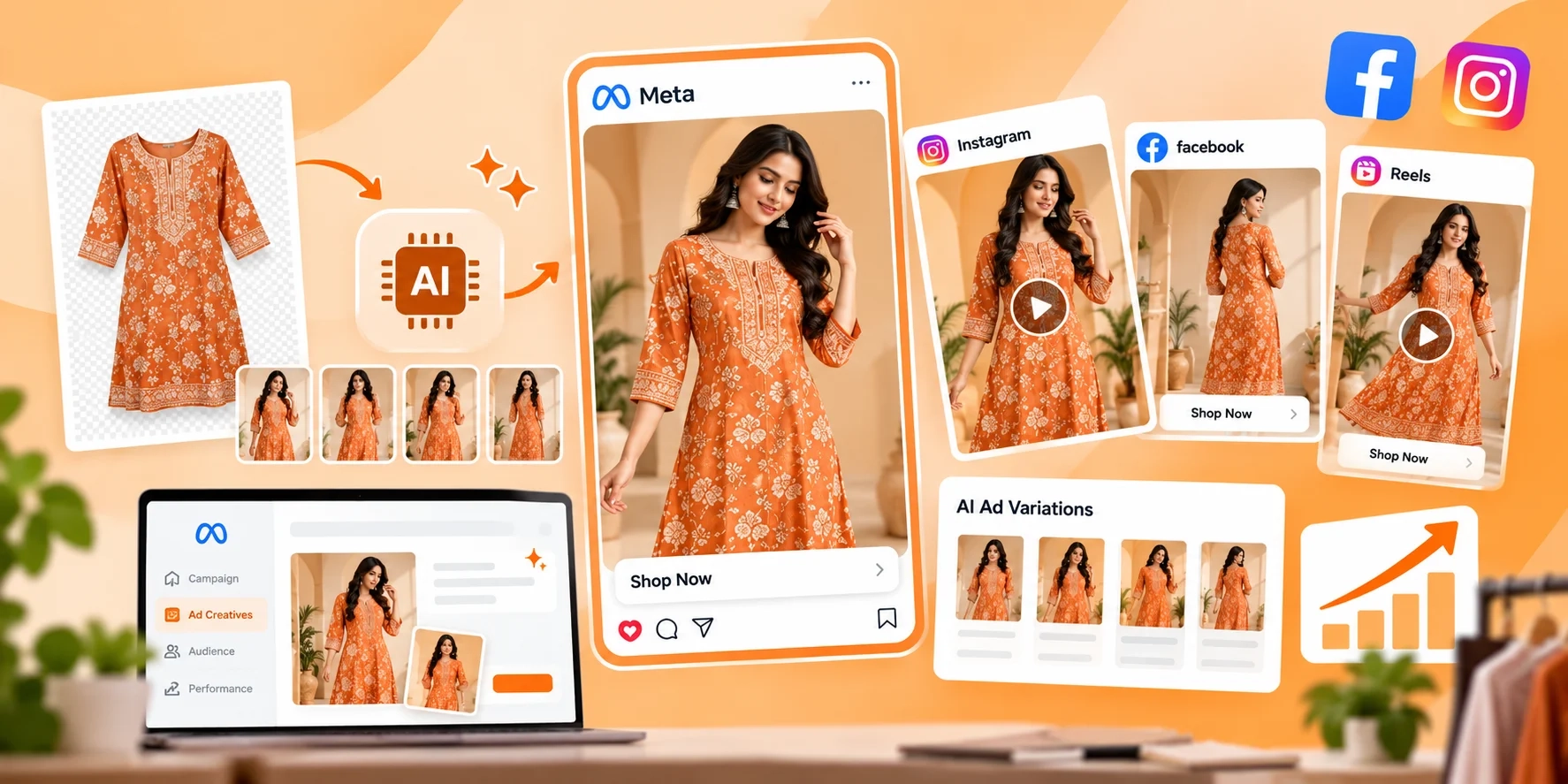
AI fashion for textile industry solves this with scalable content: clean product photos, variants, lifestyle frames, and short videos without repeating expensive shoots.
2) Trend cycles got shorter (speed is the new discount)
Fast shifts in:
-
colors
-
prints
-
silhouettes
-
seasonal micro-trends
If your pipeline can’t move quickly from idea → sample → catalog → launch, your inventory risk increases. Textile AI reduces time between decisions.
3) Cost pressure + volatility is real (margin protection)
When costs fluctuate (raw material, logistics, labor), businesses search for efficiency that doesn’t kill quality. AI helps by:
-
reducing rework (early detection)
-
reducing reshoots (content generation)
-
reducing over-sampling (visual approvals)
-
improving sell-through (better PDP conversion)
4) “Content at scale” is now a competitive advantage
Earlier: content was a marketing task.
Now: content is a sales machine.
If your competitor can generate:
-
6 angles per product
-
8 color variants
-
2 short videos
-
consistent premium background styles
…they will win attention and conversion even with the same product.
That’s why Textile AI is exploding: it turns content from “manual work” into a system.
Where Textile AI creates the biggest ROI
This is the SEO-friendly breakdown you can add as sub-sections (and it helps Google understand topical depth):
Manufacturing-side (AI in textile manufacturing)
-
fabric defect detection
-
roll inspection support
-
stitching consistency checks
-
color mismatch alerts
-
production forecasting + planning support
Brand-side (AI tool for textile industry)
-
textile catalog generator
-
product photo consistency
-
AI color variant generator
-
fabric-to-garment visualization
-
product video generator for ads + PDP
Best strategy: start where your bottleneck is worst (quality issues OR content + conversion). Don’t try everything at once.
Why timing matters (the “early mover” advantage in textiles)
When you implement Textile AI early, you build advantages that are hard for others to copy quickly:
1) You build a style library (brand consistency)
You create your brand’s repeatable templates:
-
background styles
-
lighting look
-
angle standards
-
typography rules (if used)
That consistency becomes a trust signal and a conversion booster.
2) You build a product knowledge system
Your inputs become structured over time:
-
fabric type, weave, GSM, finish
-
fit, length, model notes
-
“what converts” by category
This becomes your internal “fashion intelligence.”
3) You launch faster than your competitors
Speed compounds:
-
more SKUs tested
-
more winning variants found
-
fewer missed trend windows
“Why now?” list (keep it punchy for SEO)
-
Margins are tighter (cost pressure + volatility)
-
Speed wins (shorter trend cycles)
-
Visual commerce is everything (buyers decide in seconds)
-
AI makes content at scale possible without hiring a full studio team
Textile AI use cases across the value chain
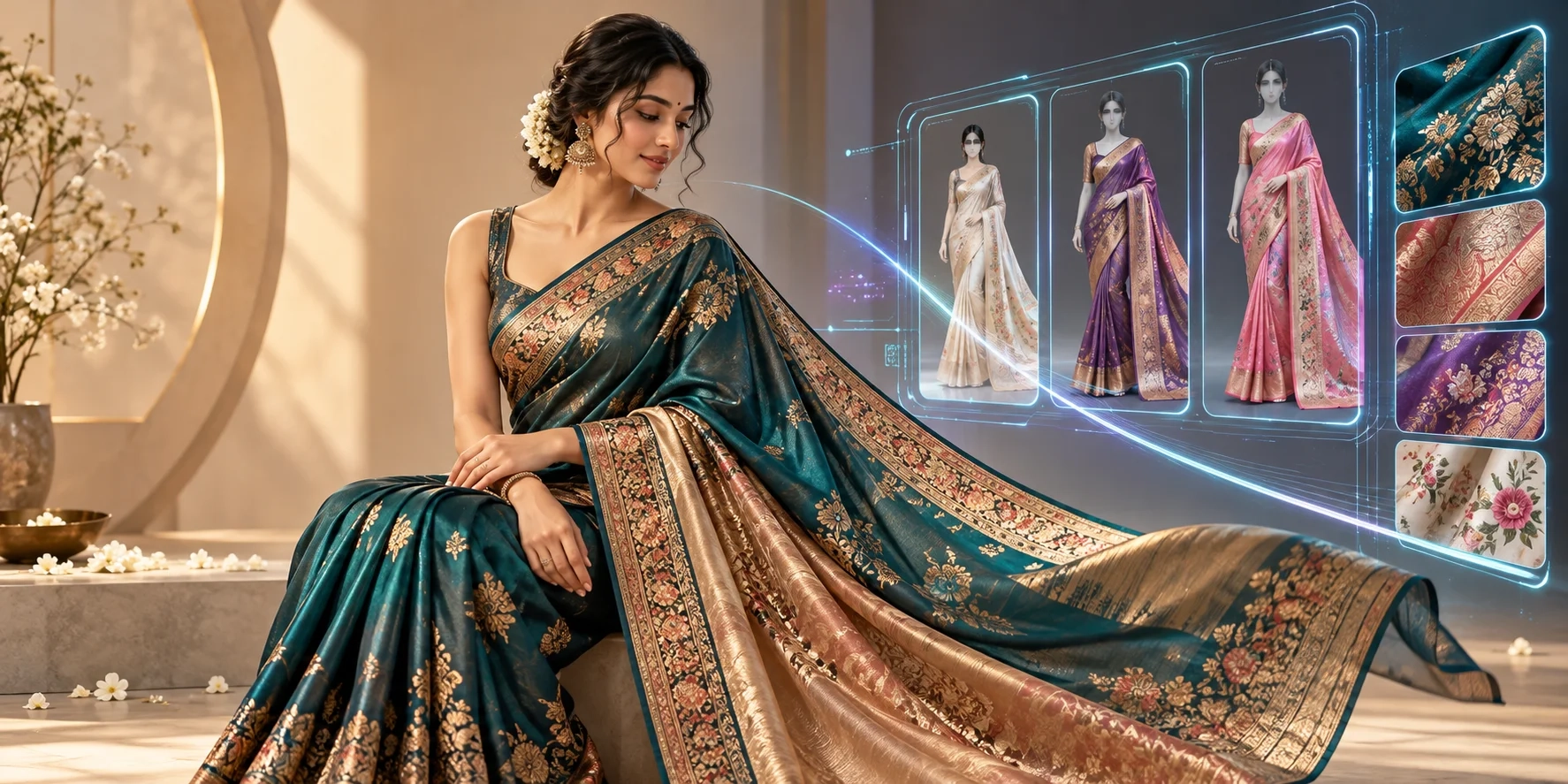
1) Fabric -> garment visualization (faster sampling, faster approvals)
Instead of sampling 10 variations physically, Textile AI can help teams visualize:
-
Same fabric in different silhouettes
-
Same design in multiple colors
-
Small changes (neckline, sleeves, border, pleats, prints)
This reduces back-and-forth between design, merch, and production—especially useful for export workflows.
2) AI in textile manufacturing (quality, uptime, consistency)
Factories commonly use computer vision + ML for:
-
Fabric defect detection
-
Stitching consistency checks
-
Color mismatch detection
-
Process optimization and planning
This is where “AI for textile industry” becomes operational—not just marketing.
3) Textile quality inspection AI (automate what humans miss)
Manual inspection is slow and inconsistent. AI inspection systems can learn defect patterns and flag issues earlier in the line.
Even if your business doesn’t build factory AI today, it’s important because it changes how buyers evaluate suppliers: speed + consistency become differentiators.
4) The biggest money maker: AI for textile catalogs + e-commerce conversion
For many brands, the fastest ROI is not on the shop floor—it’s on the product page.
Textile AI can generate:
-
Cleaner product images (consistent, premium look)
-
Lifestyle images (context + story)
-
Model/on-body visuals (when appropriate)
-
Color variants (sell more SKUs without reshoots)
-
Short product videos (ads + PDP + reels)
This is exactly where “AI fashion for textile industry” becomes a conversion engine.
Textile AI for catalogs: how it increases conversion
A) Better visuals = faster decisions
On e-commerce, shoppers decide quickly. If your images don’t explain texture, drape, and fit, you lose.
Textile AI helps you show:
-
close texture detail
-
fabric fall/drape cues
-
color accuracy (as much as possible)
-
consistent angles and lighting
-
“premium feel” without studio cost
B) Color variants at scale (without reshooting)
Color is one of the highest-impact conversion levers in fashion. But brands avoid launching variants because photoshoots are expensive.
Textile AI can turn one strong base photo into multiple sellable variants—so you can test what color actually sells globally.
C) Product video generation: the ad + PDP combo
Short videos outperform static images on many platforms because motion communicates texture and drape better.
And the wider ecosystem is clearly moving toward AI-powered shopping media (image-to-video, AI shopping assistants, virtual try-on).
Virtual try-on and “confidence shopping”
Virtual try-on reduces a core friction: “Will this look good on me?” Research continues to explore how virtual try-on affects purchase intention.
Also, Google has publicly discussed scaling virtual try-on experiences powered by custom image generation for fashion shopping.
Even if your brand doesn’t offer full try-on today, the direction is clear: shoppers want confidence, not just photos.
How to implement Textile AI in your business (simple playbook)
Step 1: Pick one “money use case” first
Don’t start with everything. Start with the one that changes revenue fastest:
-
Catalog upgrade (better PDP images)
-
Color variants (increase SKU coverage)
-
6–10 sec product videos (ads + PDP)
-
Factory inspection pilot (if you’re a manufacturer-first company)
Step 2: Build your “best input” rules
AI output quality depends on input quality. Standardize:
-
1 hero image per product (front, clean)
-
texture close-up (optional but powerful)
-
consistent naming (fabric type, weave, GSM, finish)
-
brand style rules (premium/minimal/festive)
Step 3: Create templates, not one-offs
Your goal is repeatability:
-
3–5 catalog styles that match your brand
-
5–10 proven backgrounds (not random)
-
fixed angles for consistency
-
consistent typography rules (if you add badges/text)
Step 4: A/B test the visuals like performance marketing
Measure:
-
CTR from collection → product
-
add-to-cart rate
-
conversion rate
-
return rate
-
time-to-launch per SKU
Small improvements in conversion compound massively at scale.
Best practices so Textile AI visuals don’t hurt trust
When you use AI for catalogs, your #1 job is: increase clarity without reducing honesty. If shoppers feel “this looks fake,” conversion drops and returns increase.
Trust checklist for Textile AI images (simple + repeatable)
1) Don’t over-edit (avoid the “too perfect” look)
Over-smoothing fabric, extreme glow, or unreal shadows can make images feel artificial.
Do:
-
keep natural texture detail
-
keep realistic lighting
-
keep fabric edges sharp
Avoid:
-
plastic-like smoothing
-
unrealistic shine
-
overly dramatic backgrounds that steal focus
2) Stay consistent across PDPs (consistency = trust)
Mixed styles across your product pages look like different brands—this reduces confidence.
Consistency rules to set:
-
3–5 background styles only
-
2–3 angles as standard (front, detail, drape)
-
same crop ratio and spacing
-
same brightness/contrast “feel”
This is one of the easiest wins for AI for textile industry catalogs.
3) Use AI to enhance clarity, not to mislead
Your goal is “clearer product understanding,” not “different product.”
Safe enhancements:
-
clean background
-
better lighting balance
-
sharper detailing
-
consistent framing
Risky edits (avoid):
-
altering embroidery density
-
changing weave pattern
-
changing border thickness
-
changing garment shape/fit beyond reality
4) Keep fabric truth honest (texture, weave, shine)
Fabric is everything in textiles. If your AI image changes the fabric identity, shoppers will notice when they receive it.
Always protect:
-
weave pattern (plain, twill, jacquard, etc.)
-
shine level (cotton vs satin vs silk)
-
print sharpness and scale
-
embroidery thread thickness and placement
5) Color accuracy: handle it like a pro
Color is the #1 reason for “not as expected.”
Best practice:
-
use AI to generate variants, but label them correctly
-
keep one “reference” photo that is closest to real-life
-
add a simple note like: “Color may vary slightly due to screen settings.”
This protects trust while still scaling variants.
The “Edge Review” workflow (catch the AI mistakes fast)
Before publishing AI images, do a quick 20-second review checklist:
-
Hands/fingers (common AI issue)
-
Borders/prints alignment (saree borders, hem lines)
-
Seams & stitching (odd shapes)
-
Text/logos (warped brand tags)
-
Jewelry/accessories (random artifacts)
-
Background edges (halo effect around product)
Tip: Make this a standard QA step inside your catalog pipeline so it becomes automatic.
When to disclose “AI-generated” visuals
You usually don’t need to shout “AI” everywhere, but you must stay honest.
Good disclosure positions:
-
if you’re showing virtual try-on
-
if you generate model images that are not real photoshoots
-
if the image is clearly illustrative (concept-style)
If you keep the visuals realistic and accurate, most brands simply treat AI as a production tool like editing software.
Who should use Textile AI (global roles)
-
Textile manufacturers/exporters: faster sampling visuals, buyer approvals, cleaner presentations
-
D2C fashion brands: more SKUs, better PDP conversion, faster campaigns
-
Wholesalers: consistent catalogs for buyers + marketplaces
-
Marketplace sellers: image + video assets without studio costs