Fashion product images are no longer only about one front-facing photo.
Today, online shoppers want to see the complete product. They want to understand the front view, side view, back view, close-up details, fabric fall, garment structure, model styling, and overall catalog look before making a buying decision.
For fashion brands, textile sellers, boutiques, Shopify stores, D2C brands, and catalog teams, this creates a big content challenge.
A single product may need multiple images for the product page, marketplace listing, social media post, WhatsApp catalog, buyer presentation, lookbook, advertisement, and campaign launch. Creating all of these visuals manually through traditional photography takes time, budget, coordination, and repeated editing.
This is where AI catalog generation is becoming important.
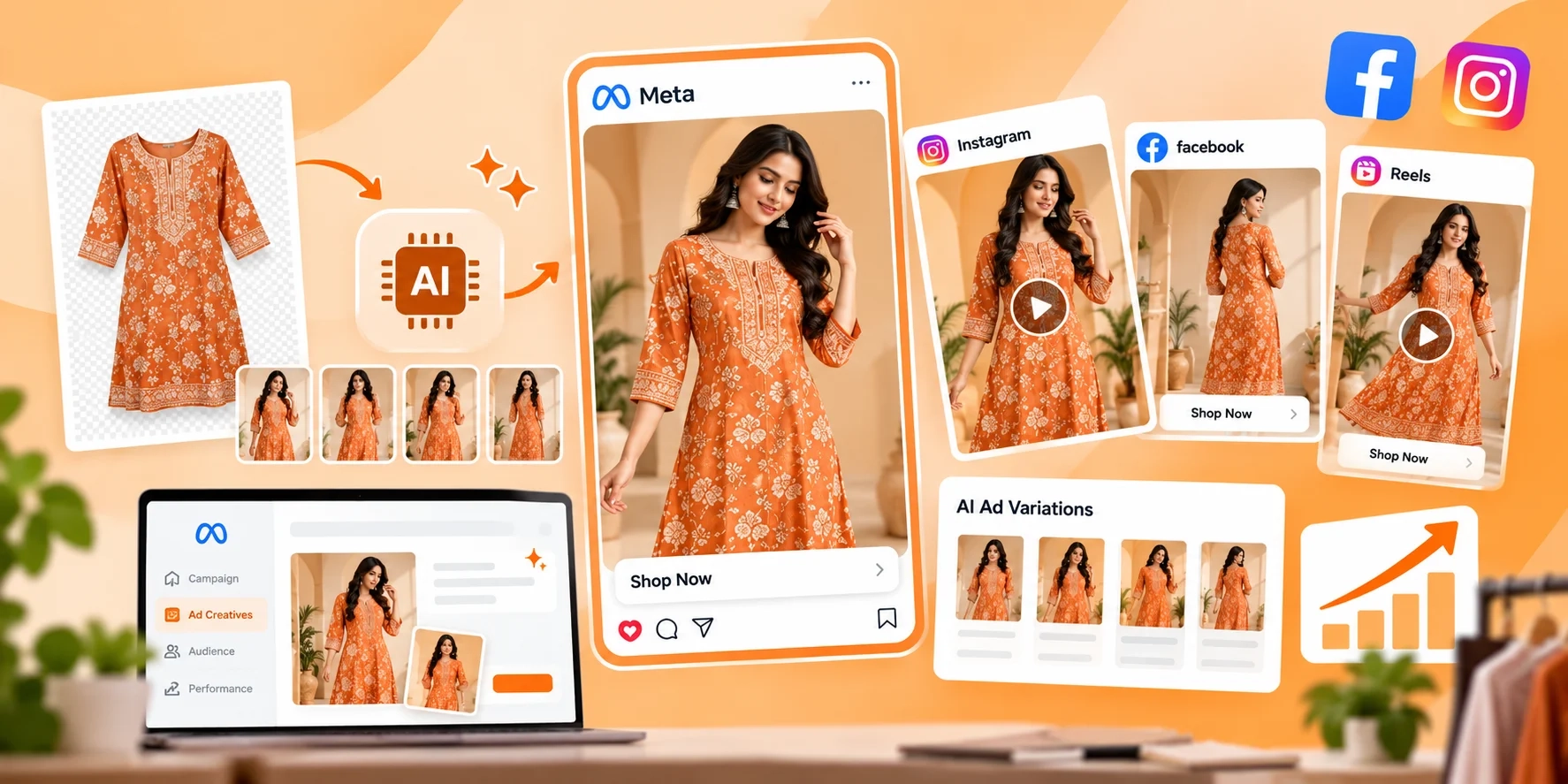
AI catalog generation helps fashion and textile businesses create professional product images faster. Instead of arranging a full shoot for every product angle, brands can use AI to generate model portfolio images, multi-angle product views, detail shots, and catalog-ready visuals from model and garment inputs.
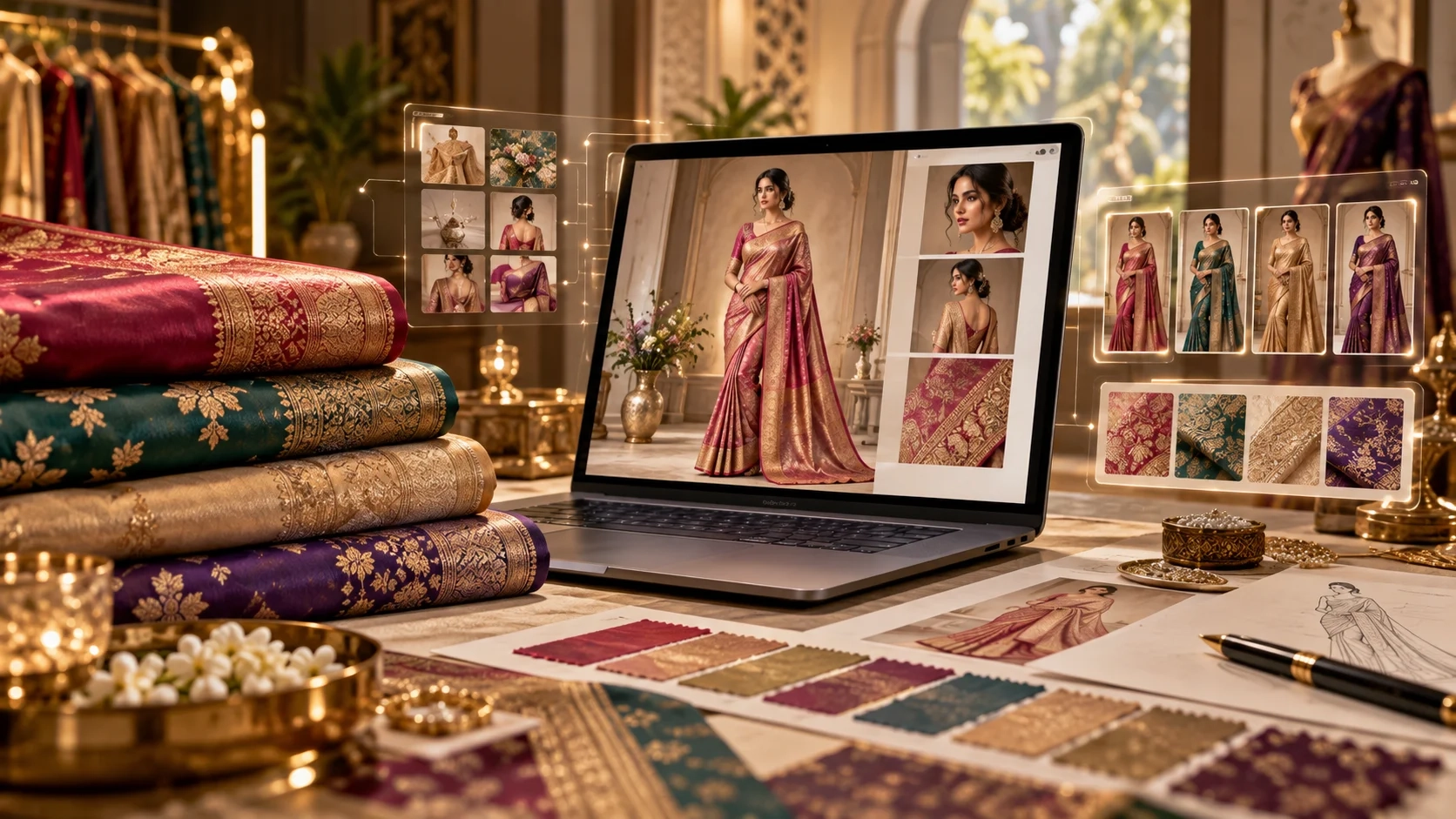
The Textile AI Catalog tool is built for this workflow. It allows users to upload a model base photo, upload an apparel or garment image, add a portfolio style description, and generate catalog visuals in different showcase views.
Website:
https://www.thetextileai.com/ai/tools/catalog
What is AI Catalog Generation?
AI catalog generation is the process of using artificial intelligence to create product catalog images for fashion, textile, and e-commerce businesses.
In simple words, it helps brands turn garment photos and model references into professional catalog visuals.
Traditional catalog photography usually needs a model, photographer, studio, stylist, lighting setup, garment preparation, editing, and multiple retakes. AI catalog generation makes the process faster by digitally creating catalog-style images from uploaded inputs.
This is useful for brands that need more than one product image. A complete fashion catalog usually needs different angles and details, not just one image.
For example, a product page may need front view, side view, back view, detail front, close-up angle, and slight angle pose. These views help customers understand the garment more clearly.
“AI catalog generation helps fashion brands move from one product photo to a complete product story.”
Why Fashion Product Images Need More Than One View
In fashion e-commerce, customers cannot physically touch or try the product.
They depend on images.
A single front image may show the basic look of the garment, but it cannot show everything. Customers may still want to know how the outfit looks from the side, how the back design appears, how the fabric falls, how the neckline sits, how the sleeve looks, and how the close-up details appear.
This is especially important for fashion products like dresses, kurtis, sarees, blazers, shirts, ethnic wear, western wear, co-ord sets, and premium garments.
A complete product gallery builds more confidence.
When customers see multiple angles, they understand the product better. When they see close-up details, they trust the quality more. When the images look consistent, the brand looks more professional.
Remember: In online fashion, better product images reduce doubt and help customers make faster decisions.
The Problem with Traditional Catalog Photography
Traditional catalog photography can produce beautiful images, but it is not always easy to scale.
A brand needs to arrange the product, model, photographer, studio, lighting, styling, poses, editing, and final exports. If the brand has only a few products, this may be manageable. But when a business has many garments, colors, sizes, and collections, the workload becomes heavy.
A single product may require front, side, back, and detail shots. If a brand has 100 products, the number of required images can grow very quickly.
Traditional catalog photography also depends on scheduling. The model must be available. The studio must be booked. The garment must be ready. The photographer and styling team must complete the shoot. After that, the images still need editing and formatting.
This creates delays.
For fast-moving e-commerce brands, delays can affect product launches.
AI catalog generation helps reduce this delay by creating catalog-style visuals digitally.
Tip: Traditional photography is useful for final premium campaigns, but AI catalog generation is useful when brands need speed, scale, and regular product content.
How The Textile AI Catalog Tool Works
The Textile AI Catalog tool is designed as an AI Catalog Studio for fashion product visuals.
The workflow is simple.
The user uploads a model base photo. This gives the AI the model reference for the catalog images. Then the user uploads an apparel or garment image. This tells the AI which product needs to be shown in the catalog output.
After that, the user can add a portfolio style description. This is useful when the brand wants a specific catalog mood, styling direction, garment presentation, or visual look.
Then the user selects the number of showcase views.
The tool can generate different catalog output options depending on the requirement. A user may need only one front view for a quick product visual, or they may need multiple angles for a complete product portfolio.
This makes the workflow practical for different types of businesses.
A small seller may generate one image for a quick product listing. A fashion brand may generate multiple views for a complete product page. A catalog team may generate a premium portfolio with front, side, back, and detail views.
Website:
https://www.thetextileai.com/ai/tools/catalog
Model Base Photo
The model base photo is the first input.
This image helps the AI understand the model identity, body structure, pose direction, lighting, and overall visual reference.
For better results, the model photo should be clear and suitable for fashion catalog use. A clean model image helps the AI create more polished catalog visuals.
The model base photo is important because catalog consistency matters.
When a brand creates multiple product views, the model identity, lighting, and styling should feel connected. If every image looks completely different, the catalog may look messy.
A consistent model reference helps create a more professional product gallery.
Remember: A strong model base photo can improve the final catalog output quality.
Apparel or Garment Image
The garment image is the second important input.
This image gives the AI information about the product that needs to appear in the catalog visuals.
The garment image should clearly show the outfit, shape, color, design, fabric pattern, and product structure. If the garment image is unclear, folded, blurry, or badly lit, the output may not look accurate.
For fashion brands, this input is very important because the garment is the main product.
The better the garment reference, the better the AI can create a product image that looks useful for catalog presentation.
Tip: Use a clean garment image with visible design details, especially if the product has embroidery, prints, borders, neckline design, sleeve details, or unique cuts.
Portfolio Style Description
The portfolio style description helps guide the final look.
This is where users can describe how they want the catalog images to appear.
For example, a brand may want a clean e-commerce catalog style, premium fashion lookbook mood, simple studio background, elegant model pose, natural lighting, or close-up detail-focused result.
This description gives more creative control.
AI works better when the instruction is clear. Instead of writing a confusing prompt, brands should write direct styling instructions.
For example:
Create a premium catalog-style image with clean lighting, natural fabric folds, and a professional e-commerce background.
This kind of prompt helps the AI understand the expected output.
“A good catalog prompt should explain the product style, image mood, and quality expectation clearly.”
Showcase View Options
One strong part of AI catalog generation is the ability to create different showcase views.
Not every product needs the same image package.
Sometimes a brand needs only one front view. Sometimes it needs a standard product gallery. Sometimes it needs a full premium catalog book with multiple angles and macro detail views.
The Textile AI Catalog tool provides different output levels such as Single View, Standard Pack, and Premium Book.
A Single View is useful when the brand needs one quick front-facing catalog image.
A Standard Pack is useful when the brand needs front, side, and back views.
A Premium Book is useful when the brand needs a more complete catalog portfolio with multiple views and detail shots.
This helps brands choose based on their content requirement and budget.
Remember: A product page with multiple views gives customers more confidence than a product page with only one image.
Why Multi-Angle Catalog Images Matter
Multi-angle product images are very important in fashion selling.
A garment is not flat. It has shape, stitching, sleeves, neckline, back design, side fall, fit, and details. Customers want to understand these parts before buying.
Front view shows the main look. Side view shows silhouette and fall. Back view shows closure, back design, and fit. Detail view shows fabric, stitching, embroidery, neckline, or surface work. Close-up angle helps highlight premium design elements.
When all these views are available, the product feels more complete.
For fashion brands, this improves product presentation.
For customers, it improves clarity.
For buyers, it improves confidence.
“A complete catalog does not only show the garment. It shows the garment from the buyer’s point of view.”
Consistent Face, Lighting, and Styling
Consistency is one of the biggest challenges in catalog photography.
If one product image has warm lighting, another has dark shadows, and another has a different model style, the product grid may look inconsistent.
A professional fashion catalog needs visual harmony.
AI catalog generation can help maintain a more consistent look across multiple views. When the model identity, lighting, skin tone, hair, background, and styling remain connected, the final catalog looks cleaner.
This is useful for e-commerce stores.
A consistent catalog makes the brand look organized and premium. It also helps customers focus on the product instead of being distracted by changing image styles.
Remember: Consistent visuals make a fashion store look more trustworthy.
AI Catalog Generation for E-Commerce Brands
E-commerce brands need product images constantly.
A Shopify store needs product page images, collection images, homepage visuals, campaign banners, social media posts, and ad creatives. A marketplace seller needs clean product photos that follow platform expectations. A D2C brand needs images for website, email, WhatsApp, and launch content.
AI catalog generation helps create these visuals faster.
Instead of waiting for every shoot, brands can create catalog images from garment and model inputs.
This is useful when launching new collections, testing product ideas, preparing buyer previews, creating online listings, or building social media content.
For e-commerce, speed is important.
If a product is ready but images are pending, the product cannot sell properly online.
Tip: Use AI catalog generation to prepare product visuals faster, then use traditional photography for selected hero campaign products.
AI Catalog Generation for Fashion Brands
Fashion brands can use AI catalog generation to create product images for dresses, shirts, kurtis, sarees, blazers, t-shirts, co-ord sets, jackets, ethnic wear, and western wear.
The tool is useful when a brand needs several views of the same product.
A designer may want to see how the garment looks from front, side, and back. A merchandiser may need product images for a buyer deck. A marketing team may need catalog visuals for a launch campaign. An e-commerce team may need product page images.
AI helps these teams work faster.
Instead of waiting for a full studio shoot, they can create early catalog visuals and move the product forward.
This does not mean brands should stop doing real shoots. It means AI can help before, between, and alongside real shoots.
AI Catalog Generation for Textile Businesses
Textile businesses also benefit from catalog generation.
Many textile businesses sell fabric, apparel designs, garment samples, sarees, fashion products, and made-to-order collections. They need strong visuals to explain their products.
A garment image shown on a model can look more valuable than a simple flat product photo.
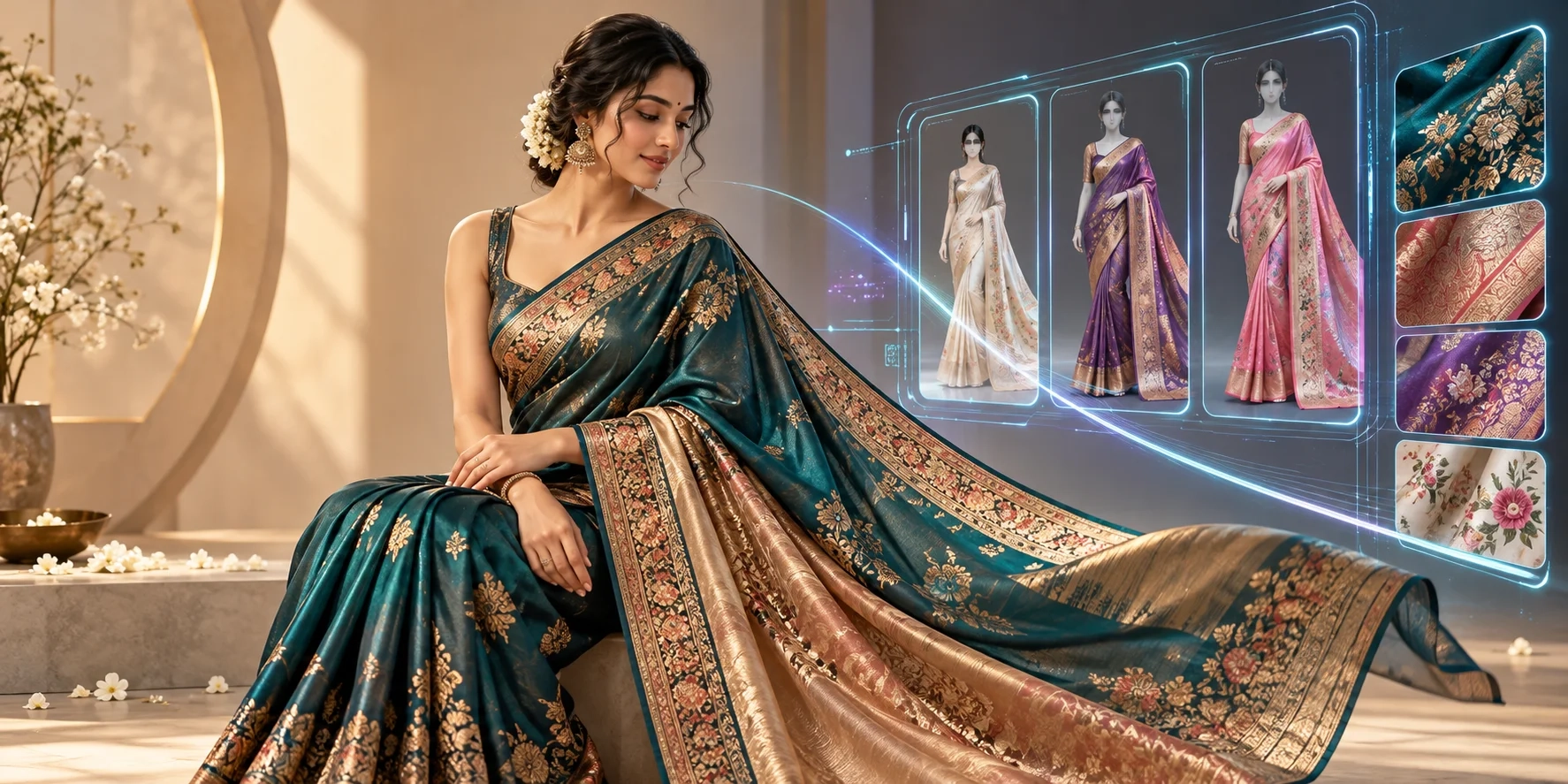
A textile manufacturer can use AI catalog visuals for buyer presentations. A fabric seller can show how a design looks as a finished outfit. A boutique can create product visuals for new arrivals. A saree brand can create model-worn drape images and catalog views.
This makes textile selling more visual and professional.
Remember: Textile products are easier to sell when buyers can see them as finished fashion visuals.
AI Catalog Generation for Buyer Presentations
Buyer presentations need clarity.
A buyer may not want to see only raw product photos. They want to understand the collection, product structure, styling, and market potential.
AI catalog generation helps create polished visuals for buyer decks, wholesale catalogs, export presentations, and collection previews.
A brand can show each product in a clean model portfolio style. It can include front, side, back, and detail views to explain the product better.
This helps buyers compare products more easily.
It also makes the brand presentation look more serious and prepared.
“A stronger catalog presentation can make the same product feel more valuable.”
AI Catalog Generation for Shopify Product Pages
Shopify product pages need clean visual structure.
A good product page usually has a main image, extra angle images, detail images, and sometimes lifestyle or model-worn visuals.
AI catalog generation can help create these assets faster.
A product page can include a main front view, side view, back view, close-up detail, slight angle pose, and fabric or design detail.
This gives customers a better understanding of the product.
For fashion brands, this can improve product page quality and make the store look more professional.
Tip: Use the front view as the main product image and side, back, and detail views as supporting gallery images.
How AI Catalog Generation Saves Time
Time is one of the biggest advantages of AI catalog generation.
Traditional catalog shoots need planning, coordination, photography, editing, and final delivery. AI can shorten the workflow by creating catalog visuals directly from uploaded inputs.
This helps brands respond faster to market needs.
If a new collection is ready, catalog images can be prepared faster. If a buyer asks for more product angles, AI can help generate them. If a seller needs product images for a listing, the workflow becomes quicker.
In fashion and e-commerce, speed can directly affect sales.
Products that go live faster can start getting traffic, inquiries, and orders earlier.
Remember: A delayed product image can delay the entire product launch.
How AI Catalog Generation Reduces Cost
Catalog creation can be expensive.
Traditional photography may involve model fees, studio rental, photographer cost, styling, makeup, lighting, editing, retouching, and team coordination.
AI catalog generation reduces dependency on these repeated costs, especially for routine product visuals and early catalog planning.
Brands can use AI to create catalog previews first, then decide which products need premium photography.
This helps businesses spend photography budget more carefully.
AI is especially useful for products that need fast listing visuals, buyer previews, social media content, or internal design review.
“AI catalog generation helps brands create more product images without increasing production cost at the same speed.”
How AI Catalog Generation Supports Product Launches
Product launches need visual content.
Before launching a fashion collection, a brand may need product images, catalog pages, social media creatives, ads, website visuals, and buyer presentation assets.
If visuals are delayed, the launch slows down.
AI catalog generation helps prepare these assets faster.
A brand can generate model portfolio images, multi-angle views, and detail shots before planning a larger campaign shoot. This helps the team test which products look strongest and which images should be used for the launch.
For small teams, this can save a lot of time.
For large brands, this can help manage scale.
How AI Catalog Generation Improves Product Trust
Customers trust products more when they can see them clearly.
A single image may not answer all questions. A multi-angle catalog gives more visual information.
When customers see front, side, back, and close-up images, they feel more confident about the product.
This is especially important for online fashion, where customers cannot try the garment physically.
A clear catalog can reduce confusion about shape, fit, and design.
It also makes the store look more professional.
Remember: Product trust starts with product clarity.
AI Catalog Generation vs Traditional Photography
AI catalog generation and traditional photography both have value.
Traditional photography gives real-world authenticity. It is useful for premium campaigns, luxury shoots, influencer content, brand storytelling, and hero images.
AI catalog generation gives speed and scale. It is useful for product previews, e-commerce images, buyer presentations, catalog books, testing, and daily content creation.
A smart fashion brand can use both.
Use AI to create early product visuals, multi-angle previews, buyer decks, and catalog drafts. Use traditional photography for selected hero products, campaign shoots, and final brand storytelling.
This balanced approach can reduce cost while keeping quality strong.
“The future of fashion content is not AI replacing photography. It is AI helping brands use photography more strategically.”
Best Use Cases for AI Catalog Generation
AI catalog generation can support many fashion and textile workflows.
The most useful use cases include creating fashion product images, generating multi-angle catalog views, creating front, side, and back views, producing close-up detail shots, preparing Shopify product gallery images, building buyer presentation visuals, creating product portfolio images, supporting new collection launches, testing garment presentation before photoshoot, and creating catalog-ready images faster.
It can also help small brands reduce photoshoot dependency and help large brands scale product content.
These use cases make AI catalog generation useful for design, sales, catalog, and marketing teams.
Common Mistakes to Avoid
AI catalog generation works best when the input images are clear.
One common mistake is uploading a poor model photo. If the model photo is blurry, badly cropped, or poorly lit, the final result may not look clean.
Another mistake is uploading an unclear garment image. The garment should be visible, well-framed, and easy for the AI to understand.
Brands should also avoid using vague portfolio descriptions. Clear instructions help AI create better outputs.
Another important mistake is publishing AI visuals without review. Every generated image should be checked for garment accuracy, realism, fabric details, model consistency, and overall quality.
Tip: AI can create catalog images faster, but your team should always review final images before using them publicly.
How to Get Better AI Catalog Results
To get better results, start with strong input images.
Use a clear model base photo with good lighting and clean framing. Upload a garment image that clearly shows the outfit design, color, structure, and important details. If the garment has embroidery, prints, borders, or fabric texture, make sure those details are visible.
Use the portfolio style description carefully.
Mention whether you want a clean e-commerce look, premium fashion catalog style, natural lighting, simple studio background, detail-focused output, or model portfolio style.
Also choose the right number of showcase views.
If you only need one image, use a single view. If you need a product page gallery, use multiple views. If you need a more complete fashion portfolio, use the premium view option.
Remember: Better input and clearer direction create better catalog output.
Why The Textile AI Catalog Tool is Useful
The Textile AI Catalog tool is useful because it focuses on professional catalog creation.
It helps users generate multi-angle model portfolios for textile designs, apparel products, and dresses. It supports model base photo upload, apparel or garment image upload, portfolio style description, and different showcase view options.
It can create front, side, back, detail front, close-up, and slight angle views depending on the selected output package.
This makes it useful for fashion brands, e-commerce sellers, textile businesses, catalog teams, Shopify stores, boutiques, and product photographers who want faster visual workflows.
The tool helps users move from garment input to catalog-ready images more quickly.
Website:
https://www.thetextileai.com/ai/tools/catalog
The Future of Fashion Product Images
Fashion product images are becoming more digital, faster, and more flexible.
Brands no longer want to wait weeks for every catalog update. They need product visuals for websites, marketplaces, ads, social media, WhatsApp catalogs, and buyer presentations.
AI catalog generation will become a normal part of this workflow.
In the future, brands may use AI to create first product images, test catalog styles, generate multiple angles, prepare buyer decks, and launch collections faster.
Traditional photography will still be important, but AI will help brands reduce repetitive production work.
This will make fashion content creation more scalable.
Final Thoughts
AI catalog generation is changing how fashion product images are created.
It helps brands generate model-worn catalog visuals, multi-angle product views, detail shots, and portfolio-style images faster than traditional workflows.
For fashion brands, textile sellers, Shopify stores, boutiques, and e-commerce teams, this means faster product launches, better product galleries, stronger buyer presentations, and more consistent visual content.
AI does not remove creativity or brand judgment.
It helps teams create product visuals faster and make better decisions earlier.
Try The Textile AI Catalog tool here:
https://www.thetextileai.com/ai/tools/catalog