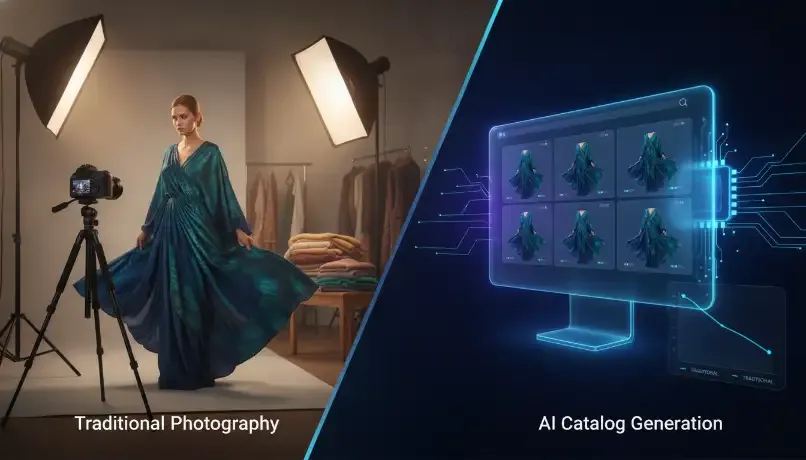
Imagine cutting your photography budget by 80 percent while putting your new clothes in front of shoppers in minutes instead of weeks.
If you sell clothes, you know that pictures are everything. When shoppers buy online, they cannot touch the fabric or try the shirt on. They rely entirely on your photos. In the past, getting those perfect pictures meant spending a lot of money and time. You had to hire people, rent a room, and wait for weeks. This is the world of traditional product photography.
But things are changing fast in the United States and the United Kingdom. A new way to make pictures is taking over the textile industry. It is called AI photography. Using smart computer programs, brands can now create amazing pictures without a camera. This guide will show you the real differences between the old way and the new way. We will look at photography pricing, time, and how easy it is to use these tools. By the end, you will know exactly which choice is best for your online store.
What Is Traditional Photography for E-Commerce?
Before we talk about computers, let us look at how things have been done for years. Traditional ecommerce photography is the classic way of taking pictures of products. It involves real cameras, real lights, and real people.
The Old Way of Taking Pictures
When you sell clothes, you need commercial photography. This means taking pictures meant to sell a product. For many years, this was the only way to fill your store catalog. A brand would design a dress, sew a sample, and then plan a big photo shoot.
This process requires a team of experts. You cannot just use a phone if you want to look like a top brand. You need someone who knows how to use high-end cameras. You need someone who knows how to make the lighting look soft and natural. Because of this, fashion photography has always been a very exclusive and expensive field. Only big brands with big budgets could afford to make their catalogs look perfect.
Quote: "Good photography is the most important part of any online store. It is the window display of the digital world."
Steps in a Standard Photo Shoot
To understand the cost, you must understand the work. Planning a traditional shoot takes a lot of steps. Here is what a brand usually has to do:
- Find a Team: You must hire a photographer, a lighting expert, a makeup artist, and a hair stylist.
- Book a Model: You have to look through modeling agencies to find the right person to wear your clothes.
- Rent a Space: You need a photo studio. Sometimes, you might need to travel to a special location, like a beach or a city street.
- Prepare the Clothes: Every piece of clothing must be steamed and ironed perfectly.
- The Shoot Day: Everyone meets. The model changes clothes many times. The photographer takes hundreds of photos.
- Editing: After the shoot, someone must sit at a computer to fix the colors, remove spots, and make the images look perfect.
This entire process can take weeks from start to finish.
Hidden Costs of Commercial Photography
When you look at photography pricing, the photographer's fee is just the start. There are many hidden costs that surprise new business owners in the US and UK.
For example, you have to pay for the food for the crew on the day of the shoot. You have to pay to ship the clothing samples to the studio. If the clothes do not fit the model perfectly, you have to pay a tailor to pin them in the back. If it rains on the day you planned to shoot outside, you lose your money and have to book another day.
Note: All these hidden costs add up quickly. A small delay can ruin your budget. This is why many textile brands are looking for a safer, cheaper way to get their images.
What Is AI Photography?
Now, let us talk about the big change in the industry. AI photography is a way to make pictures using artificial intelligence. There is no camera, no studio, and no waiting for the sun to shine.
How AI Generated Images Work
At its core, image generation uses smart computers that have studied millions of pictures. These computers know what a cotton shirt looks like. They know how silk shines in the light. They know how a shadow falls on a human face.
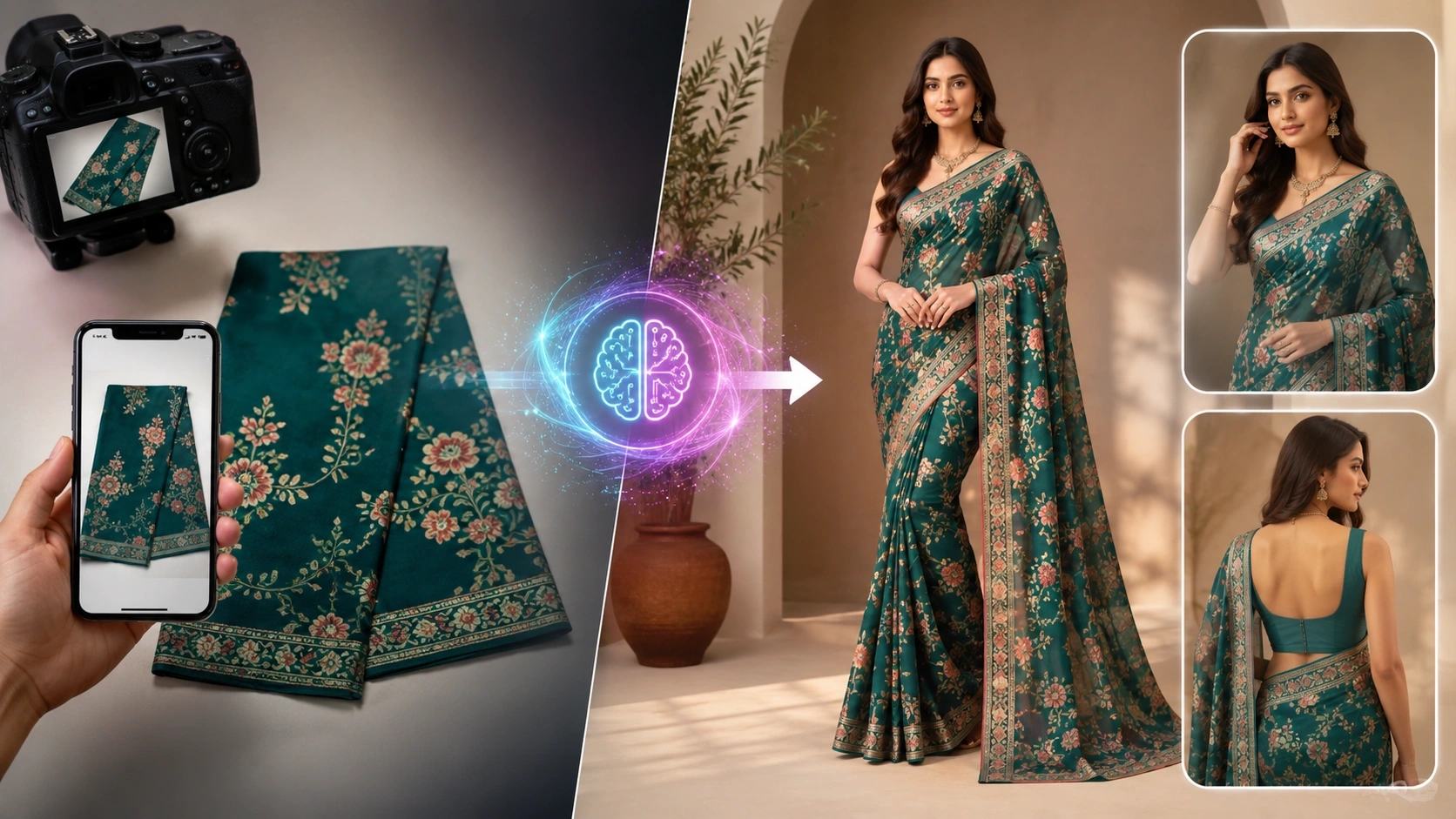
When you use an AI tool, you give it basic instructions. You might upload a flat picture of your shirt. Then, you tell the computer, "Put this shirt on a tall woman standing in a sunny park." The computer thinks for a few seconds and creates a brand new picture. These are called AI generated images. They look completely real, but they were made by a computer. You can read more about how this works on the blogs page of The Textile AI.
The Rise of AI Product Photography in Textiles
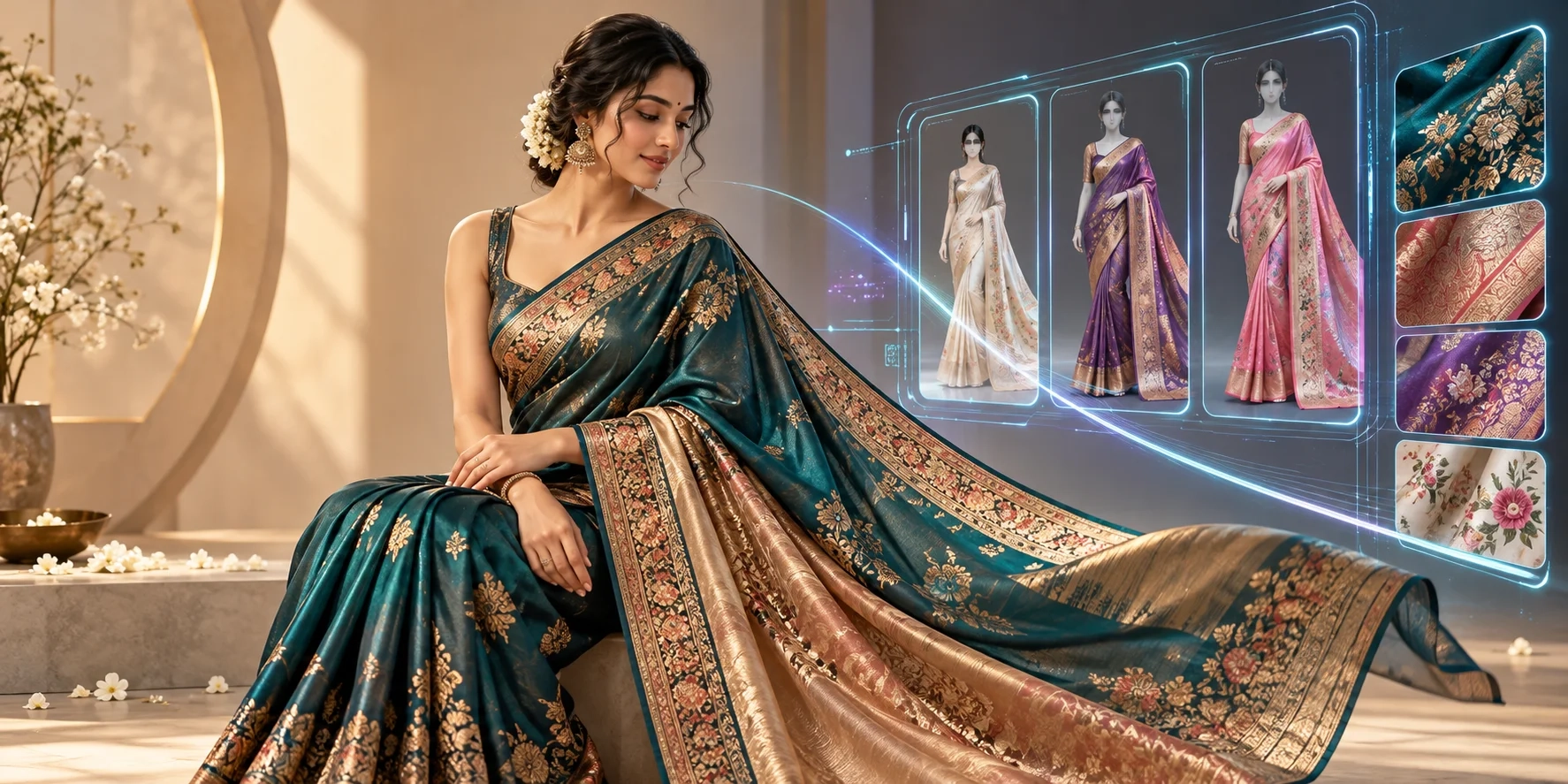
The textile industry loves this new technology. In the past, if a brand wanted to sell a shirt in five colors, they had to take pictures of all five colors. Now, with AI product photography, they only need one picture. The AI can change the color of the shirt in a few seconds.
This is very helpful for small businesses in places like New York or London. Renting space in these big cities is very expensive. By using AI, a small brand can look like a giant company. They can show their clothes on different models in different places without ever leaving their desk.
Tip: If you want to see examples of what computers can make today, check out this amazing gallery of AI generated fashion images.
Creating an AI Photoshoot
Doing an AI photoshoot is very simple. You do not need a team. You just need your computer and an internet connection. Here is how it usually works:
- Take a Basic Picture: You take a simple picture of your clothing lying flat on a table.
- Upload the Image: You put this picture into the AI system.
- Choose Your Model: You pick what kind of person you want to wear the clothes. You can choose their age, hair color, and size.
- Choose the Background: You decide where the picture should take place. It could be a studio wall, a city street, or a beach.
- Generate and Save: You click a button. In less than a minute, you have your final picture ready for your website.
This process is changing everything. You can learn more about starting your own project by visiting The Textile AI.
Breaking Down Photography Pricing in the US and UK
To really understand the difference, we must look at the numbers. Let us compare the cost of traditional methods with AI methods in the United States and the United Kingdom.
Traditional Product Photography Costs
In the US, hiring a good professional photographer for e-commerce can cost between 100 dollars and 300 dollars per hour. If you book them for a full day, you might pay 1,500 dollars just for their time. In the UK, a professional might charge between 500 pounds and 1,200 pounds for a day rate.
But remember the hidden costs.
- Models: In the US, fashion models cost about 150 to 300 dollars an hour. In London, expect to pay 100 to 250 pounds an hour.
- Studio Rent: A nice studio in Los Angeles or London can cost 500 to 1,000 dollars or pounds a day.
- Hair and Makeup: Add another 300 to 600 dollars or pounds.
- Editing: Photographers often charge extra to edit the photos. This can be 10 to 30 dollars or pounds per image.
When you add it all up, a single day of shooting can cost a small brand 3,000 to 5,000 dollars. And from that day, you might only get enough pictures for 10 or 15 items of clothing. That means each picture costs a lot of money.
AI Photography Costs
Now let us look at the cost of using computers. AI photography pricing is built very differently. Most AI tools charge a flat monthly fee or charge a small amount for each picture.
Instead of paying thousands of dollars, you might pay a simple monthly subscription. With this subscription, you can make hundreds or even thousands of pictures. When you break down the math, the cost of one AI generated image is often less than one dollar. In the UK, it is less than one pound.
There are no models to pay by the hour. There is no studio rent. There are no catering bills. You just pay for the software. You can see a clear breakdown of how this software is priced by looking at this pricing page.
A Side-by-Side Cost Look
Let us pretend you have a new clothing line with 20 items.
Traditional Route: You hire a team. You rent a studio. You pay a model for a full day. You wait two weeks for the edited photos. Total Cost: Around 4,000 dollars. Cost per Item: 200 dollars per clothing item.
AI Route: You take flat pictures of your 20 items with your phone. You upload them to an AI tool. You pick your models and backgrounds. You click generate. You are done in two hours. Total Cost: Around 50 dollars for a software subscription. Cost per Item: 2.50 dollars per clothing item.
Quote: "Switching to digital image creation allows brands to put their money into making better clothes instead of paying for expensive photo studios."
According to reports on retail trends from Statista, online clothing sales are growing every year in both the US and UK. To keep up, brands need more pictures than ever. The side-by-side cost shows why AI is winning.
Time and Speed: Which Wins?
In the business of selling clothes online, time is money. If you have winter coats to sell, you need the pictures on your website before it gets cold. If your pictures are late, you lose sales.
The Waiting Game of Fashion Photography
Traditional fashion photography is very slow. You cannot just decide to have a shoot tomorrow. Good photographers and models are booked weeks in advance.
Once you finally have the shoot, you do not get the pictures right away. The photographer needs time to look through hundreds of shots. They have to pick the best ones. Then they use editing software to clean up the images. They remove wrinkles from the clothes. They fix the lighting. This editing process can easily take one to two weeks.
If you do not like the final pictures, you are in trouble. Doing the shoot again will cost you just as much money and take just as much time.
Instant Results with Image Generation
AI photography is incredibly fast. Speed is one of its biggest benefits.
When you use an AI tool, there is no waiting for a booking. You log in whenever you want. You upload your picture. The computer creates the new image in less than a minute. If you do not like the picture, you just click the button again. You can make ten different versions in five minutes.
This speed changes how a business works. If a brand designs a new t-shirt on Monday, they can have professional pictures of it on their website by Monday afternoon. They can start selling immediately. To see how fast and easy the main system is, you can check out the AI Tool.
Remember: In e-commerce, the first brand to show a new trend usually gets the most sales. Speed gives you a huge advantage over your competitors.
How AI Tools Help the Textile Industry
The textile industry has special needs. Selling fabric and clothes is harder than selling books or electronics. Shoppers want to see how a fabric drapes. They want to see how a dress fits on a real body. AI has created special tools just for these needs.
Fabric to Garment Transformations
One of the hardest things for a fabric seller or a designer is showing what a raw piece of cloth will look like as a finished piece of clothing. In the past, you had to cut the fabric and sew a dress just to take a picture of it. This takes a lot of time and ruins the fabric.
Now, there is a better way. Using smart tools, you can take a picture of a square piece of fabric. Then, the computer wraps that fabric pattern onto a digital dress or shirt. It is called fabric-to-garment technology. It shows the folds, the shadows, and the exact pattern size. This is perfect for fabric stores in the US and UK who want to show their customers what is possible. You can explore this amazing feature at the fabric to garment page or learn more about the whole process on the fabric to product guide.
Virtual Try-On Experiences
Another massive problem in online clothing sales is returns. People buy a shirt, try it on at home, and decide it does not look good on them. Then they mail it back. Returns cost companies billions of dollars every year in the United States and the United Kingdom.
To fix this, we need better pictures. Shoppers want to see clothes on models that look like them. If a shopper is tall and curvy, they want to see the dress on a tall and curvy model. Traditional photography cannot afford to hire ten different models for every single dress.
But AI can. With an AI tool, a brand can generate images of the exact same dress on people of all different sizes, skin colors, and ages. This helps the shopper know exactly how the clothes will fit. It builds trust. You can see how this works by looking at the virtual try-on tool.
Building a Full Catalog Quickly
An online store catalog is the list of all the items you sell. If you have a large store, keeping this catalog updated is a full-time job. Every time a new season starts, you need hundreds of new pictures.
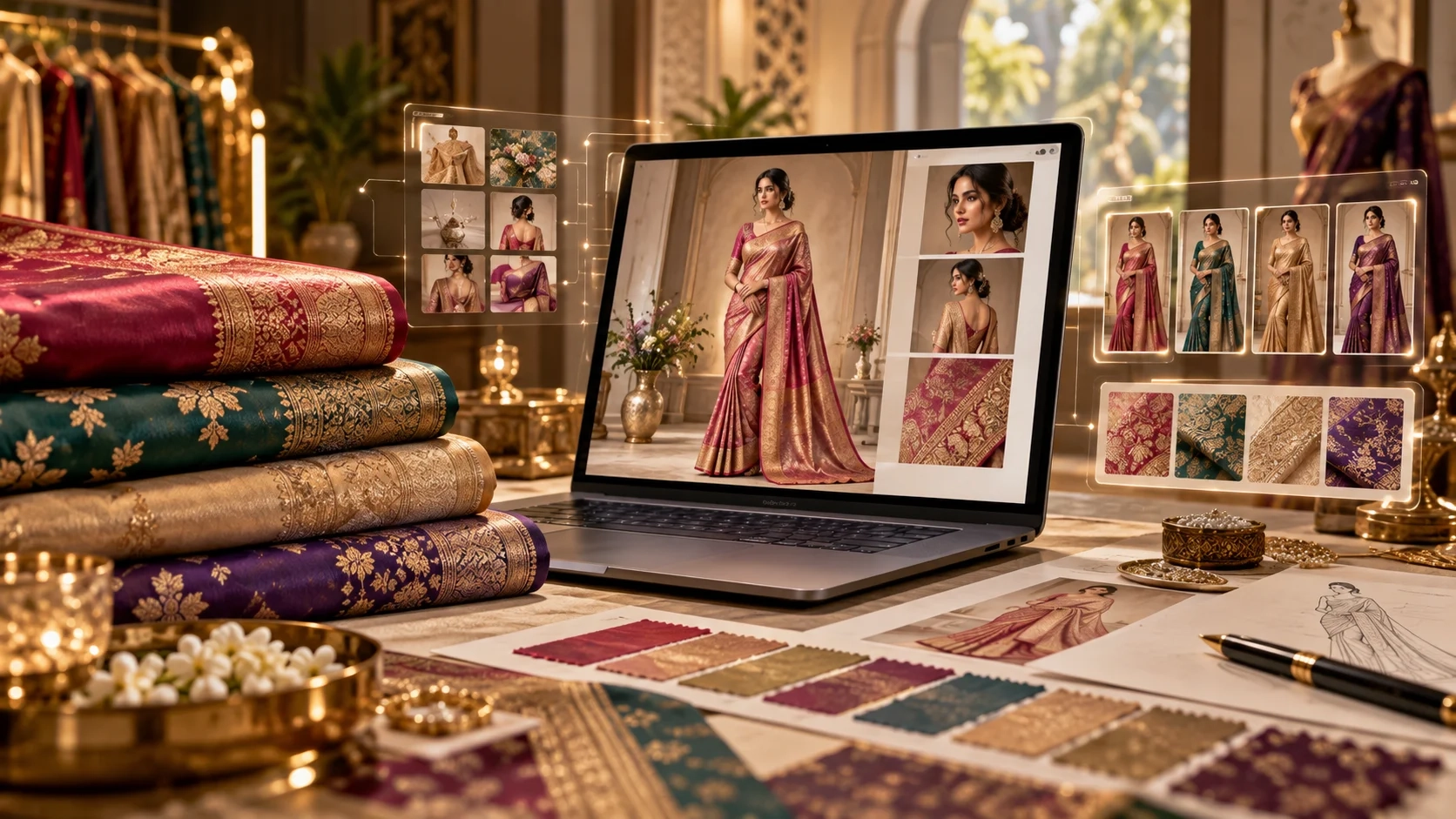
AI helps you build your catalog in record time. You can keep the style of your pictures exactly the same. You can tell the AI to use the exact same grey background for every single item. This makes your website look very clean and professional. Your shoppers will have an easy time looking through your store. If you need to make a big list of products fast, you should check out the catalog generation feature.
The Pros and Cons of Traditional Ecommerce Photography
Even though new technology is amazing, the old ways still exist for a reason. It is important to be fair and look at both the good and the bad sides of using real cameras.
Why People Still Use Cameras
There are a few reasons why some big luxury brands still prefer traditional photography.
First, real cameras capture exact reality. When you take a picture of a jacket with a real camera, you know that every single thread, button, and zipper is exactly as it looks in real life. There is no guessing.
Second, photo shoots can be a form of art. High fashion magazines in London and New York rely on famous photographers to create a specific mood. Sometimes, they want happy accidents—like the wind blowing a model's hair in a cool way. Real human interaction on a set can create magical, artistic moments that are hard to plan.
The Big Drawbacks for Modern Brands
However, for most everyday clothing brands, the bad parts of traditional shoots outweigh the good parts.
The biggest drawback is the cost. Most small and medium businesses simply cannot afford to spend thousands of dollars every time they get new inventory.
Another major issue is flexibility. Once a real photo is taken, it is very hard to change. If you decide later that you want a blue background instead of a white one, you have to spend hours editing or do the shoot all over again. Traditional photos trap you. You cannot easily adapt to new trends or quick marketing needs.
Note: If your goal is simply to show a clean, accurate picture of a shirt to sell it online, spending thousands on an artistic photo shoot is usually a waste of money.
The Pros and Cons of AI Catalog Generation
Just like the old way, the new AI way has its strong points and its weak points. Knowing these will help you make the best choice for your company.
The Magic of Speed and Savings
The benefits of AI generated images are huge. We have already talked about how much money it saves. The reduction in photography pricing is life-changing for small business owners.
Another huge pro is total control. With AI, you are the boss of the image. If you want the model to smile more, you tell the computer. If you want the model to stand on a snowy mountain, you tell the computer. You do not have to buy a plane ticket to the mountains.
AI also helps the environment. Traditional photo shoots require people to drive or fly to studios. They require huge lights that use a lot of electricity. AI photography is much greener because it all happens on a computer.
Things to Watch Out For
There are a few things you must be careful about when using AI product photography.
Because the computer is creating the image from scratch, it can sometimes make small mistakes. For example, it might make a spelling mistake if your shirt has text on it. Or it might add an extra button where there should not be one. You always have to look closely at your final AI images to make sure they perfectly match your real product.
Also, learning to use the tools takes a little bit of practice. While it is very easy, you still have to learn how to write good instructions for the computer. Luckily, there are great guides available to help you learn quickly. You can read the step-by-step instructions in the docs.
Making the Switch: How to Get Started with AI
If you are reading this and thinking, "I want to save money and try AI," you might be wondering what to do next. Switching from traditional commercial photography to AI does not have to be scary. You can take it one step at a time.
Testing the Waters
You do not have to fire your photographer and change your whole store in one day. The best way to start is by testing.
Take one or two new clothing items. Take flat pictures of them. Use an AI tool to generate professional pictures for just those items. Put them on your website next to your older, traditional photos.
Then, watch what happens. Do customers click on the AI photos? Do they buy the clothes? Most brands find that shoppers cannot even tell the difference. Once you see that the AI photos work just as well, you will feel confident using them for your whole catalog. To start your own test, you can easily create an account and login to the platform.
Using AI for Special Events and Holidays
A great way to use AI is for holiday marketing. In the US and UK, holidays like Valentine's Day, Halloween, and Christmas are huge shopping events. Brands need special pictures just for these few weeks.
Paying for a traditional photo shoot just for Valentine's Day is very expensive. The pictures are only useful for a few weeks! This is where AI shines. You can take your everyday clothes and quickly put them in a holiday setting. You can ask the AI to add red hearts or roses to the background.
For example, many couples look for matching clothes for romantic holidays. You can easily create pictures of a couple wearing your brand's matching outfits using AI. If you want to see how this works for specific holidays, check out the event page. You can also look at special campaigns like the valentine showcase, or see a live example of creating matching outfits.
Tip: Using AI for short holiday campaigns is the smartest way to boost your sales without risking your yearly marketing budget.
Conclusion
The way we sell clothes online is going through a massive change. For decades, traditional ecommerce photography was the only way to build a catalog. It required teams of people, expensive studios, and a lot of patience. While it still holds a place for high-end artistic magazines, it is no longer the only option for hardworking business owners.
Final Thoughts on the Future of Textiles
AI photography is revolutionizing the textile industry in the US and the UK. By turning basic fabric pictures into stunning, lifelike models, AI generated images save brands thousands of dollars. They turn weeks of waiting into minutes of creating.
Whether you need to show how a simple piece of fabric looks as a dress, or you want to offer a virtual try-on experience for every body type, AI tools give you the power to do it from your own desk. The huge drop in photography pricing means that small brands can now look just as good as the giant corporate brands.
If you want to survive and grow in today's fast-paced digital world, adapting to new tools is necessary. Stop paying for expensive studios and slow photo shoots. The future of fashion photography is digital, fast, and incredibly cost-effective. Take the leap, embrace the technology, and watch your online store thrive like never before.